Luxury Home Lighting & Shades: 2026 Engineering Guide
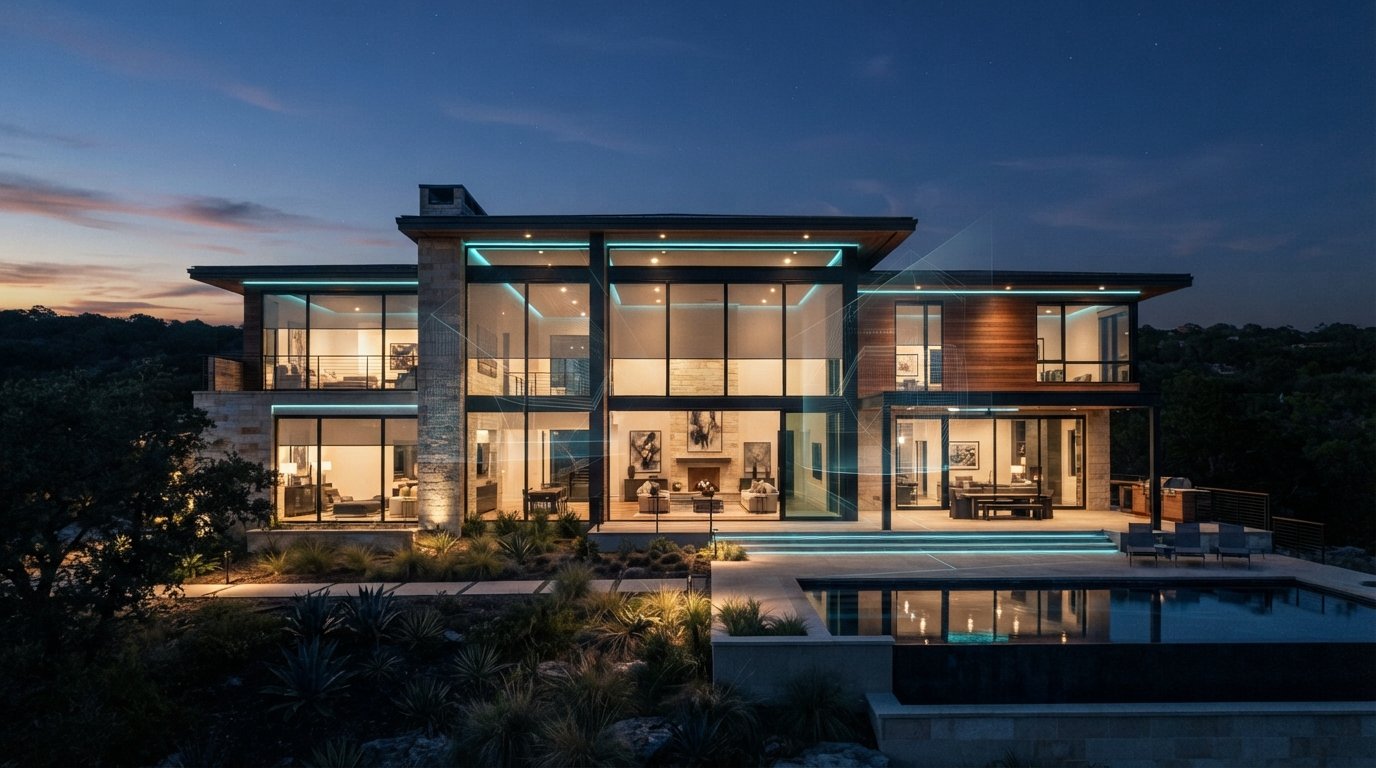
The most advanced technology in a modern estate is the kind you never actually have to touch. For many homeowners in San Antonio and Austin, the reality of high-end living often includes "wall acne," a cluttered collection of switches that disrupts the architectural flow of a room. You likely expect your home to be a sanctuary, yet you're often left managing excessive solar heat gain or lighting that feels disconnected from your natural circadian rhythm.
This 2026 engineering guide reveals how automated lighting and shades for luxury homes can be designed as an invisible, responsive infrastructure that enhances both wellness and beauty. By moving beyond basic hardware toward integrated system design, it's possible to eliminate visual friction and create an environment that anticipates your needs. We'll explore the technical precision required for seamless architectural integration, the science of human-centric lighting, and the engineering roadmaps that ensure your property remains effortless to manage for years to come.
Key Takeaways
- Learn how shifting from manual switches to scene-based intelligence transforms lighting from a simple utility into a responsive environmental asset.
- Understand how automated lighting and shades for luxury homes leverage circadian engineering and solar heat management to improve both human wellness and energy efficiency.
- Discover why centralized systems like Lutron Homeworks remain the benchmark for seamless architectural integration and long-term system resilience.
- Explore the necessity of environmental mapping and early collaboration between designers and integrators to eliminate visual clutter and "wall acne."
- Identify the importance of single-point accountability in ensuring complex lighting and shade systems operate flawlessly throughout the property's lifecycle.
Defining Automated Lighting and Shades for the Modern Estate
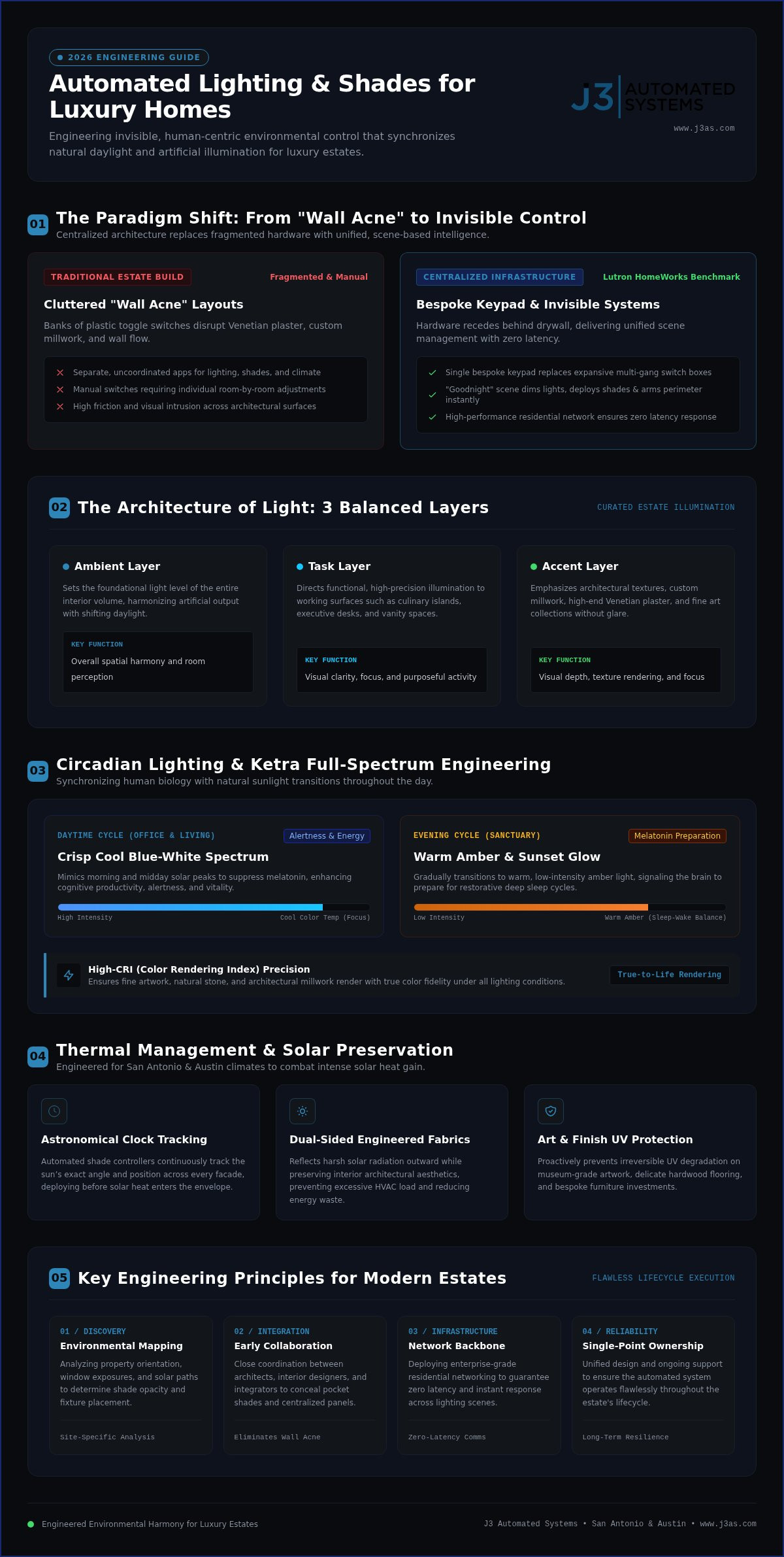
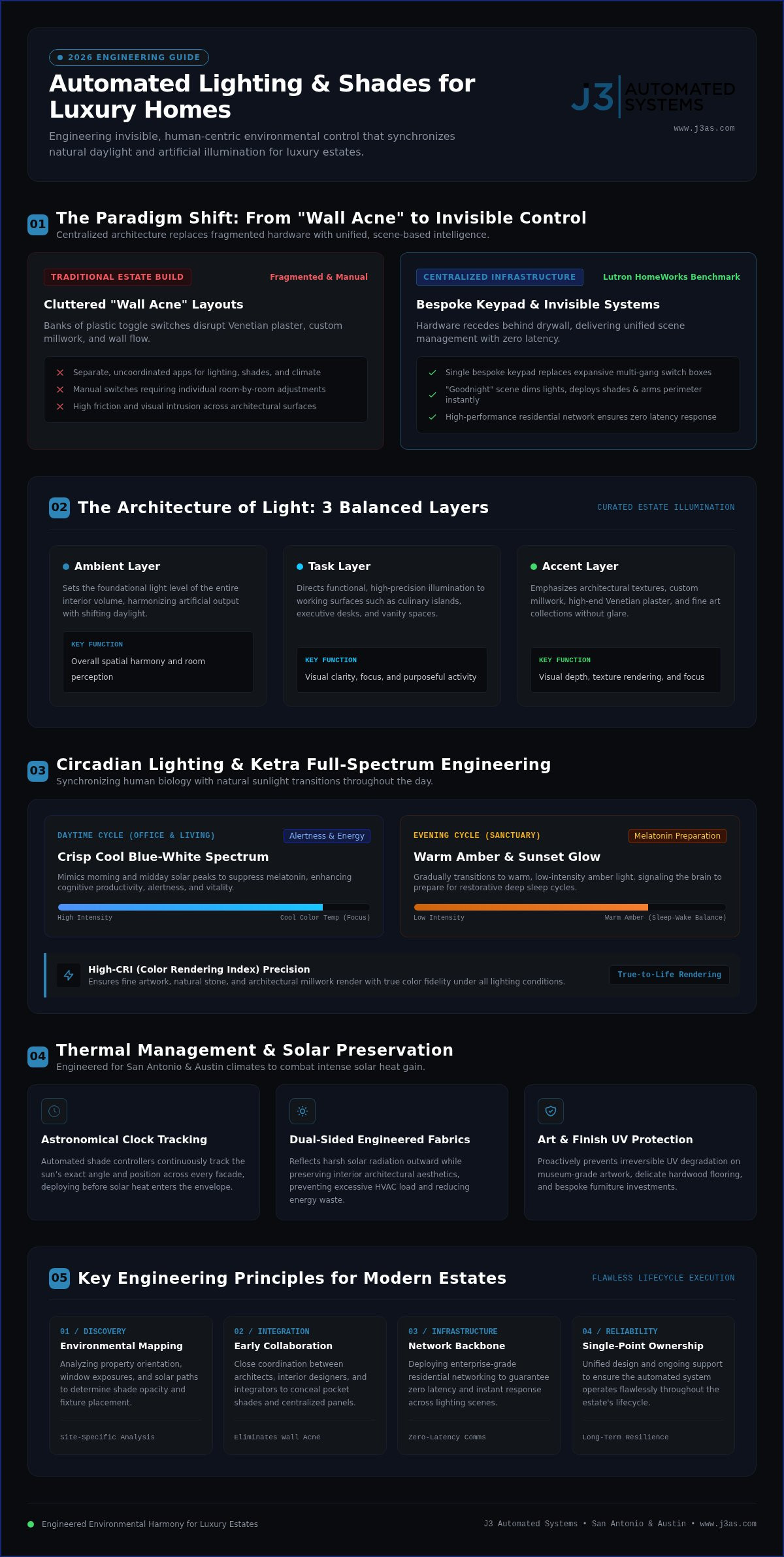
In the most refined residences, environmental control is no longer a matter of flipping a switch. It's the deliberate synchronization of natural sunlight and artificial illumination. We call this integrated environmental control. By engineering these systems to work in unison, we transform a static house into a responsive estate. Sophisticated home automation systems allow for a transition from manual, granular control to intelligent, scene-based environments. This is the foundation of automated lighting and shades for luxury homes, where a single command prepares the entire property for an evening event or a quiet morning.
This shift also addresses a common aesthetic grievance known as "wall acne." In large-scale luxury builds, the sheer number of switches required for traditional electrical layouts can clutter a room's design. Centralized control replaces these banks of plastic toggles with a single, bespoke keypad. This represents the core philosophy of "invisible technology." The hardware recedes into the architecture, leaving only the intended effect: perfectly balanced light. Effective design for automated lighting and shades for luxury homes ensures that the technical complexity remains hidden behind the drywall.
The Architecture of Light
Light is the most critical element in defining the perception of interior space. It highlights the texture of Venetian plaster and the depth of custom millwork. Without automated management, these materials are often subject to the harsh reality of the Texas sun. Integrated shades don't just provide privacy; they act as a shield. By tracking the sun's position, the system automatically deploys shades to protect high-end art and furnishings from irreversible UV damage. Professional engineering balances three distinct layers: ambient, task, and accent light. This ensures that every corner of the estate feels intentional and curated.
Unified Control vs. Fragmented Systems
True luxury is found in the removal of friction. Many homeowners struggle with fragmented systems where shades require one app and lighting requires another. This fragmentation leads to inconsistent performance and user frustration. A single, unified platform is essential for long-term system reliability. It creates a cohesive experience where a "Goodnight" scene closes the drapes, dims the lights, and sets the security perimeter simultaneously. This level of synchronization requires high-performance residential networking to serve as the invisible backbone, ensuring that commands are executed with zero latency.
The Science of Circadian Lighting and Thermal Management
Engineering a luxury estate requires a deep understanding of how light interacts with the human body and the building's thermal envelope. Light is biology. For millennia, human physiology evolved in sync with the sun's shifting spectrum, yet modern interiors often sever this connection. High-end automated lighting and shades for luxury homes restore this balance by utilizing human-centric lighting and precision thermal control. These systems don't just respond to a button press; they anticipate the biological and environmental needs of the occupants through sophisticated astronomical data.
Circadian Wellness and Ketra Technology
Ketra technology represents the pinnacle of full-spectrum color tuning. By mimicking the exact color temperature and intensity of natural sunlight, these systems support the body's internal sleep-wake cycles. In a home office, the system shifts toward a crisp, cool blue-white to enhance focus and productivity. As evening approaches, it transitions to a warm, amber glow that signals the brain to produce melatonin. This level of precision requires high-CRI (Color Rendering Index) engineering to ensure that interior finishes and fine art appear exactly as the designer intended, regardless of the time of day.
Thermal Management in the Texas Climate
In regions like San Antonio and Austin, the sun is a powerful force that dictates indoor comfort. Solar heat gain can quickly overwhelm even the most robust HVAC systems if left unmanaged. Automated shades act as the first line of defense; they use astronomical clocks to track the sun's exact position and deploy before the heat enters the home. This proactive approach reduces the cooling load significantly. By selecting dual-sided fabrics that reflect heat outward while maintaining a high-end aesthetic inward, we create a thermal barrier that feels entirely effortless. If you are looking to optimize your property's environmental performance, a bespoke engineering roadmap can identify the specific solar challenges of your site.
Daylight harvesting further refines this efficiency. By measuring the amount of ambient light entering a room, the system automatically dims artificial fixtures to maintain a consistent illumination level. This reduces electrical load and extends the lifespan of the equipment. It's a sophisticated dance between natural and artificial sources, ensuring the environment remains perfectly balanced without manual intervention. This synchronization represents the ultimate fusion of wellness, sustainability, and architectural beauty.
Comparing High-End Control Systems: Lutron Homeworks and Beyond
The distinction between consumer-grade smart bulbs and enterprise-grade infrastructure is found in the architecture of the system. While wireless retrofits offer a entry point for smaller projects, premier estates require the stability of a centralized, wired backbone. Sophisticated automated lighting and shades for luxury homes rely on a dedicated processor to manage thousands of commands without the latency or interference common in standard Wi-Fi environments. This centralized approach moves the dimming hardware to a remote equipment room, allowing for a minimalist interior design that prioritizes architectural intent over electrical utility.
Reliability is the primary metric of luxury. In a large-scale Texas residence, a wireless signal may struggle to penetrate stone walls or travel across expansive wings. Wired communication protocols ensure that every keypad press and sensor trigger executes instantly. By integrating Sivoia or Palladiom shades directly into the lighting control processor, we create a unified ecosystem where natural and artificial light are managed as a single entity rather than two separate systems fighting for priority.
Lutron Homeworks: The Enterprise-Grade Choice
Lutron Homeworks remains the gold standard for residential engineering due to its unrivaled capacity for customization. It provides the deep "Conditional Logic" necessary for a truly responsive environment. For example, the system can be programmed so that if the sun has set and the cinema-grade home theater design is active, the blackout shades deploy automatically while the hallway lights dim to a 5% safety path. This level of intelligence transforms the property from a collection of gadgets into a cohesive, thinking environment that understands the context of your daily life.
Aesthetic Hardware: Keypads and Shading Finishes
The hardware itself is designed to disappear. Palladiom keypads offer a sleek, minimalist interface available in architectural finishes like brushed brass or satin nickel, matching the home's hardware palette perfectly. These keypads replace the visual clutter of traditional switches with a single, elegant point of control. In bedrooms and theaters, the engineering of ultra-quiet shade motors is essential; these systems operate at a decibel level that is virtually imperceptible to the human ear. For the ultimate in "invisible technology," we utilize hidden pocket installations. This allows the shades to retract completely into the ceiling, ensuring that nothing obstructs the view when the system is not in use.
Designing Your System: From Architectural Integration to Installation
The successful implementation of automated lighting and shades for luxury homes begins months before the first fixture is installed. It requires a disciplined, collaborative approach between the integrator, architect, and builder. This early alignment ensures that the technical infrastructure doesn't compromise the architectural intent. By treating light and shade as fundamental building materials rather than afterthoughts, we create a system that feels like a natural extension of the estate's design.
Our process starts with Environmental Mapping. We analyze the sun's path across the property throughout the seasons to predict solar heat gain and natural light penetration. This data informs Step 2: Low-Voltage Engineering. Here, we design the wiring backbone that serves as the system's nervous system. Finally, Step 3 involves Programming and Commissioning, where the technical potential of the hardware is translated into a personalized lifestyle experience.
The Pre-Wire Phase: Why Planning Matters
Relying on wireless-only protocols in a large-scale luxury build is a significant risk. Expansive floor plans and dense building materials like stone or steel can create communication dead zones. A wired pre-wire phase ensures every motor and keypad has a dedicated, interference-free signal. This infrastructure also provides the necessary power for high-performance motorized window treatments, which often require more current than battery-operated alternatives can provide. Planning for these needs during the framing stage allows us to future-proof the property, accommodating new technologies without invasive renovations later.
Commissioning: The Art of the 'Scene'
Commissioning is the stage where engineering meets artistry. We move beyond simple "On/Off" functionality to create complex "Scenes" that manage the entire environment. A "Path to Kitchen" scene might provide a low-level safety light at 3:00 AM, while an "Entertain" scene balances accent lighting on artwork with soft ambient glows in the lounge. We take the time to tune color temperatures specifically for your interior finishes. A warm-toned wood ceiling requires a different spectral output than a white marble countertop to maintain visual harmony. For daily efficiency, we often include a "Master Off" button near the primary exits, allowing you to secure the property's energy usage with a single touch. To ensure your vision is executed with this level of precision, consult with our design specialists today.
Engineering Environmental Harmony with J3 Automated Systems
The realization of a truly responsive estate depends on the precision of the integrator. While many vendors can provide hardware, few can engineer a unified ecosystem where every system communicates without friction. J3 Automated Systems serves as the single point of accountability for your property's environmental engineering. We manage the delicate intersection of architectural intent, electrical requirements, and digital infrastructure. This holistic approach ensures that your automated lighting and shades for luxury homes function as a cohesive whole, rather than a collection of disparate devices.
Our expertise extends beyond residential comfort into the high-performance demands of modern workflows. For commercial estates and multi-use properties, we integrate environmental controls with AI business process automation to optimize energy usage and operational efficiency. By leveraging intelligent data, your property can automatically adjust lighting levels and thermal barriers based on occupancy patterns and real-time utility costs. This level of technical sophistication is delivered through a white-glove service model that prioritizes your experience from the initial design roadmap to long-term system support.
Bespoke Roadmaps for Texas Estates
Living in the San Antonio and Austin corridor presents unique environmental challenges that off-the-shelf solutions cannot address. We create bespoke technology plans that respect the specific solar orientation and architectural materials of your residence. Our deep understanding of commercial building management systems allows us to bring industrial-grade resilience to the residential market. We don't just install equipment; we design resilient systems that are built to last. This commitment to engineering excellence ensures that your investment remains functional and relevant as technology evolves.
Our roadmaps focus on three core pillars:
- Architectural Alignment: Ensuring hardware like keypads and shade pockets are integrated into the early design phase.
- Operational Resilience: Building wired backbones that eliminate the latency issues common in consumer-grade setups.
- Human-Centric Design: Prioritizing circadian wellness and effortless control in every living space.
Start Your Environmental Engineering Project
The transformation of your estate begins with a high-level consultation. We invite you to partner with a team that values intellectual rigor and meticulous planning as much as you do. Our promise is simple: we deliver systems that work as intended, every time, without technical burden. Whether you are building a new estate in Westlake or renovating a historic property in Boerne or New Braunfels, our local expertise ensures a seamless integration process. Contact J3 Automated Systems today to begin designing a home that responds to your life with quiet, intelligent brilliance.
Architecting the Future of Environmental Control
Designing a premier residence in 2026 requires moving beyond standalone gadgets toward a unified, invisible infrastructure. We've explored how the deliberate synchronization of natural and artificial light enhances architectural beauty while supporting biological wellness through precise circadian engineering. By prioritizing a wired backbone and centralized control, you can eliminate visual clutter and ensure your property remains resilient for years to come. The goal is a home that doesn't just house technology, but uses it to create a state of effortless harmony.
As a Lutron Gold Level Integrator serving San Antonio and Austin estates, J3 Automated Systems provides the end-to-end engineering and commissioning necessary for these complex environments. We act as your visionary partner, managing the hidden connections between different systems to remove the burden of manual operation. It's time to transform your estate into a responsive sanctuary that anticipates your needs with quiet brilliance. Design your bespoke environmental control system with J3 Automated Systems to experience the ultimate in modern property management. Your vision for a perfectly balanced home is within reach.
Frequently Asked Questions
What is the difference between automated shades and motorized blinds?
Automated shades utilize specialized fabrics that roll or fold, offering superior UV protection and light diffusion compared to motorized blinds with horizontal slats. While "motorized" simply means the treatment moves via a motor, "automated" implies integration into a larger ecosystem. This allows the treatments to respond to solar sensors or astronomical clocks, ensuring the environment remains balanced without manual input. The result is a more fluid and architecturally integrated solution.
Can automated lighting and shades really lower my energy bills in Texas?
Yes, automated lighting and shades for luxury homes significantly reduce energy consumption by managing solar heat gain. In the intense Texas climate, shades deploy automatically during peak sun hours to block thermal energy before it enters the room. This reduces the strain on your HVAC system. Additionally, daylight harvesting sensors dim artificial lights when natural light is sufficient, extending the lifespan of fixtures and lowering electrical demand across the estate.
What is circadian lighting, and do I need it in my home?
Circadian lighting, or human-centric lighting, is a system engineered to mimic the sun's natural color temperature and intensity throughout the day. By shifting from cool, blue-white light in the morning to warm, amber tones in the evening, the system supports your body's internal sleep-wake cycle. It's an essential feature for luxury interiors in San Antonio where homeowners prioritize wellness, as it improves mood, focus, and overall sleep quality.
Do I need to rewire my entire house to install a Lutron system?
Not necessarily, though the approach depends on the project's scope. For new construction in Austin or Boerne, we recommend a centralized, wired Lutron Homeworks system for maximum reliability. For existing estates, Lutron offers high-performance wireless solutions that utilize patented Clear Connect technology. This allows us to integrate sophisticated control without opening every wall, providing the same white-glove experience and aesthetic keypad design found in wired installations.
How do automated shades integrate with a home security system?
Integration with security systems adds a critical layer of property protection. When an alarm is triggered, the system can automatically raise all shades and flash exterior lights to alert neighbors and law enforcement. During your absence, "Away" scenes mimic your typical daily activity by adjusting lighting and shades at staggered intervals. This creates a lived-in appearance that deters potential intruders while you're traveling away from your Texas estate.
Are automated shades quiet enough for a nursery or home theater?
Premier shading systems are engineered specifically for silent operation in sensitive environments. Lutron's Sivoia and Palladiom motors operate at a decibel level that is virtually imperceptible to the human ear. This precision makes them ideal for nurseries, where you don't want to disturb a sleeping child, or for cinema-grade home theaters where any mechanical noise would compromise the acoustic integrity of the private screening experience.
What happens to my lighting and shades if the internet goes down?
Your core system functionality remains fully operational even if your internet connection fails. Unlike consumer-grade smart bulbs that rely on cloud servers, professional systems use local processors to manage commands. Your keypads, scheduled scenes, and solar sensors will continue to function exactly as programmed. While remote app control might be temporarily limited, the physical reliability of your automated lighting and shades for luxury homes is never compromised by external network outages.
Can J3 work with my existing architect or interior designer?
J3 Automated Systems functions as a high-level consultant, collaborating closely with your architect and interior designer from the early planning stages. We provide the technical documentation and CAD drawings necessary to ensure our hardware integrates seamlessly with their vision. By serving as the single point of accountability for environmental engineering, we remove the technical burden from your design team, allowing them to focus on the home's aesthetic and structural excellence.