Integrating Audio Systems with Home Automation: The 2026 Engineering Guide
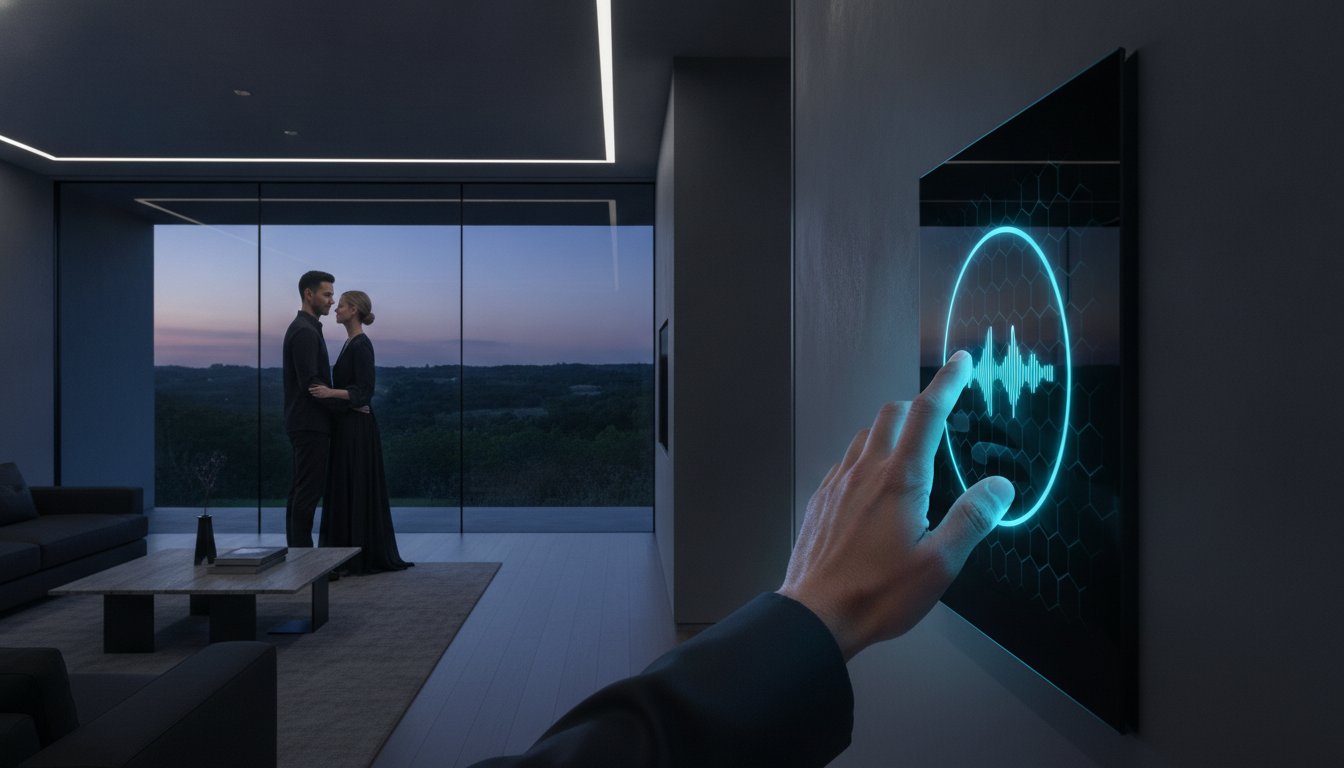
True luxury isn't found in the sheer number of devices you own, but in the silence and fluid precision between their operations. Most estate owners across San Antonio and Austin have invested heavily in premium sound, yet they frequently find themselves tethered to a dozen conflicting apps just to manage a single evening's playlist. You likely recognize the friction of audio dropouts in expansive wings of the property or the aesthetic burden of bulky hardware marring your architectural lines. We believe that integrating audio systems with home automation should feel like a natural, invisible extension of your environment rather than a constant technical negotiation.
This engineering guide reveals how to transform fragmented equipment into a unified, responsive ecosystem that enhances the functionality of your Texas estate. You'll discover the methodology for achieving one-touch control through professional platforms like Crestron Home OS 4.11 and Control4. We will explore the sophisticated networking required for zero-latency sound, the art of architectural speaker placement, and the emerging AI-driven voice commands that ensure your system remains future-proof. By the end of this analysis, you'll understand how to bridge the gap between high-performance hardware and effortless, property-wide operation.
Key Takeaways
- Learn why enterprise-grade networking serves as the essential backbone for high-fidelity audio, preventing the dropouts common in large residential properties.
- Understand the strategic advantages of integrating audio systems with home automation to replace fragmented apps with a single, intuitive interface.
- Explore the design principles of architectural audio that allow premium sound to remain completely invisible within your estate's aesthetic.
- Compare the 2026 capabilities of leading ecosystems like Crestron and Control4 to determine the best fit for your property's specific requirements.
- Discover how a discovery-first engineering approach simplifies complex system commissioning, ensuring your technology remains a reliable utility.
The Evolution of Integrated Audio: Beyond Basic Connectivity
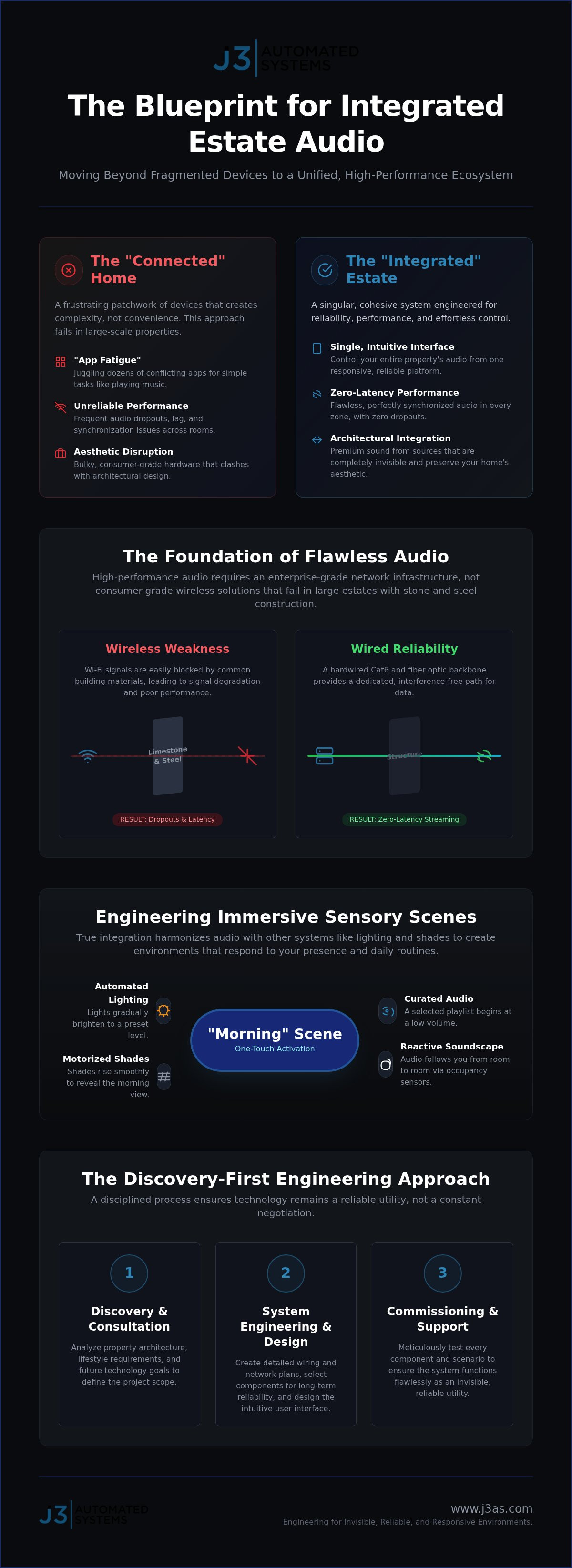
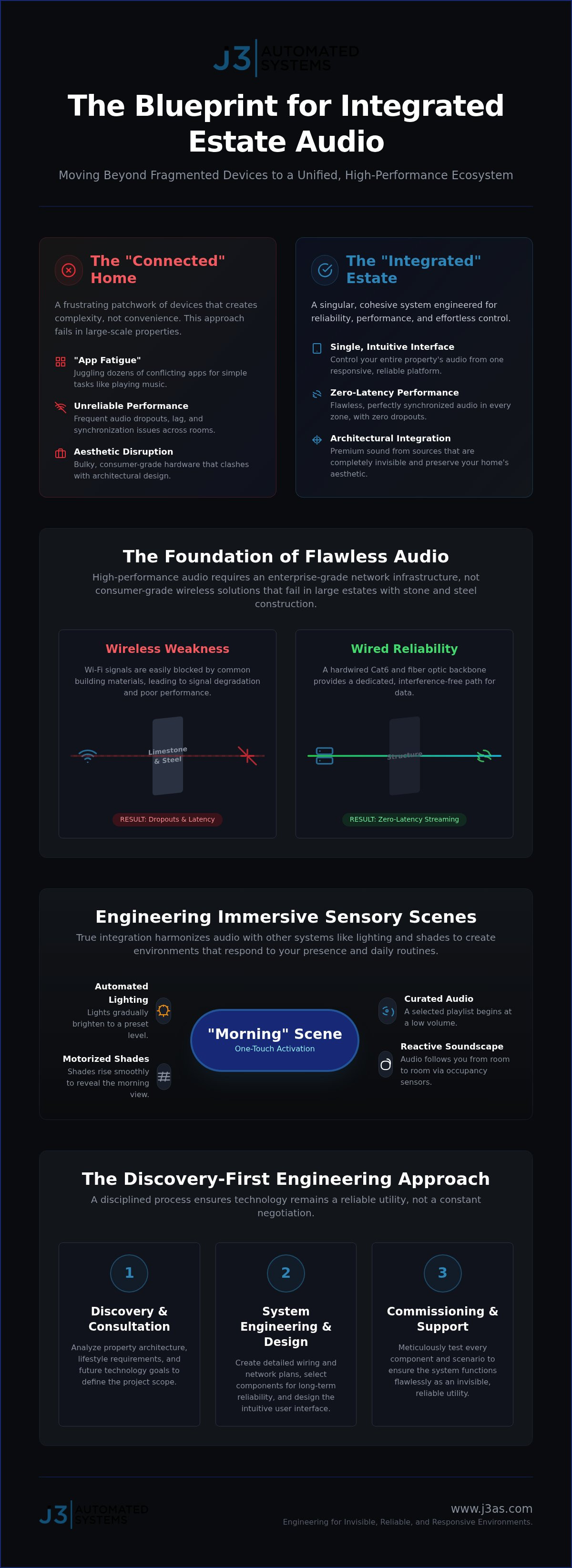
The standard for residential sound has shifted from simple speaker placement to the engineering of reactive environments. For the modern estate owner, audio is no longer an accessory but a foundational utility. Traditional setups often rely on a patchwork of Bluetooth connections and consumer-grade Wi-Fi speakers. While these solutions suffice for small apartments, they collapse under the weight of a multi-acre property. Integrating audio systems with home automation requires moving beyond these fragmented "connected" devices toward a centralized architecture that prioritizes reliability and performance.
While standalone smart speakers offer convenience for casual users, they lack the stability and processing power required to manage a 10,000-square-foot estate. These consumer devices often struggle with synchronization across multiple zones, leading to audio lag that shatters the illusion of a luxury environment. A visionary integrator acts as a master of complexity, mapping out a long-term audio roadmap that accounts for architectural constraints and future technological shifts. This professional oversight ensures that every component, from the low-voltage wiring to the AI-driven processors, works in concert to simplify the user's daily life.
Connected vs. Integrated: Understanding the Distinction
A connected home is merely a collection of disparate devices that happen to share a network. This fragmentation leads to "app fatigue," where users must toggle between several different interfaces just to play music in the kitchen or adjust the volume on the terrace. An integrated system, however, functions as a singular organism controlled by a high-performance processor. Integrated audio is the harmonization of hardware and software logic into a single, cohesive user experience. By utilizing a robust home automation system, the property owner gains a level of control and stability that consumer-grade hardware cannot replicate.
The Rise of Sensory Scenes
The true power of integration lies in how audio interacts with other environmental elements. Modern engineering allows us to pair sound with automated lighting and shades to create immersive sensory scenes. A "Morning" scene doesn't just raise the blinds; it gradually introduces a curated acoustic landscape that follows you from the bedroom to the breakfast nook. The process of integrating audio systems with home automation is no longer about simply playing music; it's about engineering an environment that responds to your presence.
Reactive audio utilizes room occupancy sensors to ensure the soundscape is present only where it's needed, fading out as you exit a space. This creates a feeling of calm reliability, where the technology anticipates your needs without requiring manual intervention. By removing the friction of manual selection, the system becomes an invisible steward of the home's atmosphere, providing a polished result that blends technical authority with personal comfort.
The Infrastructure of Sound: Networking and Low-Voltage Wiring
High-performance audio depends on the silent integrity of the home's physical architecture. While wireless solutions offer convenience for mobile devices, they are insufficient for distributing high-fidelity sound across a sprawling estate. Integrating audio systems with home automation requires a robust backbone of low-voltage wiring to ensure signals remain pure and uninterrupted. In new constructions or comprehensive retrofits, this infrastructure is the non-negotiable prerequisite for a system that functions with the same reliability as a traditional utility.
Wired Reliability in an Increasingly Wireless World
Modern estates in Central Texas often feature thick limestone walls and steel framing that act as natural barriers to Wi-Fi signals. Relying on wireless protocols for multi-room audio in these environments invites latency, dropouts, and frustrating synchronization issues. We prioritize Cat6 and fiber optic solutions to facilitate zero-latency streaming. This hardwired approach is why high performance residential networking prevents audio dropouts even when the property's digital demands are at their peak. By offloading the primary audio traffic to a dedicated wired path, the wireless network remains free for mobile tasks, maintaining harmony across the entire digital ecosystem.
The Centralized Equipment Rack
A hallmark of professional engineering is the removal of clutter from the living environment. By relocating amplifiers, streamers, and processors to a dedicated, climate-controlled equipment room, we achieve a state of invisible technology. This centralization offers several critical advantages for the longevity of the system:
- Thermal Management: Dedicated cooling prevents the overheating of high-memory control processors and high-current amplifiers.
- Power Conditioning: Centralized protection filters the electrical supply, shielding sensitive components from voltage fluctuations common in Texas summers.
- Aesthetic Purity: Removing bulky hardware from the living space allows the interior design to remain the focal point.
Engineering for 2026 means preparing for the next wave of high-resolution standards, such as 8K audio and advanced AI-driven processing. These emerging technologies demand bandwidth that only a meticulously planned wiring schedule can provide. If you're planning a project that requires this level of technical foresight, our team can help you design a resilient infrastructure that serves your property for decades. By treating the network as a foundational utility, we ensure your audio ecosystem remains fluid, responsive, and entirely effortless.
Comparing Ecosystems: Control4, Crestron, and Lutron Integration
The success of a whole-property audio project depends less on the individual speakers and more on the intelligence of the control processor. While high-performance wiring provides the path, the automation ecosystem provides the logic. Choosing the right platform is a strategic decision that determines how you interact with your environment every day. Integrating audio systems with home automation is not merely about connectivity; it's about selecting a platform that can manage the immense complexity of a modern Texas estate while presenting a simple, white-glove interface to the user.
A sophisticated installation requires a single accountable team to oversee the commissioning of these systems. Without professional programming, even the most expensive hardware remains a collection of isolated parts. We focus on creating a unified logic where the audio system, lighting, and climate control operate as a single, cohesive entity. This level of orchestration ensures that your technology serves your lifestyle rather than demanding your attention.
Crestron and Control4: The Titans of Integration
For estates that demand absolute customization, Crestron remains the industry benchmark. With the release of Crestron Home OS 4.11, the platform has introduced "Configure Pro," a tool that allows our engineers to build deeply personalized environments. Crestron is ideal for massive residential projects where the logic must handle hundreds of distinct zones and complex sub-system handoffs without hesitation. It offers a level of technical authority that is unmatched for clients who require a bespoke digital architecture.
Control4, particularly with OS 3 version 3.4.0, offers a different but equally compelling value proposition. It excels in providing an intuitive, user-centric interface that makes managing whole-property audio feel effortless. Control4 is often the preferred choice for family-oriented estates where ease of use is paramount. J3 engineers the handoff between these powerful systems, ensuring that whether you choose the granular control of Crestron or the fluid simplicity of Control4, the underlying audio performance remains flawless and resilient.
Lutron’s Role in the Audio Experience
Lutron HomeWorks QSX is frequently the silent partner in a premium audio ecosystem. While primarily known for lighting and shade control, Lutron keypads often serve as the primary physical touchpoints for audio interaction. We program these elegant keypads to trigger sensory scenes where a single press adjusts the lighting, closes the shades, and initiates a curated playlist. This physical control is essential in high-traffic areas like kitchens or galleries where opening a mobile app is inconvenient.
This integration becomes even more critical when designing a cinema grade home theater design. In a private screening environment, the audio must be perfectly synchronized with the lighting dimming and the projector activation. By integrating audio systems with home automation through the Lutron platform, we ensure the transition from a standard room to an immersive cinema experience is fluid and instantaneous. This holistic approach removes the friction of manual adjustments, allowing the technology to fade into the background of a perfectly tuned environment.
Designing Multi-Zone Audio for Central Texas Estates
Architectural audio represents the pinnacle of aesthetic integration. In-ceiling and in-wall speakers allow premium sound to permeate a space without disrupting the interior design, effectively making the technology invisible. For estates in Austin and San Antonio, where open-concept floor plans are the architectural standard, managing sound becomes a matter of precision engineering. Integrating audio systems with home automation allows us to define specific zones that adapt to the room's use, whether it’s a quiet morning in the study or a high-activity evening in the gallery.
In multi-generational or high-activity homes, we manage sound leakage through careful driver placement and acoustic dampening. This ensures that a high-energy playlist in the game room doesn't disturb the tranquility of the primary suite. By treating each room as a distinct acoustic environment, we provide a polished result where audio remains a curated experience rather than a background noise that bleeds into adjacent spaces.
Outdoor Entertainment and Perimeter Audio
Outdoor zones require equipment that can withstand the brutal intensity of the Texas sun and high humidity. We utilize weather-hardened landscape speakers and subterranean subwoofers to create a high-fidelity sound stage that covers pools, outdoor kitchens, and expansive lawns. These components are engineered for durability and longevity, ensuring that the performance doesn't degrade despite the environmental stressors of the Central Texas climate.
This perimeter audio also serves a functional role by integrating audio systems with home automation and commercial security system design. This connection allows the audio system to act as a deterrent, broadcasting automated alerts or voice instructions if a perimeter breach is detected by the security sensors. This multi-layered approach transforms your sound system into a contributor to the property's overall safety and intelligence.
Acoustics and Room Tuning
Acoustic engineering is vital when working with the hard surfaces common in Central Texas architecture. Digital Signal Processing (DSP) is used to correct for room reflections and standing waves that occur in open-concept spaces. We perform bespoke calibration for every zone to ensure the kitchen maintains clarity while the private study offers a warmer, more intimate sound profile. Our engineers tune each zone to specifically account for the unique resonance and reflective properties of local architectural materials like Texas limestone.
This level of room tuning eliminates the muddiness often found in large, cavernous rooms with high ceilings. By adjusting the frequency response to the specific geometry of the room, we achieve a state of intelligent, effortless operation where the sound is always balanced. If you're ready to engineer a soundscape that complements your estate's architecture, contact J3 Automated Systems to begin your discovery process.
The J3 Engineering Approach: From Discovery to Commissioning
Every successful project begins with a deep discovery phase rather than a product catalog. We utilize a structured roadmap that prioritizes process mapping to understand how you intend to move through your estate. By integrating audio systems with home automation at the design stage, we identify potential friction points before the first wire is pulled. This engineering-first mindset ensures that the final system is a reflection of your lifestyle rather than a technical burden you must learn to navigate.
Managing the vast data streams of a modern luxury property requires more than just standard software. We leverage AI business process automation to engineer intelligence into the underlying workflows of your home. This technology allows the system to handle complex logic, such as adjusting volume based on ambient noise or predictive scene setting, with absolute precision. The final 5% of our work, known as professional commissioning, is where we fine-tune these logical handoffs. This meticulous attention to detail is what makes the technology feel effortless to the end user.
Engineering the Invisible
Complexity should be managed, never displayed. Our "single accountable team" model covers the entire lifecycle of the project, from the initial low-voltage design to the final software commissioning. This holistic oversight eliminates the common communication gaps between AV vendors, network engineers, and automation programmers. By maintaining a single point of accountability, we ensure that the custom software touches and personalization layers are executed with the same intellectual rigor as the physical infrastructure.
Beyond the initial installation, high-performance properties require ongoing stewardship. We provide remote monitoring and proactive support to ensure your ecosystem remains resilient. This allows our engineers to identify and resolve potential network issues or software updates before they impact your experience. This level of service provides the calm reliability that is the hallmark of a J3 system, ensuring your investment remains a polished and functional utility for years to come.
Your Next Steps in San Antonio and Austin
For estate owners in San Antonio and Austin, the transition from a fragmented house to an intelligent home begins with a formal consultation. We believe that professional design fees are an essential investment in the long-term functionality of your property. These fees allow us to provide a comprehensive engineering plan that prevents costly technical friction and ensures your system remains future-proof. By integrating audio systems with home automation through a professional lens, you avoid the "app fatigue" and reliability issues of consumer-grade setups.
If you are preparing for a new build or a major renovation, schedule a design consultation with J3 Automated Systems to explore how we can simplify your world through intelligent integration. Our team is ready to act as your visionary partner, transforming your property into a unified, responsive environment that responds to your every need.
Engineering a Resilient Acoustic Future
The transition from a collection of isolated speakers to a reactive, property-wide environment requires a departure from consumer-grade thinking. Success in integrating audio systems with home automation relies on a foundation of high-performance residential networking and meticulously planned low-voltage infrastructure. By centralizing control through professional platforms, you replace technical friction with a single, intuitive interface that respects your estate's architectural intent. This transformation ensures that technology serves as a reliable utility rather than a constant distraction.
Our Texas-based engineering team provides the deep expertise required for end-to-end design and commissioning. We act as a single point of accountability, bridging the gap between physical environments and digital processes to create a state of intelligent, effortless operation. By prioritizing architectural integration and robust connectivity, we ensure your soundscape remains fluid, responsive, and entirely invisible. True luxury is found in this removal of burden, where your environment anticipates your needs with silent precision.
If you are ready to move beyond fragmented control and embrace a unified, high-performance ecosystem, our experts are prepared to guide your project from initial discovery to final calibration. Request a Bespoke Audio Integration Roadmap from J3 Automated Systems and begin the journey toward a more harmonious property today.
Frequently Asked Questions
What is the best home automation system for high-fidelity audio?
Crestron and Control4 represent the gold standard for high-performance audio integration in 2026. Crestron Home OS 4.11 provides unparalleled customization for expansive estates, while Control4 offers an exceptionally intuitive interface for daily residential use. Both platforms allow our engineers to bridge the gap between premium audio hardware and centralized logic, ensuring your music remains a fluid, high-fidelity experience rather than a technical struggle.
Can I integrate my existing speakers into a new home automation system?
Most high-quality passive and active speakers can be successfully integrated into a modern ecosystem. By utilizing specialized streamers and amplifiers that communicate with a central processor, we can bring legacy equipment into a unified control environment. Our team evaluates your existing hardware during the discovery phase to ensure it supports the zero-latency performance and reliability required for a sophisticated, property-wide installation.
Do I need a special network for whole-home audio integration?
A resilient, enterprise-grade network is the non-negotiable backbone of any stable system. Integrating audio systems with home automation requires a dedicated infrastructure that prioritizes high-bandwidth traffic to prevent dropouts and lag. In large San Antonio and Austin estates, we deploy high-performance residential networking that utilizes Cat6 and fiber optic wiring to overcome the limitations of standard Wi-Fi and challenging architectural materials.
What is the difference between multi-room audio and integrated audio?
Multi-room audio is a basic capability that allows sound to play in different areas, often requiring fragmented control through multiple apps. Integrated audio is a holistic environment where sound is managed by a single central processor alongside lighting, shades, and climate. This centralized approach allows for sensory scenes where the environment reacts to your presence, moving beyond simple connectivity toward a state of intelligent, effortless operation.
How much does it cost to install a whole-property audio system in Texas?
The investment for a whole-property system depends on the architectural scope and the technical complexity of the integration. We utilize a project-based model that covers the entire engineering lifecycle, including bespoke design, hardware procurement, and professional commissioning. Each roadmap is tailored to the specific requirements of the estate, ensuring that the final system functions as a reliable utility rather than a collection of standalone devices.
Is wireless audio as good as wired for luxury home automation?
Wireless audio cannot match the reliability or the zero-latency purity of a hardwired system. For luxury properties in Central Texas, we prioritize wired infrastructure to ensure that high-fidelity sound is distributed without the interference common in wireless protocols. Hardwired connections provide the stability needed for high-resolution audio formats and ensure that your system remains resilient even when the property's digital demands are at their peak.
Can I control my home audio with voice commands like Alexa or Josh.ai?
Modern automation platforms integrate seamlessly with voice assistants to provide hands-free control of your acoustic environment. We often recommend privacy-focused solutions like Josh.ai for high-end estates, as they offer natural language processing specifically tuned for home control. This allows you to trigger complex sensory scenes, such as dimming the lights and initiating a curated playlist, with a single spoken command in any room.
How do I hide my audio equipment while maintaining high performance?
We achieve a state of invisible technology by utilizing architectural speakers that blend into your ceilings or walls. All bulky hardware, including amplifiers and streamers, is relocated to a centralized, climate-controlled equipment rack. This approach preserves the aesthetic purity of your Austin or San Antonio home while ensuring that the sensitive electronics are housed in an optimized environment for long-term health and peak performance.