IoT Predictive Maintenance for Commercial Buildings: Engineering Foresight into Texas Facilities
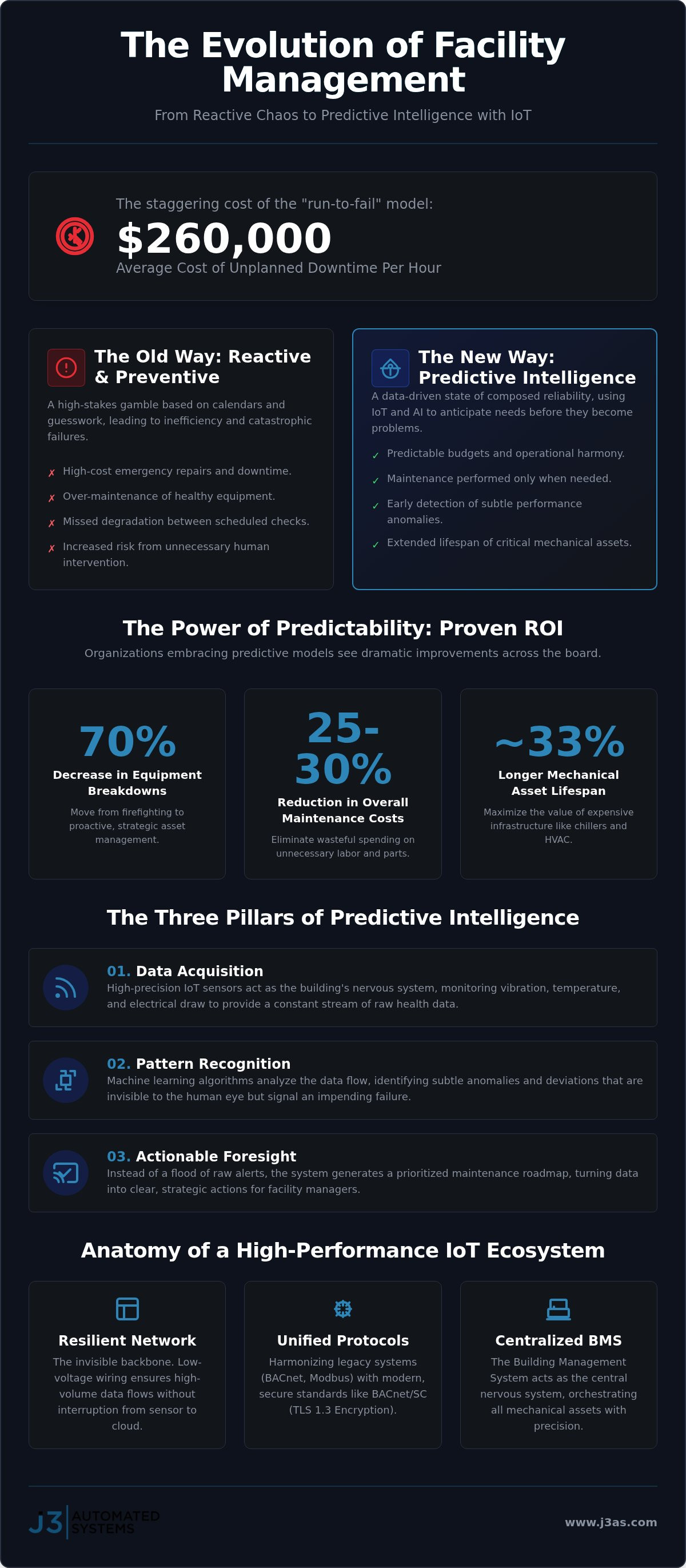
The average cost of unplanned downtime for facility managers has reached $260,000 per hour, yet organizations that adopt a predictive model can decrease equipment breakdowns by 70%. This shift represents more than a simple software upgrade; it's a fundamental evolution in how we maintain our physical environments. By implementing iot predictive maintenance for commercial buildings, facility leaders are moving away from the frantic energy of emergency repairs toward a state of composed, data-driven reliability. This engineered foresight allows you to identify a failing bearing or a refrigerant leak long before it triggers a system-wide shutdown.
Managing a Texas facility means contending with extreme thermal loads and the inherent friction of fragmented legacy systems, especially as new 2024 International Mechanical Code standards take effect this September. It's exhausting to wait for the next inevitable failure during a heat peak, knowing that each reactive fix erodes your budget and the lifespan of your mechanical assets. You deserve a system that works with the same precision and intelligence as the rest of your business. This article explores how integrating IoT sensors and predictive analytics transforms building management into a seamless, high-performance operation. We'll examine the technical architecture required to achieve predictable budgets and ensure your critical systems operate with absolute fluidity.
Key Takeaways
- Understand how shifting from reactive "run-to-fail" models to predictive intelligence can reduce overall maintenance costs by 25-30 percent.
- Explore the technical architecture required for iot predictive maintenance for commercial buildings, including the integration of resilient networking and secure communication protocols.
- Learn to navigate the unique challenges of the Texas climate by using real-time data to manage extreme heat-load cycles and ERCOT demand-response events.
- Discover how intelligent building automation slashes utility bills and extends the lifespan of expensive mechanical assets, such as chillers, by nearly a third.
- Identify the strategic roadmap for transitioning from fragmented legacy tools to a unified, bespoke ecosystem engineered for long-term operational harmony.
The Evolution of Facility Management: From Reactive Repair to Predictive Intelligence
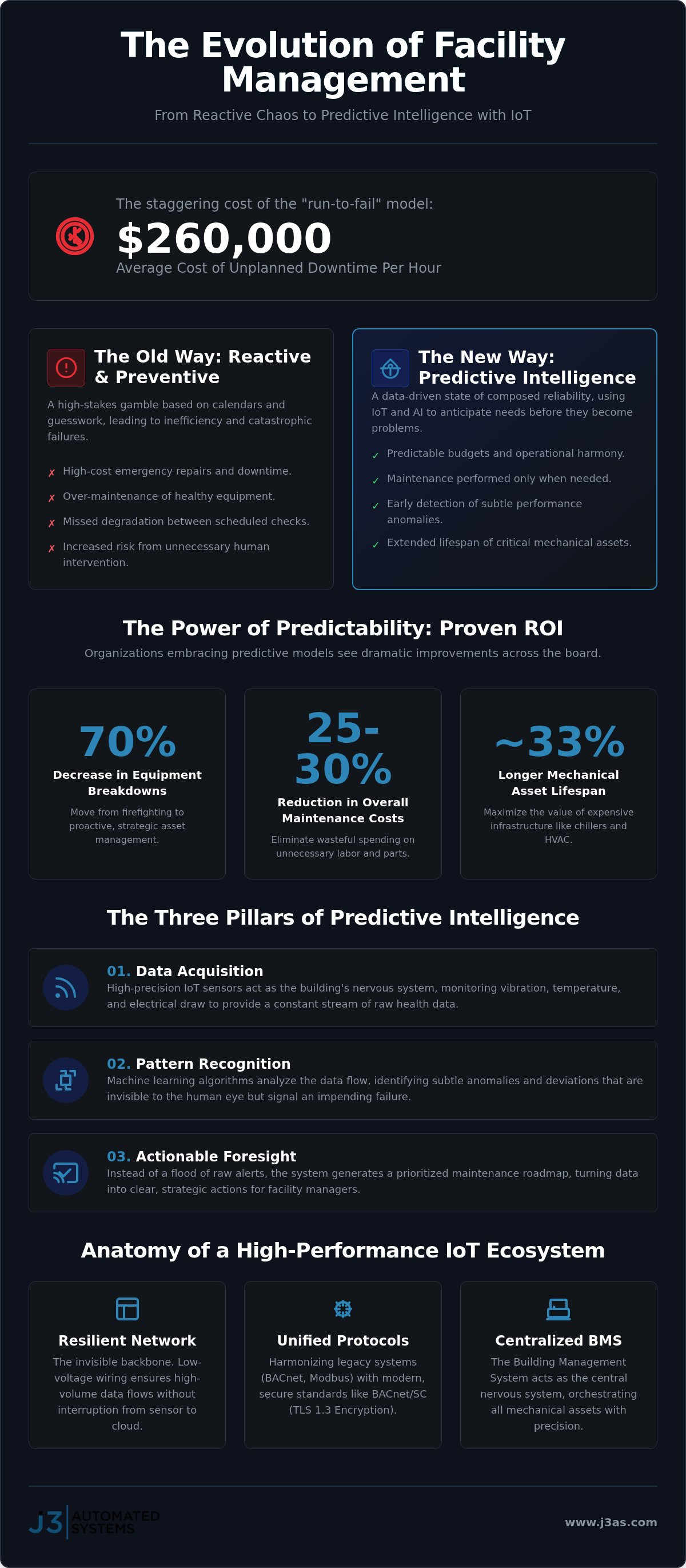
The traditional "run-to-fail" maintenance model is a high-stakes gamble that modern facilities can no longer afford. When a critical HVAC system fails during a Texas heatwave, the cost isn't just the repair invoice; it's the $260,000 per hour lost to unplanned downtime. True iot predictive maintenance for commercial buildings replaces this reactive chaos with a state of composed reliability. It represents a sophisticated synthesis of real-time sensor data and machine learning, allowing systems to communicate their health before a catastrophic failure occurs. By moving beyond simple repairs, facility leaders can transform their mechanical infrastructure into a streamlined, high-performance asset.
The Limitations of Traditional Preventive Maintenance
Preventive maintenance was once the gold standard, yet its reliance on rigid, calendar-based schedules often creates its own set of inefficiencies. Servicing equipment based on the date rather than its actual condition leads to over-maintenance, where perfectly functional components are replaced prematurely. Conversely, a calendar-based approach can miss the subtle signs of early-stage degradation between scheduled visits. This "blind" replacement strategy incurs unnecessary labor costs and introduces human error into otherwise stable systems. A more granular, data-driven methodology is required to eliminate this operational friction and ensure that every technician's hour is spent where it's truly needed.
The Three Pillars of Predictive Intelligence
Engineering a predictive ecosystem requires a methodical focus on three distinct layers of intelligence. First is Data Acquisition, where high-precision IoT sensors monitor vibration, temperature, and electrical draw with architectural precision. These sensors act as the nervous system of the building, providing a steady flow of raw information. Second is Pattern Recognition. Machine learning algorithms analyze this data to identify the subtle anomalies, such as a slight increase in motor vibration or a deviation in thermal output, that precede a total breakdown.
Finally, the system provides Actionable Foresight. Rather than delivering a flood of alerts, the platform generates prioritized maintenance roadmaps. This removes the cognitive burden from facility managers, allowing them to act as visionary stewards of their property rather than firefighters. Organizations that embrace this transition typically reduce their overall maintenance costs by 25 to 30 percent while decreasing equipment breakdowns by 70 percent. This shift ensures that iot predictive maintenance for commercial buildings isn't just a technical upgrade, but a commitment to long-term asset health and predictable operational budgets.
The Anatomy of a High-Performance IoT Ecosystem for Commercial Buildings
Building a robust infrastructure for iot predictive maintenance for commercial buildings begins with the invisible backbone. A resilient network, supported by precise low-voltage wiring, ensures that data flows without interruption from the mechanical floor to the cloud. This physical layer must be engineered to handle the high-volume traffic of hundreds of sensors without latency. Without a stable networking foundation, even the most advanced AI analytics will struggle with fragmented data packets and unreliable uptime.
True integration requires harmonizing diverse protocols into a unified language. While legacy systems often rely on Modbus or standard BACnet, modern high-security installations utilize BACnet/SC (Secure Connect). This protocol provides TLS 1.3 encryption over WebSockets, addressing the cybersecurity vulnerabilities inherent in older, unencrypted building protocols. By bridging these wired standards with wireless LoRaWAN sensors for hard-to-reach areas, facility managers create a comprehensive data fabric. This interconnected environment allows the Building Management System (BMS) to act as a central nervous system, orchestrating every mechanical movement with architectural precision.
Sensor Selection and Strategic Placement
High-performance ecosystems rely on targeted data rather than raw volume. Vibration sensors and thermal monitors are essential for critical HVAC compressors and motors, identifying mechanical friction before it causes a catastrophic seizure. Power quality meters complement these physical sensors by detecting electrical harmonics and voltage sags that can damage sensitive control boards. Strategic placement is more critical than sensor volume because a single data point from a primary load-bearing component provides more actionable intelligence than dozens of sensors placed on non-critical peripherals. This methodical approach ensures that every device contributes to the overall clarity of the system health.
Integrating Legacy Infrastructure with Modern AI
Many premier Texas properties operate with 20-year-old chillers and mechanical assets that predate the IoT era. Bridging the gap between these legacy machines and modern cloud-based analytics requires a sophisticated approach to unified system commissioning. We focus on removing the friction of digital transformation by layering intelligent gateways over existing controls, allowing data to flow from fragmented assets into a centralized AI engine. This process transforms an aging facility into a visionary environment without the need for a total mechanical overhaul. By partnering with a master of complexity, owners can extend the functional life of their existing investments while gaining the foresight of real-time monitoring. This transition from manual effort to intelligent operation ensures that your facility remains a high-performance asset for decades to come.
Optimizing Critical Infrastructure for the Texas Climate and Grid
Texas facilities face a unique set of environmental pressures that standard maintenance protocols often ignore. In cities like San Antonio and Austin, the relentless summer heat creates extreme load cycles that push mechanical components to their physical limits. Implementing iot predictive maintenance for commercial buildings allows facility managers to anticipate these thermal stress points before they lead to system failure. By synthesizing local weather forecasts with real-time performance data, systems can engage in predictive cooling. This involves pre-chilling spaces during lower-demand hours to maintain comfort while protecting the equipment from the strain of peak-hour operations.
HVAC Reliability in the Face of Extreme Heat
Maintaining HVAC health during a heat peak requires more than a routine inspection. High-precision sensors monitor refrigerant pressures and coil temperatures with architectural detail, flagging deviations that suggest a pending compressor failure. These insights are a core component of commercial building management systems in Texas, which act as a shield against thermal degradation. Integration with automated shading and lighting further reduces the mechanical burden. By lowering shades based on solar position, the system physically blocks heat gain, allowing the HVAC to operate within its optimal efficiency range rather than struggling at maximum capacity.
Electrical Stability and Surge Protection
The Texas grid is known for its volatility, particularly during ERCOT demand-response events and sudden price spikes. Intelligent power monitoring predicts failures in transformers and switchgear by identifying harmonic distortions and heat signatures that precede a blowout. We apply high performance residential networking principles to commercial environments to ensure the digital infrastructure remains resilient against grid fluctuations. This level of oversight protects expensive digital assets from surges and allows for automated load shedding when electricity prices soar.
In drought-prone regions, water management is equally critical. IoT sensors provide a layer of vigilance for leak detection and cooling tower efficiency, preventing the waste of a precious resource. Integrated platforms that unify these controls can achieve whole-building energy savings of 18% to 22% in Texas facilities. This holistic approach to iot predictive maintenance for commercial buildings ensures that a facility remains a stable, high-performance asset regardless of external environmental or economic pressures.
Calculating the ROI of Intelligent Building Automation
Measuring the return on investment for sophisticated facility technology requires looking beyond simple line items. It involves a fundamental shift in how we value the removal of operational friction. Organizations that transition to iot predictive maintenance for commercial buildings typically see an immediate reduction in overall maintenance costs by 25% to 30%. This isn't merely a projection; it's the result of eliminating the "blind" labor associated with manual inspections. By empowering your team to focus exclusively on verified mechanical anomalies, you transform your maintenance department from a cost center into a high-efficiency asset.
The financial impact is most evident in the extended lifespan of critical mechanical assets. A million-dollar chiller represents a significant capital expenditure. Extending its functional life by 25% to 30% through precise vibration and thermal monitoring directly preserves your capital for other visionary projects. Furthermore, some firms report achieving a 300% ROI within the first six months of implementation. This rapid return is often driven by the prevention of a single catastrophic failure, which justifies the entire sensor network investment in one event.
Reducing Commercial Operating Costs via Automation
There is a direct, measurable correlation between system tuning and lower energy consumption. Predictive models allow for micro-adjustments in real-time, ensuring that motors and fans only draw the power they need for the current load. Beyond the hard numbers, there's a significant "soft ROI" in the form of tenant satisfaction and retention. In the competitive Texas commercial market, a building that maintains perfect environmental harmony during a record-breaking heatwave becomes a preferred destination for high-tier clients. This reliability builds a brand of excellence that transcends the physical structure itself.
Sustainability and Emissions Compliance
As we move toward the implementation of 2026 energy efficiency standards, intelligent load management becomes a necessity rather than a luxury. Proactive monitoring identifies energy leaks and inefficient cycles that would otherwise go unnoticed for months. Integrating ai business process automation allows for the seamless reporting of ESG metrics, turning raw data into a narrative of sustainability. This digital stewardship transforms a facility into a "green" asset, commanding premium leasing rates and ensuring long-term compliance with evolving regulations. To begin quantifying the potential savings for your specific property, you can request a comprehensive facility audit from our engineering team.
Proactive leak and fire detection also offer substantial insurance and liability benefits. By identifying a moisture plume or an electrical hot spot before it triggers an alarm, you avoid the high-deductible claims and reputational damage associated with major incidents. This layer of digital vigilance provides a sense of calm reliability for owners and stakeholders alike.
Engineering the Roadmap: Bespoke Implementation with J3 Automated Systems
Implementation of iot predictive maintenance for commercial buildings isn't a transactional hardware purchase; it's a multi-layered engineering project. J3 Automated Systems approaches each facility as a unique mechanical and digital landscape. Our Discovery Process begins with a comprehensive audit of your existing infrastructure, identifying the hidden connections between legacy systems and modern requirements. This architectural phase ensures that the final solution is tailored to your specific operational goals, removing the burden of generic, off-the-shelf software. We don't just look at equipment; we analyze the data flow. We identify where legacy protocols like Modbus need to be translated into secure BACnet/SC streams to ensure your facility remains resilient against cyber threats.
From Discovery to Commissioning
We prioritize high-impact assets first, focusing on critical failure points like primary chillers and main electrical switchgear. Our team engineers a scalable low-voltage infrastructure that serves as a resilient foundation for your current needs and future growth. By managing both the engineering and installation, we provide a single point of accountability. This eliminates the communication gaps that often plague multi-vendor projects. It's a white-glove approach to commissioning. Once the system is live, we train your team to utilize intelligent dashboards, turning raw data into proactive, confident decision-making that aligns with the latest 2024 International Mechanical Code standards.
The J3 Advantage: A Holistic Perspective
True efficiency occurs when physical maintenance data flows seamlessly into your broader business operations. As a visionary integrator, J3 bridges the gap between mechanical health and digital oversight. We specialize in integrating these maintenance insights into custom web app development in San Antonio, providing real-time reporting that is accessible from any device. This holistic perspective ensures that your facility data isn't trapped in a silo, but instead fuels bespoke internal business tools that streamline your entire workflow. It's about creating harmony between your physical environment and your digital processes.
Choosing a partner who understands the complexity of iot predictive maintenance for commercial buildings is the difference between a fragmented tool and a unified asset. We replace the friction of manual effort with a state of intelligent, effortless operation. Our focus is on long-term functionality, not quick fixes. If you're ready to move beyond reactive repairs and embrace a future of engineered foresight, consult with J3 to engineer your facility’s predictive roadmap.
Transitioning to a Future of Engineered Foresight
The transition from a reactive burden to a streamlined, high-performance asset represents a fundamental evolution in property stewardship. By implementing iot predictive maintenance for commercial buildings, you replace the friction of unplanned downtime with a state of composed reliability. This journey requires more than just sensors; it demands an engineered ecosystem that bridges the gap between your physical mechanical health and intelligent digital foresight. It's about moving from a state of manual effort to a state of intelligent, effortless operation.
J3 Automated Systems serves as your visionary integrator, providing a single accountable team for both engineering and implementation. Our deep expertise in Texas commercial infrastructure allows us to navigate the complexities of extreme heat cycles and grid volatility with precision. We combine these mechanical insights with bespoke AI and software integration capabilities to create a unified environment that prioritizes long-term functionality over quick fixes. This methodical approach ensures your facility remains a high-performance asset for decades to come.
Partner with J3 to engineer a more resilient, intelligent facility. The path to a high-performance facility is steady and well-planned. We look forward to helping you transform your property into a model of quiet brilliance and operational harmony.
Frequently Asked Questions
What is the primary difference between preventive and predictive maintenance?
Preventive maintenance follows a rigid, calendar-based schedule, often leading to over-maintenance or missed failures. In contrast, iot predictive maintenance for commercial buildings utilizes real-time sensor data to determine the actual health of mechanical assets. This shift from time-based to condition-based action ensures that repairs occur only when necessary, removing the cognitive burden from facility managers and preventing catastrophic system failure before it starts.
How much can a commercial building save by implementing IoT predictive maintenance?
Organizations typically see a 25% to 30% reduction in overall maintenance costs and a 70% decrease in equipment breakdowns. Some firms report achieving a 300% ROI within the first six months. These savings result from eliminating unnecessary labor and preventing the $260,000 per hour cost associated with unplanned downtime. By extending the life of expensive assets like chillers, property owners preserve capital for more visionary investments.
Will I need to replace my existing HVAC units to use IoT sensors?
No, most legacy infrastructure can be modernized through unified system commissioning. We layer intelligent gateways and high-precision sensors over your existing mechanical assets, bridging the gap between 20-year-old machines and modern AI analytics. This approach removes the friction of a total mechanical overhaul while granting you the foresight of real-time monitoring. It transforms aging equipment into a high-performance asset without the need for immediate replacement.
What types of sensors are most critical for commercial buildings in Texas?
Vibration and thermal sensors are essential for monitoring HVAC compressors under extreme Texas heat loads. Power quality meters are equally critical to detect electrical anomalies and harmonic distortions from the grid before they damage sensitive control boards. In drought-prone regions like San Antonio, water leak detection and cooling tower efficiency sensors provide a necessary layer of resource vigilance, ensuring that your facility operates with absolute fluidity and minimal waste.
How does IoT predictive maintenance impact building energy efficiency?
Integrated platforms that control HVAC, lighting, and power loads can achieve whole-building energy savings of 18% to 22%. By utilizing iot predictive maintenance for commercial buildings, systems can engage in predictive cooling based on local weather forecasts and occupancy levels. This prevents equipment from struggling at maximum capacity during peak demand, reducing both utility bills and the carbon footprint of the property.
Can IoT maintenance data be integrated into my existing business software?
Yes, our engineering team specializes in harmonizing physical data with digital processes. We integrate maintenance insights into bespoke internal business tools or custom web applications, allowing for real-time reporting across your entire organization. This removes data silos and ensures that facility health metrics are accessible to stakeholders. It creates a unified narrative of operational performance, turning raw sensor data into actionable intelligence for your broader business strategy.
What is the typical timeline for engineering and installing a predictive maintenance system?
The timeline follows a methodical project lifecycle, beginning with a deep-thinking discovery phase to map your facility's unique landscape. Following this audit, we engineer a bespoke roadmap tailored to your specific operational goals. Professional installation and commissioning by our single accountable team ensure a seamless transition. While the duration varies based on the complexity of your infrastructure, we prioritize high-impact assets to deliver measurable results as early as possible.
Is predictive maintenance suitable for smaller commercial properties in San Antonio?
Scalability is a core tenet of our architectural approach, making predictive intelligence accessible for properties of various sizes. Smaller facilities in the San Antonio-Austin corridor often face the same thermal stress and rising energy costs as larger estates. Implementing a targeted IoT ecosystem allows these owners to achieve predictable maintenance budgets and extend the lifespan of their mechanical investments. It provides a premium level of reliability that protects the property's long-term value.