Whole Home Audio Installation in Austin: A Guide to Thoughtful System Design
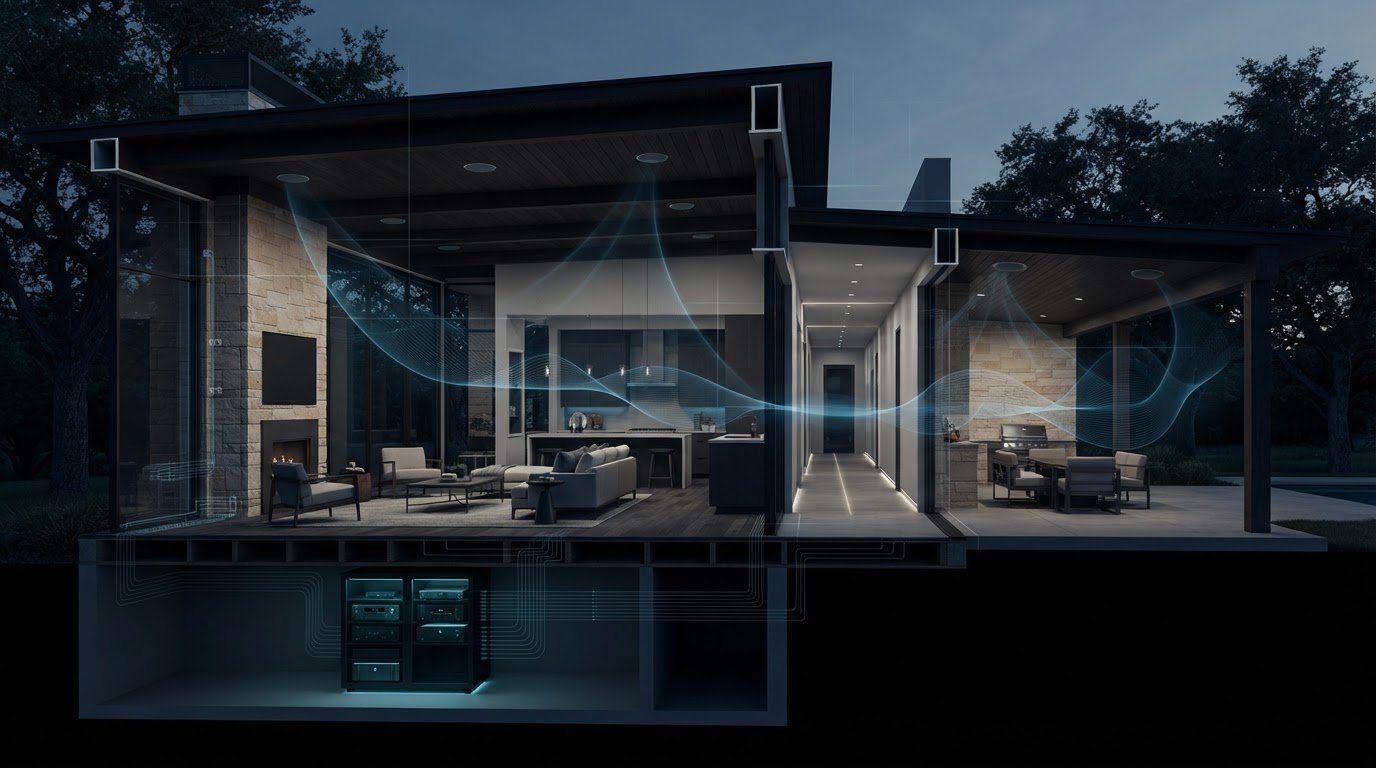
A whole-home audio system succeeds before the first speaker is installed. For a whole home audio installation Austin homeowners should begin with the architecture of the home: how sound should move between rooms, where equipment can sit discreetly, and how the system will fit the renovation or finished interiors.
Speaker placement, wiring, equipment locations, and control design all affect how natural the finished experience feels. Start by identifying where you listen, whether rooms need independent playback, and how much of the system should be visible. Those decisions help shape a design that works with the home instead of competing with it.
This guide explains how a whole-home audio project is planned, engineered, installed, and commissioned. You’ll learn how to map listening areas, consider the home’s network and AV needs, and coordinate installation with the property’s design. J3 Automated Systems brings those stages together under one accountable team, from system design through commissioning, for audio that feels cohesive rather than complicated.
Key Takeaways
- List the rooms and outdoor areas where you want audio, then decide which zones should share a source and which need independent playback.
- Map everyday listening habits and room layouts before selecting equipment or planning infrastructure.
- Compare wired, wireless, and hybrid approaches based on installation needs, existing conditions, and project stage.
- For whole home audio installation Austin, coordinate the plan with whether the home is being built, renovated, or already complete.
- J3 connects planning, engineering, installation, and commissioning to bring whole-property audio together as a cohesive system.
What Whole Home Audio Installation in Austin Should Solve
Whole-home audio is a coordinated system for selected rooms or outdoor areas, bringing music to the places where people spend time. Rather than treating every speaker as a separate setup, the design connects listening spaces through a shared system. Depending on the design, several rooms can play the same source, or different zones can play different audio at the same time.
That flexibility matters in daily life. One person might listen to music in the kitchen while another prefers quiet in a nearby study. Audio might follow the household from bedroom to breakfast area in the morning, or create a consistent atmosphere between indoor living spaces and a patio when hosting. The system should support those routines without making control another task.
For whole home audio installation Austin projects, the right scope depends on the property, listening habits, and desired level of integration. A carefully selected set of zones can be more useful than placing speakers in every room. Aim to make sound intentional: present where it adds to an experience, contained where privacy or quiet matters, and simple to manage as people move through the home.
Which rooms belong in an Austin whole-home audio plan?
Start with frequently used spaces, then consider secondary rooms and outdoor listening areas. For each space, note its purpose, typical listening habits, and whether it should share audio with nearby rooms.
- Everyday spaces: Kitchens, living areas, and primary bedrooms may support regular background listening.
- Secondary spaces: Offices or guest rooms may need independent control, occasional use, or no audio.
- Outdoor areas: Patios and other listening spaces can extend the experience beyond the interior, with their own zone in the plan.
Separate everyday listening from dedicated cinema or media-room needs. Consider whether adjoining spaces should share audio or remain distinct, especially when household members have different routines. A simple room list with each space’s purpose and desired level of control is a useful starting point.
How is whole-home audio different from a home theater?
Distributed audio serves selected rooms across a home, supporting music and other listening as people move between spaces. A home theater is organized around a dedicated viewing experience, with distinct priorities for sound, picture, and room design. The systems can be considered together, but one doesn’t replace the other. J3’s cinema-grade home theater design guide explores the planning considerations for a private screening space.
Zones connect these different uses. Some systems distribute one shared source to multiple zones; others allow different sources to play in different zones. The Understanding Multi-Room Audio Systems overview explains common multi-room arrangements. For a household, the practical question is how much independence each space needs: coordinated playback for hosting, separate choices for everyday routines, or a balance of both.
Define those needs before settling on the system’s scope. A room-by-room plan helps distinguish essential listening areas from optional ones, account for privacy, and clarify how audio should transition between spaces. That gives the installation a purpose beyond simply adding speakers.
How Austin Whole Home Audio Systems Are Planned and Engineered
A successful design connects the listening experience to the home’s physical and digital infrastructure. Planning a whole home audio installation Austin project starts with how each space will be used, then translates those needs into zones, equipment locations, connectivity, and installation details. Room dimensions, ceiling and wall construction, the project’s stage, and available equipment areas all influence the plan. Decisions made early help align the system with the architecture instead of forcing it into place later.
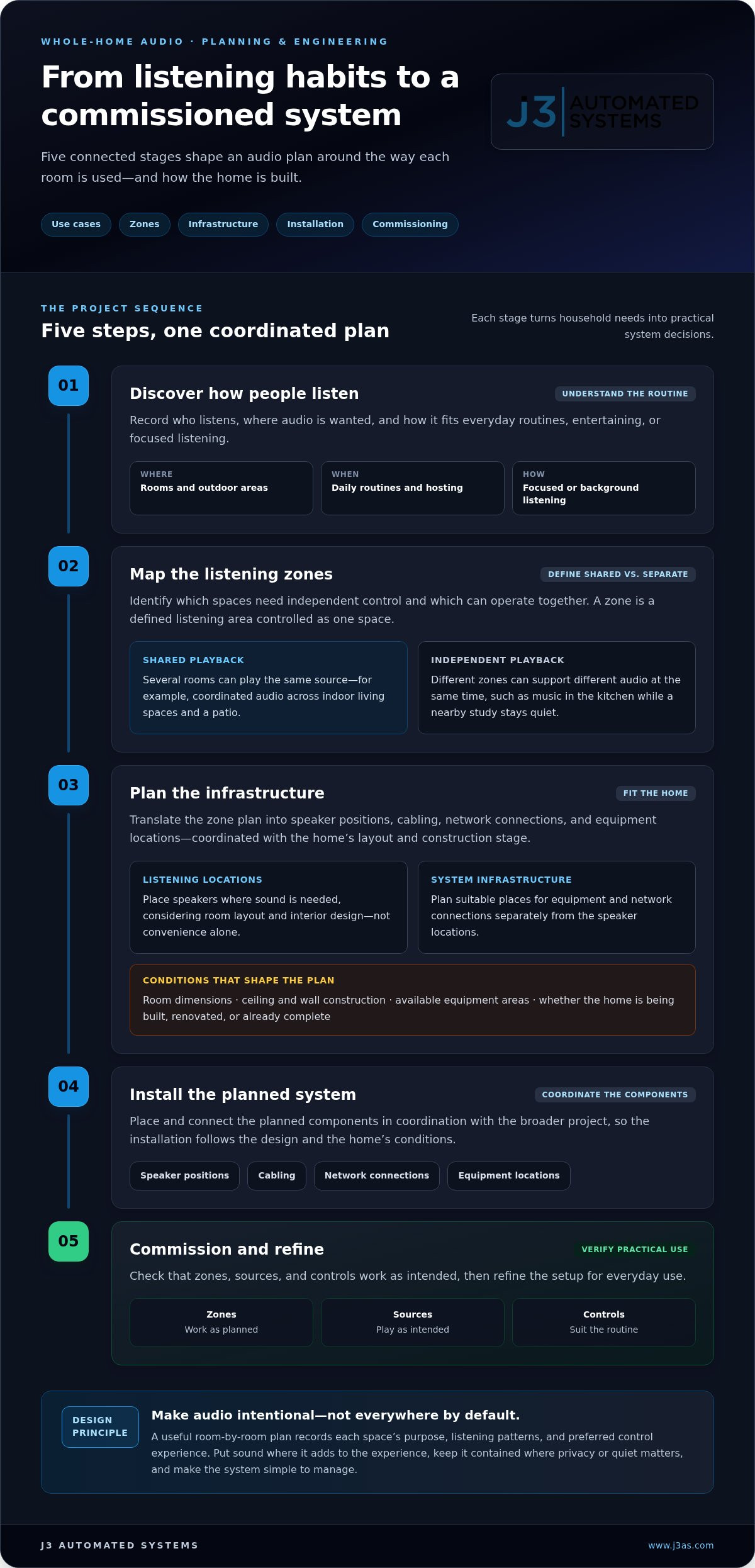
A useful project sequence is:
- Discover use cases. Record who listens, where, and how audio fits daily routines, entertaining, or focused listening.
- Map zones. Identify spaces that need independent control and those that can operate together.
- Plan infrastructure. Coordinate speaker positions, cabling, network connections, and equipment locations with the home’s layout and construction stage.
- Install the system. Place and connect the planned components in coordination with the broader project.
- Commission the system. Verify that zones, sources, and controls work as intended, then refine the setup for practical use.
An audio zone is a defined listening area that can be controlled as one space, allowing sound to follow the room’s use without dictating what happens elsewhere. Depending on the system design, zones may share audio or operate independently. The Crutchfield's Guide to Multi-Room Audio outlines common system approaches; the engineering plan accounts for how those choices fit the property.
What should a room-by-room audio plan include?
A useful plan records each room’s purpose, typical listening patterns, and preferred control experience. It should also distinguish listening locations from system infrastructure. Speakers belong where sound is needed, while centralized or distributed equipment and network connections need suitable locations of their own. Consider speaker positions in relation to room layout and interior design, rather than choosing a spot solely because it is convenient. Include outdoor areas when their different conditions and uses are part of the design.
Why coordinate audio with networking and construction?
Connected audio depends on planned connectivity as well as speakers and equipment. Mapping network connections alongside the audio design helps identify where infrastructure must reach and where system equipment can be accommodated. Early coordination is especially useful during construction or renovation, when cable routes and equipment locations can be aligned with the building work. In a completed home, planning helps shape an approach around existing conditions. J3 considers audio alongside networking so the system’s physical layout and connections work as one plan. Its high-performance residential networking guide explores network planning for connected residential systems.
With the design established, J3 carries the project through engineering, installation, and commissioning. Explore J3’s integrated systems approach to see how whole-property audio is planned in context.
Wired, Wireless, and Zoned Audio: Choosing the Right Austin Approach
Choosing an audio approach is about matching infrastructure to the home, not declaring one technology best. A new build may allow cable routes to be planned alongside construction, while a completed home may call for a design that works with its existing structure. Wired and wireless elements can also coexist in a hybrid system. For whole home audio installation Austin projects, the right balance depends on the rooms, connectivity, and the household’s preferred experience.
Use the comparison below as a starting point. It describes planning considerations, not a universal ranking. The property and project scope determine which approach fits.
| Approach | Planning considerations | Suitable project context |
|---|---|---|
| Wired | Plan cable routes, speaker positions, and equipment locations around the building structure. | New construction or renovation where infrastructure can be coordinated with the work. |
| Wireless | Consider network coverage, connection needs, and how each listening area will be controlled. | Projects where flexibility and existing-home conditions shape the design. |
| Hybrid | Coordinate wired and wireless areas as one system, accounting for each room’s infrastructure. | Homes where different spaces have different installation constraints or uses. |
Multi-room audio doesn’t have to mean complicated controls. The system’s structure should reflect how people use it: select a room or group of rooms, choose the intended source, and adjust playback through a consistent control experience. Clear zone names and thoughtful grouping make day-to-day operation more intuitive. The aim is to make the options understandable without asking household members to learn the underlying technology.
When does wired audio make sense in a home?
New construction and renovation can create opportunities to coordinate cable routes before walls and finishes are complete. That allows speaker and equipment locations to be planned in relation to the rooms and overall design. In an existing home, the structure and project scope influence practical routes and installation choices. A wired approach may suit some spaces, while others may call for a different solution.
What should homeowners weigh with wireless or hybrid audio?
Wireless audio makes network coverage part of the system plan, so connectivity should be considered alongside room use and control. A hybrid design can account for differences between rooms: one space may be straightforward to wire during a renovation, while another may have constraints that favor a wireless connection. Choose based on the space and its needs, not the technology label alone. J3’s system planning brings room needs, infrastructure, and control into one coordinated design.
As you compare options, focus on the experience each room needs and the conditions the property presents. That keeps the decision grounded in architecture and use rather than turning it into a contest between wired and wireless technology.
What to Expect During Whole Home Audio Installation in Austin
A well-managed installation follows the project design from initial discovery through final system checks. The details at each stage depend on the home, construction schedule, and agreed scope. Before installation begins, the team aligns on the intended rooms, system layout, equipment locations, and how controls should support daily use.
Discovery, design coordination, installation, and commissioning move the audio project from agreed plans to a system checked for real-world use. The stages typically include:
- Project discovery: Review the property, listening priorities, and existing or planned construction.
- Design coordination: Align the room plan, infrastructure, equipment locations, and installation scope.
- Installation: Complete the planned work in coordination with the home and other project activity.
- Commissioning: Check system operation and controls against the agreed design, then make adjustments needed for the intended use.
Commissioning matters because a system is more than its installed components. It compares the project plan with how rooms, zones, sources, and controls operate together. J3 provides end-to-end design, installation, and commissioning, keeping those stages connected instead of leaving the homeowner to reconcile separate handoffs.
How does installation fit a new build or renovation?
Early planning brings audio infrastructure into the wider construction conversation. Room plans help coordinate speaker locations and cable routes, while equipment locations can be considered alongside the home’s layout. Finish-sensitive areas benefit from clear coordination before work reaches them. The installation sequence follows the property’s construction schedule and project scope, so audio work can align with other trades and milestones rather than proceed as a disconnected task.
What happens when adding audio to an existing Austin home?
Existing walls, ceilings, and equipment locations shape routing and installation choices. A tailored plan can prioritize the rooms that matter most, then define whether additional areas belong in the project now or later. This avoids assuming every home needs identical work. The design responds to the structure and intended experience, with installation planned around the home as it stands.
Across project types, the scope and conditions determine installation details. A new build may allow infrastructure to be coordinated with construction; a renovation must work within its defined scope; and a completed home requires decisions shaped by existing finishes and structure. Commissioning then checks that the system functions according to the agreed plan, including expected room groupings and controls.
For a coordinated path from design through commissioning, plan your whole-home audio project with J3.
Plan Whole Home Audio Installation with J3 in Austin
A thoughtful whole-home audio project needs more than a collection of rooms and equipment. It needs a team that can connect household priorities with the property’s layout, infrastructure, and intended listening experience, then carry that plan through implementation. J3 Automated Systems designs, engineers, installs, and commissions whole-property audio for clients across Texas, including Austin.
For a whole home audio installation Austin project, discovery gives the design its direction. Establish which spaces matter most, how the home is used, and what the project stage allows. A household planning a new build may coordinate audio with construction; an owner of a completed home may want to focus first on a few high-use areas. Those different starting points call for different project plans.
How does J3 bring the audio project together?
J3 starts by understanding the property and the listening experience the household wants. That context informs the system plan: which areas to serve, how the system should be organized, and where audio infrastructure and equipment belong. J3 then engineers and installs the integrated design, followed by commissioning to check that the completed system operates in line with the project plan.
Audio can also be considered alongside AV and networking when the project calls for it. That coordination helps align connected systems and the home’s infrastructure without losing sight of the listening experience. The result is a roadmap tailored to the property and household priorities, rather than a standard layout applied to every home.
Prepare a few practical details to make the initial discussion useful:
- Property context: Share whether the home is being planned, renovated, or already complete, along with relevant room plans.
- Listening priorities: Identify the spaces you use most and how audio should support everyday routines or entertaining.
- Project preferences: Describe how you want to manage playback and whether other AV or networking considerations belong in the scope.
These details connect what you want to hear with the physical conditions of the home. They also give the project team a clear basis for mapping priorities, engineering the system, and coordinating installation and commissioning as one continuous effort.
What is the next step for an Austin audio project?
Share your property context, current project stage, and listening priorities with J3. The initial conversation can shape a tailored project roadmap, clarifying how the design should respond to your home and what matters most in the finished experience. J3 serves Austin as part of its Texas-wide whole-property audio work.
Discuss your whole-home audio project with J3 to begin shaping a coordinated plan from discovery through commissioning.
Shape the Listening Experience You Want
Start by defining what you want the home to feel like when audio is in use. Should music provide a quiet backdrop, create energy for guests, or remain available without intruding on rooms meant for focus? Those priorities give the system a human purpose and keep decisions centered on daily experience rather than equipment alone.
A whole home audio installation Austin homeowners will appreciate starts with a clear point of view: where sound belongs, how it should fit the home, and what level of control feels comfortable. You don’t need every technical choice settled before taking the next step. A concise picture of the desired experience gives the project meaningful direction.
J3 can translate that direction into a considered project plan, with system design, installation, and commissioning connected under one team. Discuss your whole-home audio project with J3 and take the first step toward audio that feels naturally at home in your space.
Frequently Asked Questions
How much does whole-home audio installation cost in Austin?
The cost depends on the project’s scope, so whole home audio installation Austin doesn’t have one standard price. The number of listening areas, the home’s existing infrastructure, equipment locations, and level of system integration all shape the design and installation work. A focused setup for a few rooms differs from a broader property-wide plan. Defining priorities and project conditions helps establish a scope that reflects the home rather than a generic package.
Can whole-home audio play different music in different rooms?
Yes, a system can support different audio in different rooms if its sources and zone design allow for it. For example, someone might listen to a podcast in a home office while music plays in the kitchen. The design determines how much independence each space has and how listeners select content. Decide which rooms need separate playback and which can share a source so the system matches household routines.
Is wired or wireless audio better for a whole-home system?
Neither approach is automatically better; the right fit depends on the property and project. Wiring can be coordinated with construction or renovation, while wireless connections make network coverage an important planning factor. A hybrid system may suit homes where conditions differ from room to room. Consider the home’s structure, connectivity, installation scope, and how each listening area should function rather than choosing by technology label.
Can whole-home audio be installed in an existing Austin home?
Yes. An existing home can be designed for whole-property audio, with the installation plan shaped by its construction and finishes. A homeowner might begin with the kitchen and main living area, then decide whether a study or patio belongs in the project. Reviewing the home’s layout helps guide routing and equipment placement. The system can be tailored to existing conditions instead of assuming every room needs the same treatment.
How long does whole-home audio installation take?
There isn’t one fixed installation duration; it depends on the project scope and the home’s construction schedule. A project coordinated with a new build or renovation follows the relevant work sequence, while an existing home has different access and installation considerations. J3 serves Austin, San Antonio, New Braunfels, Seguin, Bandera, Boerne, and San Marcos. The project plan provides the basis for setting expectations.
What is the difference between whole-home audio and a home theater?
Whole-home audio supports listening across selected areas of a property, while a home theater is centered on a dedicated viewing space. A theater brings picture, sound, and room design together for a focused entertainment experience; distributed audio serves a broader range of everyday listening situations. A home can include both, with each designed for its intended use. Keeping those purposes distinct helps avoid expecting background music zones to serve as a cinema system.
Can outdoor areas be included in a whole-home audio system?
Yes, outdoor listening areas can be included when the design accounts for their specific conditions and use. A covered patio, for instance, may have different placement and coverage needs from an interior lounge. Planning should consider how the outdoor zone connects to the rest of the system, where people will listen, and how its controls fit household routines. That helps make the space feel intentionally included rather than like an afterthought.