The Future of Home Automation in Austin: 2026 Trends and Integration Insights
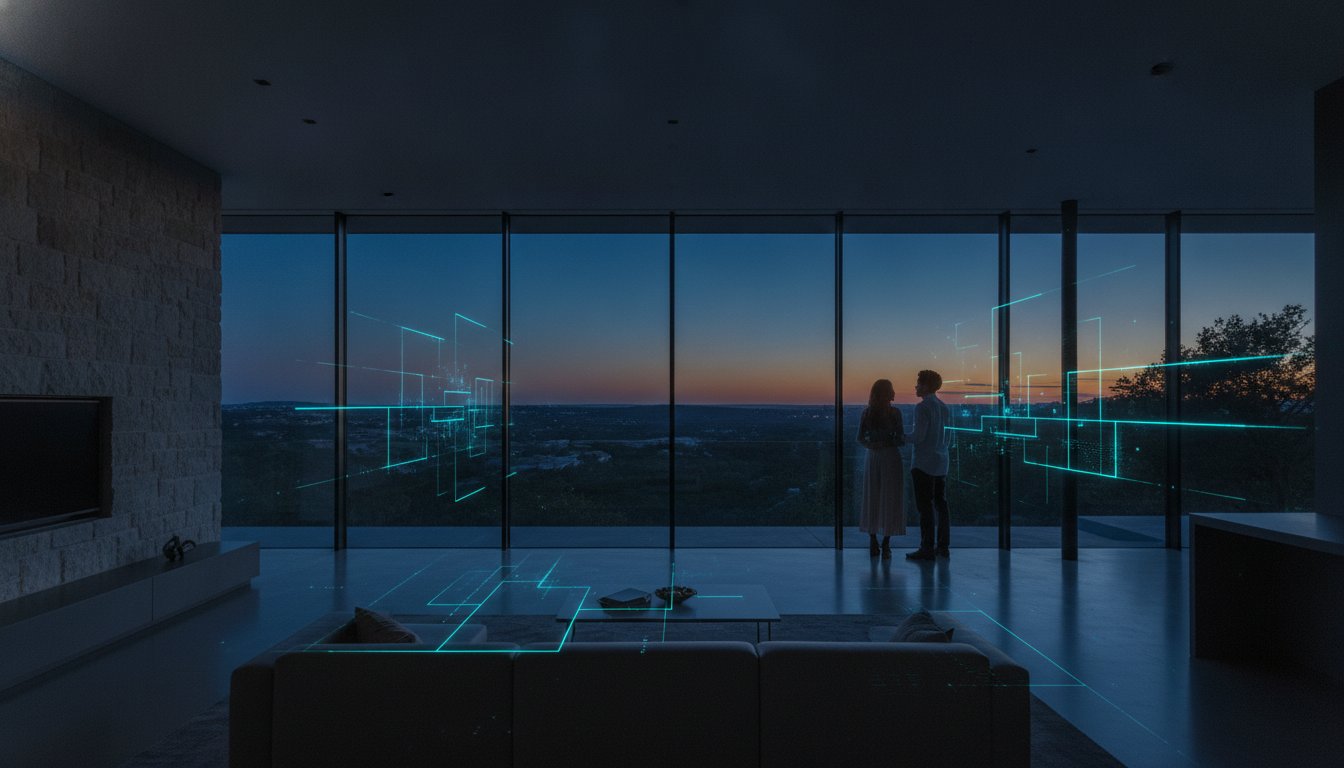
What if your home understood your intentions before you even stepped through the front door? In the evolving landscape of home automation austin, the standard of luxury has shifted from manual control to deep, predictive intelligence. Many owners of Austin’s premier estates have felt the frustration of fragmented systems that fail to communicate or enterprise-grade WiFi that drops the moment you move behind a limestone wall. You've likely experienced the visual clutter of hardware that disrupts a carefully curated architectural aesthetic, leaving you with a collection of gadgets rather than a cohesive environment.
It's time for a living experience where technology is felt but never seen, operating with a level of reliability that matches the craftsmanship of your home. This guide explores how predictive AI, invisible engineering, and the 2026 "limited energy" standards are creating a new era of effortless luxury. You'll discover how a single point of accountability in design and maintenance can transform your property into a high-performance sanctuary that anticipates your needs and protects your privacy through local, edge-based processing.
Key Takeaways
- Understand how 2026 standards for home automation austin have evolved from reactive gadgets into a unified, engineered ecosystem that anticipates your lifestyle.
- Explore the emergence of invisible technology and predictive AI that seamlessly adjusts lighting and climate based on environmental patterns.
- Learn why enterprise-grade networking and resilient wiring are the non-negotiable foundations for estates exceeding 5,000 square feet.
- Discover the design strategies used to create high-performance outdoor sanctuaries and private cinemas that maintain architectural integrity.
- Master the integration roadmap to ensure a single point of accountability from initial engineering through final commissioning.
The Evolution of Austin Home Automation in 2026
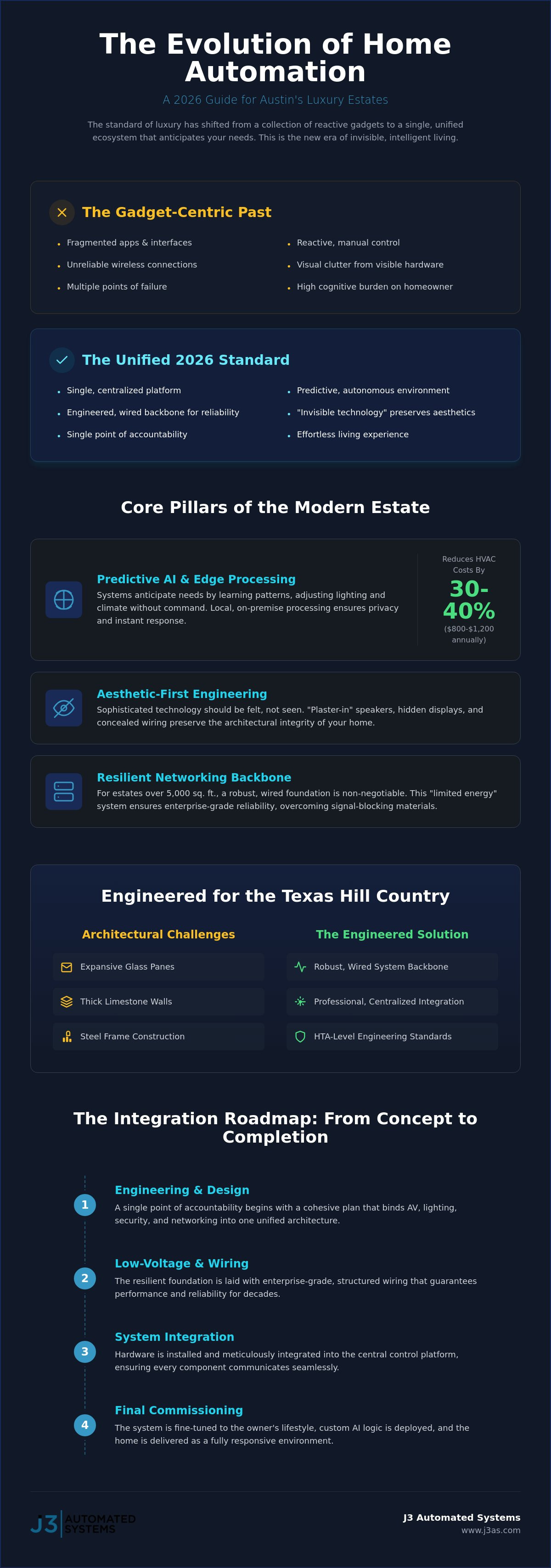
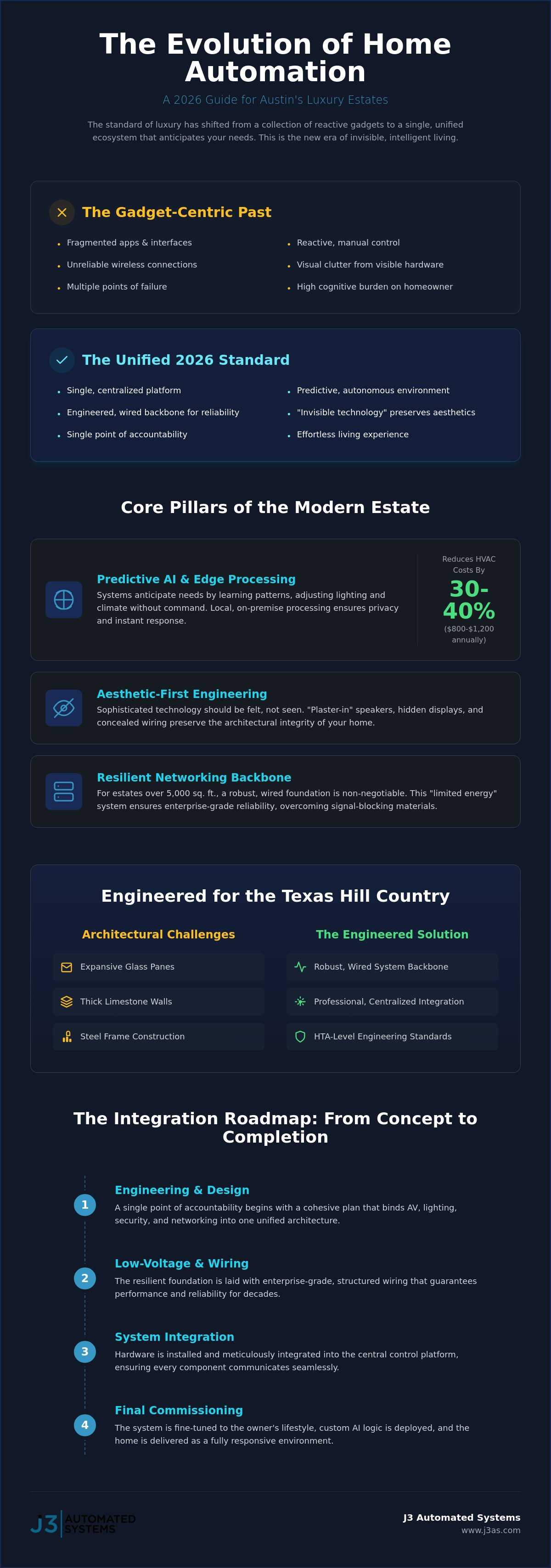
Modern home automation is no longer a collection of disparate devices. In the context of home automation austin, 2026 represents a pivot point where systems move from reactive tools to unified ecosystems. While previous years focused on individual "smart" gadgets, today's luxury estates require a singular, engineered architecture. This integration binds audio-visual components, lighting, and security into a fluid environment that operates as one. It's a fundamental shift from managing a house to living in a responsive space.
The "gadget-centric" DIY approach often results in a digital graveyard of fragmented apps and unreliable connections. Professional integration eliminates this friction. By replacing multiple interfaces with a centralized platform, we remove the cognitive burden from the homeowner. This shift is particularly evident in Austin’s high-end residential projects, where the desire for "invisible technology" has become the baseline. Technology should serve the architecture, not clutter it. Centralized control ensures that every system talks to the others, creating a harmony that off-the-shelf products simply can't replicate.
From Remote Controls to Predictive Living
The era of searching for a remote control or scrolling through a phone to dim lights is ending. Autonomous home environments now rely on sophisticated sensor arrays that monitor occupancy, light levels, and even atmospheric conditions. These systems anticipate your needs. If the Texas sun begins to heat the great room, the shades adjust automatically. When you enter a room, the lighting scene transitions based on the time of day and your personal habits. The "smart home" has matured into an intelligent estate that acts on your behalf without a single command.
The Austin Luxury Market Standards
Estates in Westlake, Lakeway, and Tarrytown present unique engineering challenges. Modern Texas Hill Country architecture often features expansive glass, steel frames, and thick stone walls. These materials are notoriously hostile to standard wireless signals. Meeting HTA-level standards in these environments requires a robust, wired backbone. The 2026 National Electrical Code now classifies these converged power and data systems as "limited energy" systems, acknowledging their complexity. Homeowners in these premier zip codes demand systems that respect the clean lines of their interiors while delivering enterprise-grade performance. It's about achieving a balance between high-performance capability and a minimalist, clutter-free aesthetic.
Emerging Trends: Predictive AI and Invisible Technology
The standard for home automation austin has transitioned from reactive control to predictive intelligence. In 2026, luxury estates no longer rely on manual inputs to maintain comfort. Instead, systems utilize local Edge AI to process environmental data within the home, ensuring both privacy and speed. This intelligence manages lighting and climate by adapting to circadian rhythms and real-time weather patterns. For Austin residents, this is an economic necessity as much as a luxury. Predictive energy management systems can reduce HVAC costs by 30% to 40%, which often results in $800 to $1,200 in annual savings during the intense Texas summers.
Custom AI Integration for Home Management
Modern home management now mirrors enterprise-level operations. We see a move toward bespoke internal tools that act as a digital concierge for the property. AI business process integration for residential management is the deployment of custom software and automated logic to synchronize estate operations with the specific lifestyle of the owner. These systems don't just wait for a command; they proactively manage energy consumption and schedule maintenance before a failure occurs. This level of custom AI development ensures that the technology remains an asset rather than a burden.
Aesthetic-First Engineering
The most sophisticated technology is the kind you cannot see. Austin’s architectural landscape, particularly in areas like Westlake, demands that systems preserve the design integrity of the home. Invisible audio solutions, such as "plaster-in" speakers, deliver high-fidelity sound through walls without a visible grille. Hidden displays emerge from custom cabinetry or disappear behind artwork when not in use. According to the latest smart home trends, the focus has shifted entirely toward this "invisible" integration. Automated shading systems are now engineered to retract into dedicated architectural pockets, ensuring that the transition between indoor and outdoor spaces remains seamless. This approach allows interior designers to work without the traditional constraints of hardware placement.
Security has also become frictionless through biometric integration. Facial recognition and palm-vein scanning provide secure access to the property without the need for keys or codes. These systems work in tandem with the home’s predictive logic, adjusting lighting and temperature the moment an authorized resident is identified. It's a holistic approach that prioritizes the human experience over the hardware itself, removing the friction typical of older, fragmented security platforms.
The Architectural Backbone: Resilient Networking and Low-Voltage
The success of a premium installation depends entirely on the invisible infrastructure within the walls. In the landscape of home automation austin, the distinction between a functional system and a flawless one lies in the architectural backbone. For properties exceeding 5,000 square feet, standard consumer networking equipment is fundamentally insufficient. These estates require enterprise-grade solutions designed to manage the complexity of modern digital life. Austin’s signature building materials, such as thick limestone and structural steel, act as natural barriers to wireless signals. Without a meticulously engineered network of wired access points, even the most expensive devices will suffer from latency and dropouts.
Resilience is the hallmark of a professional system. We design with redundancy in mind, ensuring that critical functions like security and climate control remain operational during power or internet outages. This level of planning moves the property from a collection of gadgets to a truly autonomous environment. It's about providing a sense of calm reliability where the technology simply works, regardless of external conditions.
High-Performance Residential Networking
Modern luxury living demands a network capable of supporting high-bandwidth activities simultaneously. Whether it's 8K video distribution or executive-level remote work, the demand for data is relentless. Achieving this requires high performance residential networking that provides consistent uptime and seamless roaming across the entire property. We utilize multiple access points and sophisticated hand-off protocols so that your devices stay connected as you move from the primary suite to the outdoor terrace. This eliminates the friction of dropped calls or buffering, creating a fluid digital experience that matches the physical elegance of the home.
Low-Voltage Infrastructure Design
The low-voltage wiring is the permanent nervous system of your home. While hardware like touchscreens and cameras may be updated every few years, the copper and fiber optic cables behind the drywall are intended to last for decades. This is why the wiring strategy matters more than the specific hardware selected at the time of construction. By implementing centralized equipment racks, we eliminate the "black boxes" and clutter often found in living spaces, moving the heat and noise to a dedicated, climate-controlled environment. This centralized approach is essential for the integration of automated lighting and shade control, allowing for a cleaner architectural finish. In 2026, the shift toward "limited energy" classifications in the National Electrical Code reinforces the need for professional engineering in home automation austin projects. It's a commitment to long-term functionality and structural intelligence.
Designing for the Austin Lifestyle: Outdoor Living and Private Cinema
Austin’s premier estates demand a lifestyle that dissolves the boundaries between indoor comfort and outdoor recreation. In the context of home automation austin, this means creating high-performance environments that are as capable on the patio as they are in the primary suite. Achieving this requires a holistic engineering approach that considers environmental stressors, acoustic integrity, and architectural aesthetics. This level of planning extends to the grounds, where precision irrigation systems—such as the custom designs from Sonora Sprinkler Inc.—ensure that the landscape remains as resilient and intelligent as the home's interior. Whether you're hosting an evening by the pool or a private screening, the technology must perform with absolute reliability while remaining subservient to the design of the home.
This pursuit of a refined life often includes the search for symbols that represent personal milestones and lasting elegance. For those ready to mark a new chapter in their lives, you can explore Halo Engagement Rings to find a piece that matches the high standards of your Texas estate.
The Private Cinema Experience
A true private cinema is more than a room with a projector; it's a meticulously engineered environment designed to rival professional screening rooms. This involves cinema-grade home theater design that prioritizes sound isolation and precision acoustic calibration. Engineering requirements for sound isolation in luxury homes involve specialized wall construction and acoustic decoupling to prevent low-frequency energy from migrating into adjacent living areas. We balance these technical demands with luxury interior aesthetics, using automated lighting to transition the space from a multi-purpose lounge to a dedicated movie night scene with a single touch. This creates a transformative experience where the hardware disappears, leaving only the immersion of the film.
Seamless Outdoor Integration
The Texas Hill Country lifestyle often centers around the pool, patio, and outdoor kitchen. Extending the smart home ecosystem to these areas requires weather-proof displays and integrated audio systems designed to overcome ambient environmental noise. To complement these technical features, many homeowners source specimen-grade greenery from specialists like Verdant Tree Farm to create an immediate sense of privacy and luxury. High-performance landscape lighting then serves a dual purpose, enhancing the architectural beauty of the property and its flora while providing a critical layer of security. These systems are programmed to adapt to the time of day, ensuring the property is always presented in its best light.
Connectivity is the most common failure point in outdoor living. We deploy weather-resistant networking hardware to ensure that your high-speed connection remains stable across the entire property. This allows for seamless transitions as you move between environments, ensuring that your music, video, and control interfaces follow you effortlessly. If you're ready to elevate your property's entertainment capabilities, consult with our engineering team to design a bespoke integration plan that matches your lifestyle.
Navigating the Integration Roadmap: Engineering to Commissioning
The transition from an architectural concept to a fully operational estate requires a level of precision that goes beyond simple equipment placement. In the sophisticated landscape of home automation austin, the most successful projects are defined by a single point of accountability. This approach ensures that the original design intent isn't lost during the physical installation or the final programming stages. By managing every aspect of the project lifecycle, we remove the burden from the homeowner and provide a clear path to a finished result that is both technically superior and aesthetically flawless. It's a fundamental shift from hiring a vendor to partnering with a consultant who understands the hidden connections between diverse systems.
One of the primary frustrations in the luxury market is the fragmentation of support. When a system fails, homeowners often find themselves caught between an electrician, a service provider, and a hardware manufacturer. We eliminate this friction. By acting as the primary steward of the technology, we provide a unified response to any challenge, including coordinating with essential local services like fastplumbing.ai, ensuring that the system remains as resilient as the day it was commissioned. This commitment to long-term functionality is what separates an engineered environment from a collection of gadgets.
Just as technical stewardship ensures your home’s performance, professional legal stewardship ensures your legacy is protected; for comprehensive guidance on Texas estate planning and business law, check out Massingill Attorneys & Counselors at Law.
The Discovery and Design Process
Mapping your lifestyle to a specific technology roadmap is the essential first step. We collaborate with architects and builders from the blueprint stage to ensure that the infrastructure is baked into the home’s DNA. This proactive planning prevents the need for invasive retrofits and ensures that sensors, speakers, and interfaces are perfectly aligned with the interior design. We address the common concern of system complexity by focusing on intuitive operation. If a system requires a manual to dim the lights or adjust the climate, the design has failed. Our goal is to create an environment that feels natural to every resident and guest, regardless of their technical proficiency.
Commissioning and Professional Support
The final phase of the roadmap is commissioning, which is the process of tuning the system to the specific nuances of the property. This involves more than just checking that devices are powered on. It’s the meticulous calibration of every lighting scene, climate zone, and occupancy sensor to ensure they work in perfect harmony. We refine the logic of the predictive AI to match the actual patterns of the household, ensuring that the technology stays ahead of your needs.
Beyond the handover, an intelligent home requires ongoing stewardship. Software maintenance and remote monitoring are non-negotiable components of a high-performance system. We provide proactive support that identifies and resolves potential issues before they cause downtime, ensuring that your property remains a sanctuary of reliability. Ready to engineer your intelligent home? Consult with J3 Automated Systems.
Engineering the Intelligent Estate
The transition toward a truly intelligent estate is no longer a matter of selecting the right hardware; it's a matter of engineering a unified, predictive environment. We've moved beyond the era of reactive controls into a landscape where invisible technology and custom software work in concert to simplify your lifestyle. Achieving this level of sophistication in home automation austin requires a foundation of resilient networking and a meticulous integration roadmap that respects the architectural integrity of your property.
By partnering with a single accountable team for both engineering and installation, you ensure that every sensor, speaker, and software interface operates with absolute precision. Our expertise in bespoke AI and high-performance residential networking allows us to bridge the gap between physical environments and digital intelligence, removing the friction of fragmented systems. Begin your intelligent home roadmap with J3 Automated Systems. Your home should be a sanctuary of effortless operation and lasting reliability.
Frequently Asked Questions
How much does a full home automation system cost in Austin?
Investment levels for home automation austin vary based on the scale of the property and the depth of integration required. Entry-level systems with basic predictive features typically begin around $2,500. For luxury estates requiring fully integrated lighting, climate, and AV ecosystems, industry data suggests costs often range between $50,000 and $120,000 or more depending on the complexity of the engineering and the quality of the components selected.
What is the best home automation platform for a luxury estate in 2026?
The ideal platform for a luxury estate is one that prioritizes centralized control over a collection of fragmented apps. While professional ecosystems like Savant or Crestron remain industry standards, the best solution in 2026 often includes custom software interfaces tailored to the specific operational needs of the property. This approach ensures that diverse systems like lighting, HVAC, and security are unified under a single, intuitive dashboard that reflects your lifestyle.
Can I integrate home automation into an existing Austin home or does it require new construction?
Automation can be integrated into both new constructions and existing residences through sophisticated retrofit techniques. While new builds allow for the seamless installation of a wired low-voltage backbone, modern wireless protocols like Matter and Thread 1.5 enable high-performance integration in historic or finished properties. We utilize specialized engineering to overcome the signal challenges posed by traditional Austin materials like stone and steel during the retrofit process.
What is the difference between enterprise-grade networking and standard home WiFi?
Enterprise-grade networking utilizes dedicated hardware and multiple hardwired access points to manage high-bandwidth traffic without latency. Standard home WiFi often relies on a single router that struggles with the structural interference of large estates. An enterprise system provides seamless roaming and consistent uptime, which is essential for 8K streaming and remote executive work that requires a resilient connection throughout every room and outdoor space.
How does home automation improve energy efficiency in the Texas climate?
Intelligent systems utilize predictive AI to manage HVAC and shading based on real-time weather patterns and solar gain. By automatically adjusting shades during peak sun hours and optimizing cooling cycles, these systems can reduce HVAC energy consumption by 30% to 40%. This proactive management is particularly effective in the intense Texas heat, where it translates to significant annual savings on residential electricity costs without sacrificing comfort.
What happens to my smart home if the internet goes down?
A professionally engineered system continues to function even during an internet outage by relying on local, on-device processing known as Edge AI. While remote access and cloud-based updates may temporarily pause, your essential functions like lighting scenes, climate schedules, and security protocols remain operational. This local architecture ensures that your home remains a functional sanctuary regardless of the status of external service providers.
Is it possible to hide all the wires and equipment in a luxury home automation setup?
Achieving a completely "invisible" technology experience is a hallmark of high-end home automation austin. We utilize centralized equipment racks located in climate-controlled utility spaces to remove hardware clutter from living areas. By employing "plaster-in" speakers and architectural shading pockets, the physical components of the system disappear into the structure of the home, allowing the interior design to remain the primary focus. This seamless aesthetic is only possible when paired with elite-level finishing, such as the interior and exterior work performed by Chaparro's Painting, LLC.
How long does the installation and commissioning process typically take?
The timeline for a comprehensive project follows a structured roadmap that typically spans several months, often aligning with the construction or renovation schedule. The initial rough-in of the low-voltage nervous system occurs during the early stages of building. The final installation and the critical commissioning phase, where every sensor and scene is tuned for precision, usually take two to four weeks depending on the scale of the estate.