Outdoor Entertainment Systems in New Braunfels for Pools and Patios
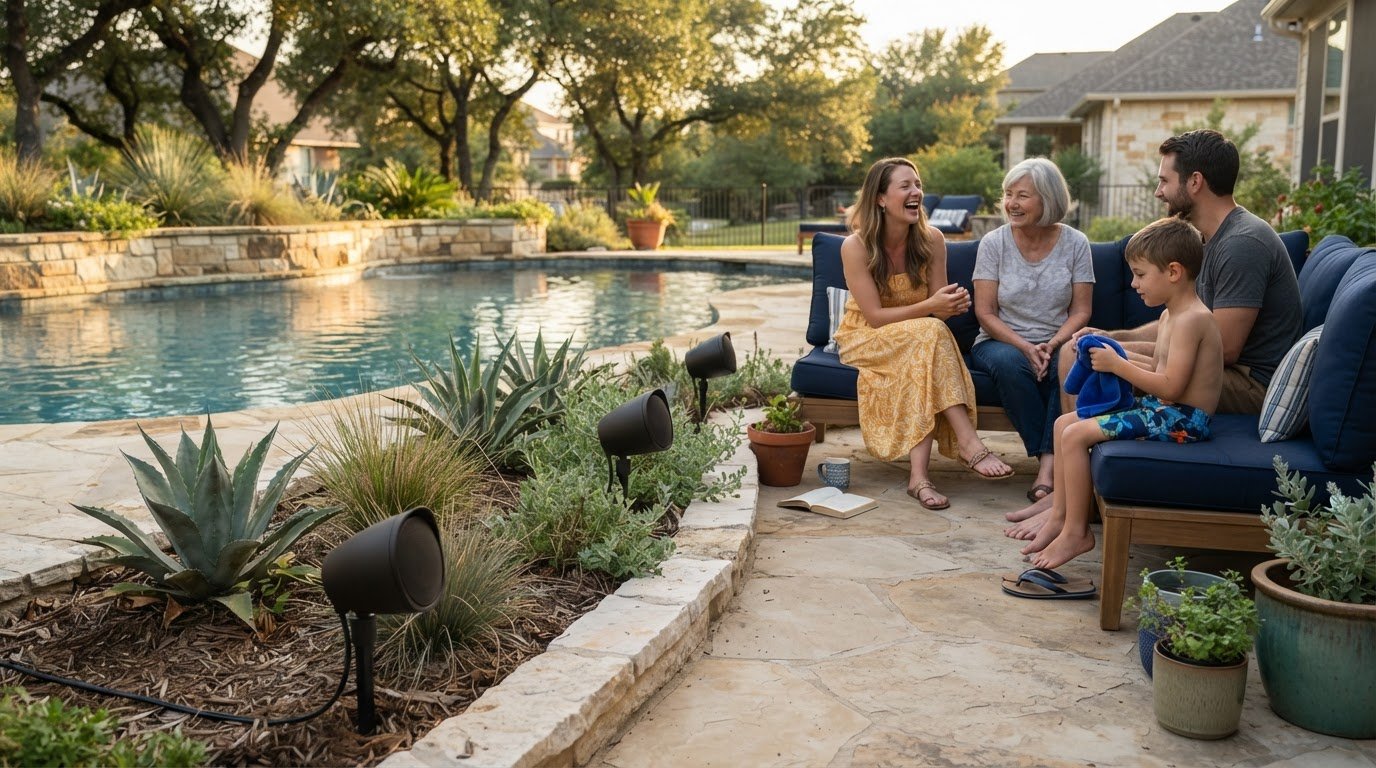
Yes, outdoor entertainment systems in New Braunfels can combine weather-rated speakers and a weatherproof TV for a poolside setting. A well-planned layout brings sound and viewing into the space while keeping wiring concealed within the structure or, where appropriate, routed underground. Account for exposure, sightlines, and how each area is used so the system feels integrated with the property.
Outdoor equipment needs to suit a different environment from indoor AV, and many homeowners want technology that doesn’t distract from the patio’s design. This guide covers how landscape audio can serve pools, patios, and outdoor kitchens; what to consider when placing speakers and a weatherproof TV; and how concealed wiring supports a clean installation. It also explains how planning outdoor audio as part of the home’s wider audio system can connect indoor and outdoor spaces.
Key Takeaways
- Plan audio around how each outdoor area is used, so sound coverage suits dining, swimming, and entertaining.
- Compare visible landscape speakers with flush-mounted options to find an approach that fits the setting.
- Position outdoor viewing for comfortable sightlines, while accounting for the area’s exposure and layout.
- Coordinate cable routes with the patio or kitchen design to keep the finished space visually orderly.
- Define the spaces, equipment, and control preferences you want before requesting a tailored project quote.
Landscape audio systems
Landscape audio extends listening beyond the walls, from a poolside lounge to an outdoor kitchen. Plan speaker locations, indoor connections, and controls together so each area works for its intended use.
Audio for Music, TV, and Movie Nights
Start with the activities the space needs to support. A patio used for background music has different priorities from a seating area arranged around a television. Map the listening areas first, then place speakers to serve them without turning the whole yard into one undifferentiated sound zone.
Outdoor speakers can connect to an existing home audio system, so music can play indoors and outdoors. A shared setup suits gatherings that move from the living room to the patio. The system can also connect to a music library or streaming services such as Spotify or Apple Music, with controls on a tablet or smartphone.
For movie nights, consider how outdoor audio relates to the screen and seating. Listeners should hear dialogue clearly from the viewing area, while music playback may need to cover a wider patio or poolside space. These uses can call for different speaker placements, even when they share a source or control point.
Texas weather and the landscape both shape the plan. Note exposed areas, covered seating, nearby planting, and proposed speaker locations before choosing a layout. Rock speakers offer one design option: shaped to resemble rocks, they blend into the surrounding landscape. Place them to serve the listening area, not simply beside the nearest garden bed.
Whole-Home and Poolside Audio
Whole-property audio brings indoor and outdoor listening into one considered plan. Connecting outdoor speakers to an existing audio system can let the same music continue outside. Decide whether the pool, patio, and kitchen should share playback or work as separate listening areas. That choice helps guide speaker placement and how household members use the system.
For a poolside setting, identify where people will listen: beside the water, at a dining table, or across a lounge area. Then consider how the landscape shapes those zones. A rock speaker may blend visually among planting, while another placement may better serve an open patio. Match the listening area to how the space looks and is used.
Smart home automation can bring audio controls into a broader home experience. A household may, for example, want to select music for an indoor room or outdoor area from a tablet or smartphone. Planning controls alongside the audio system clarifies how sources and listening zones work together, rather than treating each speaker as an isolated addition.
For a new home, plan wiring during construction rough-in, before the walls are closed. Consider speaker wire and connections between indoor and outdoor areas at this stage. In an existing home, start by identifying the current audio system and the outdoor locations it needs to serve. This inventory helps shape a practical plan for integrated landscape and poolside audio.
Outdoor speakers and weatherproof televisions for pool and patio areas
For a pool or patio, choose outdoor-rated equipment rather than assuming indoor AV can handle Texas weather. Plan the screen, speakers, mounting positions, and cable routes as one installation.
Outdoor TV Installation and Weather Ratings
For Texas conditions, choose a weatherproof TV designed for outdoor use. Standard indoor TVs aren’t built for the durability or brightness needed outdoors. Match the screen’s position to the seating area, and consider whether direct sun, a covered patio, or changing light will affect viewing.
During home theater installation, plan the mount around stable support, comfortable sightlines, and access to connections. A screen facing the dining table may not work well for pool loungers. Decide which seating area matters most before choosing the TV position, then plan sound for that viewing zone.
Weather-Resistant Speakers and Equipment
Outdoor speakers need enclosures designed for exposure. Rust-proof metal and sealed enclosures help protect their technical components from water. Choose positions based on the listening area, such as poolside seating or an outdoor kitchen, rather than placing speakers wherever installation seems easiest.
Compare the intended use, enclosure construction, and how each speaker will fit the landscape. A weather-rated speaker is more suitable than an indoor model in an exposed location. Coordinate the TV and speakers so music, movie dialogue, and seating work together.
Sun Exposure and Weather Protection
Before mounting equipment, observe the patio at different times of day. Note when direct sunlight reaches the proposed screen and whether a covered area offers a better viewing position. Sun exposure affects how comfortably people can see the display, so consider screen orientation and seating before installation.
Map areas exposed to rain and other weather, too. A covered location may reduce direct exposure, while open poolside areas need equipment designed for outdoor use. Consider nearby planting, walkways, and furniture when placing speakers. The layout should serve the space without obstructing movement or disrupting the landscape.
Features, Safety, and Installation Planning
Compare outdoor ratings, screen visibility in the planned location, speaker enclosures, mounting positions, and control options. Electrical work may be needed if existing power or cable routes don’t reach the chosen locations, where guidance from power quality specialists such as Energy Control Systems can help ensure expensive outdoor AV hardware remains shielded from electrical disturbances. Permit requirements depend on the specific work and local rules, so don’t assume every installation follows the same process.
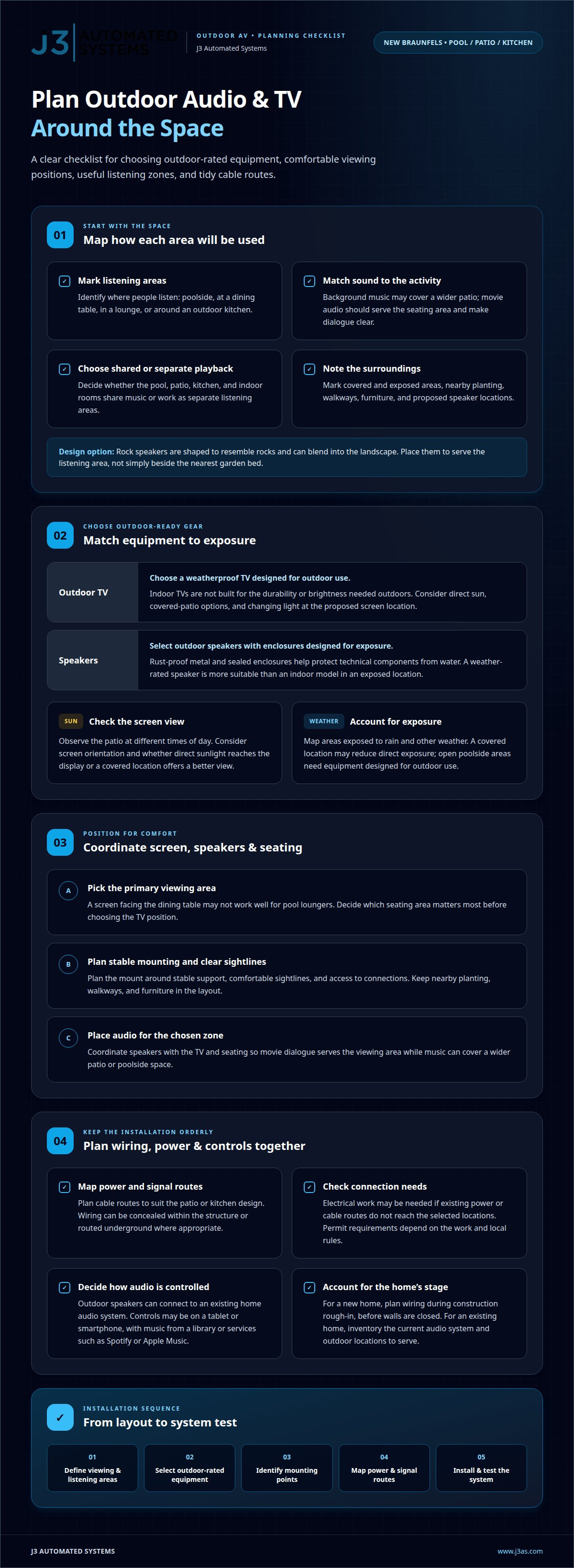
Plan the installation in sequence: define viewing and listening areas, select outdoor-rated equipment, identify mounting points, map power and signal routes, then install and test the system. Plan connections and wiring for their exposure and placement. Secure mounting and suitable weather protection are essential for outdoor equipment.
- Start with use: Identify whether the area is for television, music, or both.
- Map conditions: Note sun exposure, cover, seating, and speaker locations.
- Coordinate the system: Align the screen, sound, mounting, and cable routes before installation.
Clean, concealed wiring for patios and outdoor kitchens
Visible cables can disrupt a carefully designed patio and complicate movement through it. Plan routes around the outdoor kitchen, seating, and audio locations rather than letting wiring cross an open walkway. Outdoor AV wiring can run through the structure instead of across the patio, keeping the route aligned with the architecture and intended use of the space.
Start by mapping each connection point. Mark the outdoor speakers, television, and any kitchen or patio area that needs network access. Trace how each route can reach its equipment without exposed runs across walkways and gathering spaces. A simple site plan connects these points with the home’s indoor spaces and highlights where construction access may matter.
For a new home, arrange pre-wiring during construction rough-in, before the walls are closed. This stage can accommodate structured wiring, speaker wire, HDMI runs, and networking cable. For larger or more complex properties, incorporating proven audio-visual and ICT system design principles from specialists like AVC Principles ensures integrated pathways are mapped before finished surfaces limit access. For example, plan cable paths for a future patio screen and speakers before the surrounding structure is complete.
Existing patios need a different route assessment. Identify accessible pathways through the structure, the distance between equipment and connection points, and any surfaces that need to remain clear. A route through the structure may work depending on the layout. Where outdoor sound-system wires cross the ground, they can be installed underground with specialized connectors designed to prevent water from entering and causing damage.
Patios and outdoor kitchens also benefit from separating cable routes by purpose. Speaker wire serves audio; HDMI runs connect video equipment; networking cable supports network connections. Showing these needs in the plan clarifies which endpoints each route serves. It also helps avoid improvising a cable path after stonework, cabinetry, or other finished elements are in place.
Before installation, review the planned routes against how the space will function. A cable path, for instance, shouldn’t become an exposed line between a kitchen counter and dining table. Mark connection points and concealed pathways on the same plan. For whole-property audio, coordinating outdoor speaker wiring with indoor connections can link both spaces without visible cabling across the patio.
- During construction: Plan structured wiring, speaker wire, HDMI, and networking routes before walls close.
- For outdoor sound: Route wiring through the structure or underground with specialized connectors where needed.
- For finished spaces: Map equipment locations and pathways before deciding where cables should run.
Choosing a professional and requesting a quote
A useful quote starts with a clear project scope: the areas, equipment, connections, and installation work required. In New Braunfels, compare proposals by what they include, not just by the headline.
Finding New Braunfels Installers
Outdoor TV, speaker, and home theater projects are typically handled by AV integrators or home media professionals. Houzz lists 203 home automation and home media professionals serving the New Braunfels, Texas area. Use that figure as local market context, then assess whether a proposed scope addresses outdoor equipment and installation.
Look for a plan that coordinates equipment, placement, wiring, and indoor system integration. A poolside TV and patio speakers, for example, may need coordinated audio, video, and cable routing. A consultation should establish where people watch or listen, what equipment is involved, and how the finished system fits the property.
For a meaningful comparison, review the same elements in each proposal: equipment categories, mounting locations, cable paths, system connections, installation tasks, and testing. A proposal that only lists a television and speakers leaves key project decisions unclear. Request a written scope explaining how those elements work together.
Warranty and maintenance terms belong in the written project details, too. Review what the equipment warranty covers, how installation work is addressed, and whether ongoing maintenance is included. Terms vary by proposal, so compare the written coverage rather than assuming every project includes the same protection or service.
Discounts, Financing, and Quotes
Seasonal discounts and financing aren’t standard features to assume for an outdoor AV project. Treat them as specific quote terms: the proposal should state any offer, its conditions, and the financing arrangement, if available.
To request a useful quote, prepare a short project brief before the consultation. Note whether you want television, music, or both; list the pool, patio, or kitchen areas; and identify existing equipment that may connect to the system. Photos or a simple property plan can help clarify locations and routes.
Ask the proposal to distinguish equipment selection from installation scope. It should identify planned screen and speaker locations, the wiring approach, system connections, and work for each space. If comparing options, make sure each quote covers the same rooms and functions. Otherwise, a lower figure may reflect a narrower project, not a more efficient design.
Include practical details in your request, such as whether the patio is covered, where viewers sit, and how indoor audio connects. These help shape a tailored scope. Before deciding, review the quote for clear responsibilities, warranty terms, maintenance provisions, and any stated discount or financing conditions.
Outdoor entertainment for patios, pools, and kitchens
A successful outdoor layout treats the patio, pool, and kitchen as distinct spaces with connected uses. Start by mapping where people gather, watch, prepare food, and move between areas.
Consider each space separately. A poolside lounge may need a clear screen view, while the outdoor kitchen needs audio that reaches the dining table. Mark those locations on a simple site plan, including usual seating positions and walking paths. This helps coordinate viewing, listening, and movement before deciding where equipment goes.
For a covered patio, in-wall or in-ceiling speakers can sit flush with the surrounding material. This keeps their profile aligned with the finished surface instead of adding a freestanding object beside seating. Consider where the ceiling or wall meets the seating area and how sound should reach people around a table. Placement should follow the room’s function and architecture.
At the outdoor kitchen, plan audio around the cook’s position, serving counter, and nearby dining seats. A speaker that serves only the counter, for example, may leave guests at the table outside the listening area. Map work and seating zones, then decide whether they need shared playback or distinct coverage. This helps the audio suit how the kitchen is used.
A pool and patio often support different activities at the same time. One group may be watching a program while others move between the water and lounge. Direct the screen toward its intended audience, then position speakers to serve them without turning the whole yard into one listening zone. Landscape features and furniture can help define these areas in the plan.
Plan for transitions, too. A gathering may begin indoors, move to the patio, and finish near the outdoor kitchen. An integrated audio plan can support that flow by considering indoor and outdoor listening areas together. Decide which locations should share music, where viewing belongs, and which controls should be convenient at each gathering point.
Before installation, walk the property with the plan in hand. Check the proposed screen view from actual seats, compare speaker positions with furniture and kitchen activity, and trace how people move between areas. Adjust the layout if the screen faces away from the main seating or a speaker conflicts with a cooking or serving zone. These checks turn a general idea into a coordinated space.
Use a site plan to align screens, flush-mounted speakers, seating, and circulation before selecting final positions. Plan your outdoor audio layout around the way each space is used, so the system complements the property rather than dictating its arrangement.
J3 Automated Systems: Cinema-grade home theater
J3 Automated Systems is a natural next step when outdoor audio needs to work alongside a broader home entertainment plan. Its whole-property audio can connect listening across indoor and outdoor spaces, while cinema-grade home theater serves dedicated viewing environments.
Consider this approach when planning more than a standalone patio setup, such as music throughout the property or an outdoor system that complements a home theater. Automated lighting and shades can also support indoor viewing, while commercial building automation (HVAC/BMS) serves building-control needs.
Share the spaces you want to connect, how you plan to use them, and what equipment is already in place. Contact J3 Automated Systems to discuss an integrated approach for your property.
Shape the outdoor experience you want
The best next step is to define how you want the property to feel in use. Picture a quiet evening on the patio, a lively poolside gathering, or a meal that moves between the kitchen and dining area. Those priorities can guide how an outdoor entertainment system in New Braunfels fits the home, instead of letting equipment choices dictate the experience.
Write down the spaces you want to connect, what you’ll watch or listen to, and how you expect people to move through them. Bring those priorities to a project discussion so the system can be planned as part of the property’s wider design. A clear brief gives the process a useful starting point and aligns technical choices with daily life.
For a considered conversation about your project, contact J3 Automated Systems. The right plan can make outdoor spaces feel like a natural extension of home.
Frequently Asked Questions
Can you install outdoor speakers and a TV by the pool?
Yes, an outdoor entertainment system can combine poolside speakers with an outdoor-rated television. Plan around how people use the area, such as watching from a shaded lounge or listening from a nearby dining space. The design should account for viewing position, equipment exposure, and how sound and video fit together. A clear description of the poolside setup helps define the project.
Do you serve Canyon Lake, Gruene, Fischer, and Wimberley?
J3 Automated Systems’ stated service area includes New Braunfels, San Antonio, Seguin, Bandera, Boerne, Austin, and San Marcos. Canyon Lake, Gruene, Fischer, and Wimberley are outside that stated service area. For a project in one of the listed locations, include the property’s location and the spaces you want to connect in your project description. That context helps frame the request around the property and system.
How much does an outdoor entertainment system cost in New Braunfels?
The price depends on the project and is provided after a quote request. Key factors include the number and type of outdoor spaces, equipment selection, existing systems to connect, and installation scope. Patio audio differs from a project coordinating a poolside screen, speakers, and connections across indoor and outdoor areas. A clear scope gives the quote a useful basis.
Can outdoor entertainment systems connect to existing Wi-Fi, streaming services, and smart home systems?
Outdoor speakers can connect to music libraries and streaming services such as Spotify or Apple Music, with controls on a tablet or smartphone. Whole-property audio and resilient networking are relevant to planning connected spaces. The role of existing Wi-Fi and smart-home equipment depends on the system design and devices involved, so describe your current setup and how you want to control audio across the property.
What outdoor TVs and weatherproof speakers are best for the Texas climate?
Choose a weatherproof TV designed for outdoor use and weather-rated speakers with rust-proof metal and sealed enclosures. Position the screen with sun exposure and seating in mind, and place speakers to serve the intended listening areas.