Benefits of Smart Building Technology for Comfort and Care
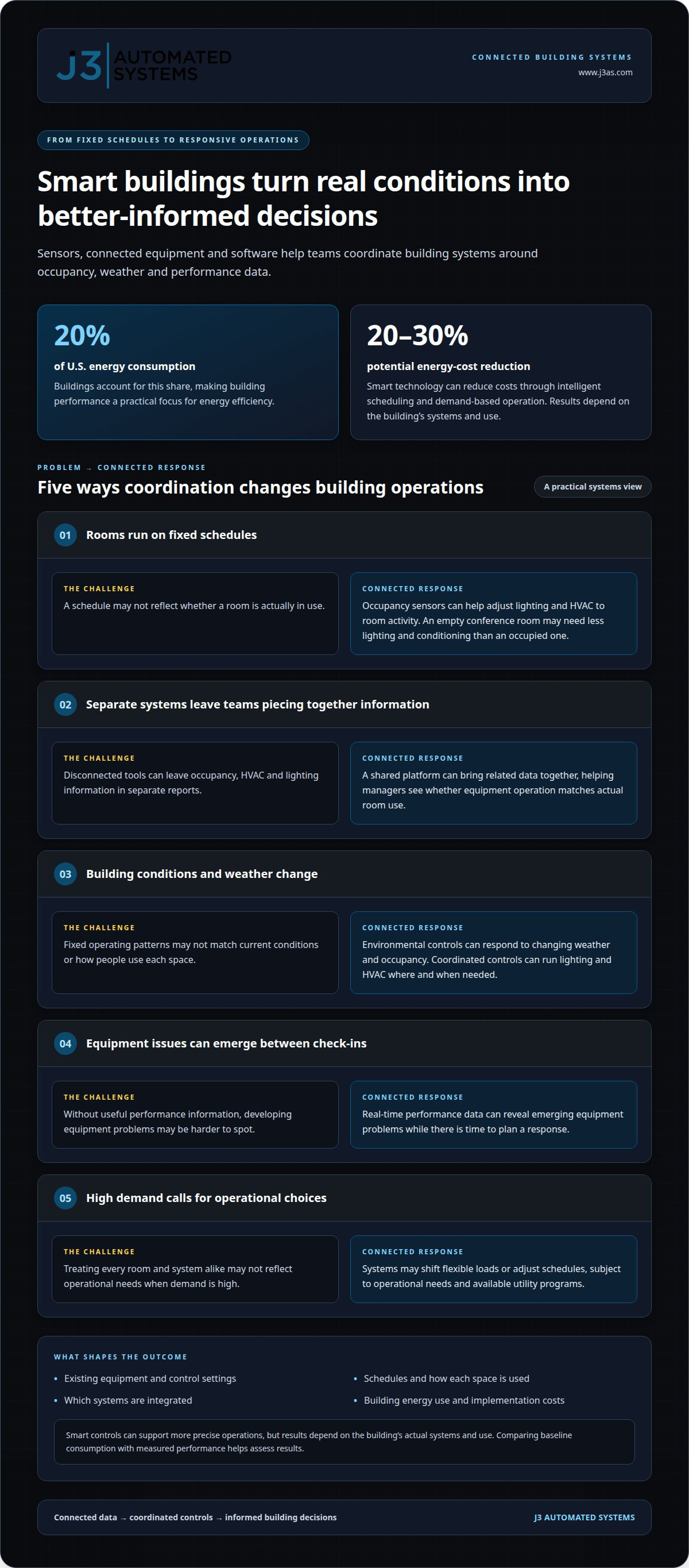
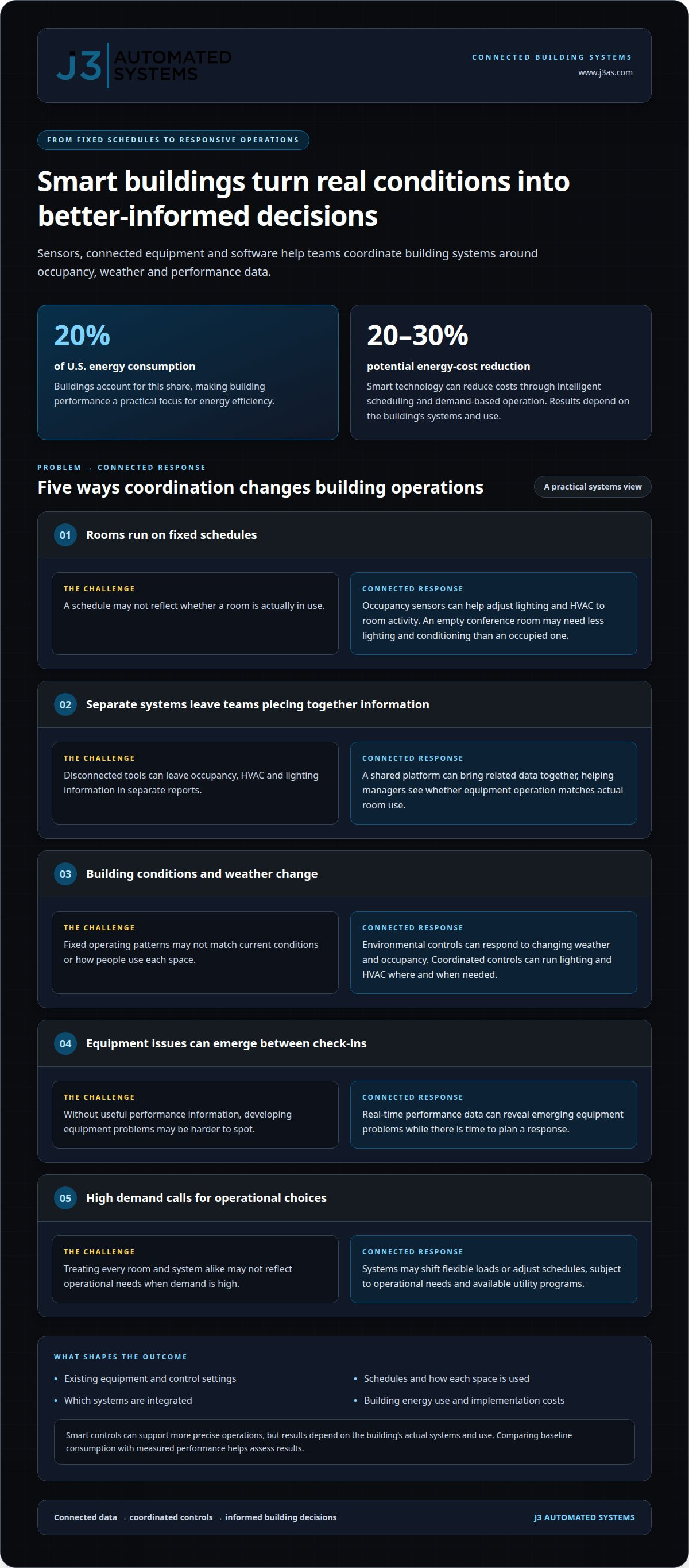
A building’s intelligence comes from how well its systems work together. In the United States, buildings account for 20% of energy consumption, and the benefits of smart building technology include coordinating lighting, heating, ventilation, and other systems around real conditions rather than fixed schedules. Connected sensors and real-time data help building teams see what’s happening and respond with greater precision.
It’s natural to think first about convenience: a comfortable room, lighting that responds to occupancy, or fewer equipment surprises. Those benefits matter, but they’re part of a larger network that can support indoor conditions, more efficient operations, and informed maintenance.
This article explains what makes a building smart and how connected systems turn data into practical decisions. You’ll learn how intelligent networks can support occupant comfort, help teams spot equipment issues, and reveal opportunities to use space and energy more effectively, as well as where building automation fits.
Key Takeaways
- See how occupancy-responsive lighting and HVAC can align building operations with how spaces are actually used.
- Understand how connected systems turn live building data into clearer operational decisions.
- Learn how monitoring temperature, humidity, and indoor air conditions can support occupant comfort.
- Explore how equipment-performance data can help teams identify developing maintenance needs before they become disruptive.
- Discover how analytics and intelligent networks can reveal opportunities to use space and building systems more effectively.
What are smart buildings?
A smart building connects systems such as lighting, heating, ventilation, and access controls so they can respond to building conditions. Sensors and building management systems collect information, then use it to adjust operations or help managers make decisions. In the United States, buildings account for 20% of energy consumption, making building performance a practical focus for energy efficiency.
Occupancy-responsive controls show how coordination works. A sensor detects whether a room is in use, and the system can adjust lighting and HVAC accordingly. An empty conference room, for example, may need less lighting and conditioning than an occupied one. Environmental controls can also respond to changing weather instead of relying only on fixed schedules. These adjustments can reduce energy consumption while maintaining comfortable conditions where people are present.
Energy efficiency depends on more than installing sensors. Schedules, control settings, existing equipment, and how people use each space all shape the result. Smart building technology can reduce energy costs by 20-30% through intelligent scheduling and demand-based operation, though outcomes depend on the building’s actual systems and use. More precise controls, alongside smart metering options from providers such as smartmitaz, can also give managers a clearer view of where energy is being consumed and when operations can be adjusted.
Connected controls can also support energy demand management. When demand is high, systems may shift flexible loads or adjust schedules, subject to operational needs and available utility programs. This helps a facility respond to grid conditions without treating every room or system alike. The practical value is coordinating demand while preserving the service each space requires.
There is no single U.S. regulation, incentive, or building standard that applies identically to every smart-building project. Requirements and available programs depend on location, building use, and the systems involved, so these factors shape the applicable decisions.
Installation costs depend on the building, existing equipment, integrated systems, and project scope. Return on investment and payback also depend on energy use, operating schedules, equipment condition, and implementation costs. Comparing baseline consumption with measured performance helps assess the results.
Smart controls can support safety by helping teams monitor occupancy and manage access through connected sensors and access-control systems. Cameras and motion sensors can add visibility into building activity. Privacy and cybersecurity risks include excessive collection of occupant data, unauthorized access, and insecure device connections. Access controls, encrypted communications, network segmentation, and compatibility planning help address those risks and reduce friction between systems.
Environmental controls can use occupancy and weather conditions to optimize energy use. Occupancy and environmental data can also help coordinate HVAC operation and cleaning schedules. Automated lighting and HVAC can run only where and when needed. More efficient energy use can support renewable energy integration and reduce carbon footprints.
Connected building systems and real-time data
A smart building connects sensors, equipment, and software so information can guide building operations. Real-time data helps managers understand how separate building systems interact, from HVAC performance to room occupancy.
System Components and Integration
Smart building components include sensors, connected equipment, communication networks, and software that gathers or displays system data. Software selection matters because it determines how information from different systems can be organized and used. A connected platform helps managers view related data together, while disconnected tools may leave them piecing together separate reports.
For example, occupancy sensors can provide room-use information alongside HVAC and lighting data. Managers can see whether equipment operation matches actual room activity. Integration also affects how easily a building adapts as needs change: systems designed to exchange useful information make later adjustments more coherent than isolated controls.
Building Management Automation
A building management system monitors and controls core systems, such as HVAC and lighting, through a shared interface. Automation applies operating rules to system data, helping the building respond without a manual adjustment for every change. This gives managers a clearer view of activity and a more coordinated way to manage routine operations.
For instance, a control sequence can use occupancy information to adjust room conditions. Managers can review energy-consumption data to identify possible waste, then consider changes to HVAC settings, equipment, or lighting. Real-time performance information can also reveal emerging equipment problems while there is time to plan a response.
Automation is only as useful as the quality and relevance of its inputs. Sensors collect information about conditions such as occupancy or equipment performance; software turns those readings into patterns managers can interpret. A useful system makes the link between a reading and an action clear. If a room appears unoccupied, for example, its controls can respond according to the building’s operating requirements.
Integration can support decisions beyond immediate control. Real-time energy monitoring helps facility managers identify opportunities to optimize operations. Data may reveal a schedule that no longer reflects how spaces are used, or equipment consuming energy without serving current demand. Managers can investigate those patterns and choose a response suited to the building.
Connected systems do not make every decision automatically. They coordinate information and, when configured, carry out defined control actions. Managers can interpret operating needs, assess unusual readings, and refine settings. This balance of automation and oversight helps building management respond to changing conditions without treating every space or system alike.
Occupant comfort and indoor air quality
Indoor comfort depends on more than a thermostat setting. Temperature, humidity, lighting, and air quality shape how occupants experience each room, while occupancy insights help show where conditions need attention.
Occupant Comfort and Indoor Environments
Indoor environmental monitoring uses sensors to track conditions such as temperature, humidity, and carbon dioxide. These readings matter because a meeting room, reception area, and private office can experience different conditions throughout the day. Room-level data gives building teams a more precise view than a single reading for an entire floor.
For example, a sensor can detect when a room becomes too hot or cold, allowing connected controls to adjust its temperature. Some advanced systems also use real-time data to adjust airflow and filtration, helping maintain carbon dioxide and particulate levels. These responses can support a more consistent indoor environment without treating every space alike.
Lighting also shapes the experience of a room. Some smart building systems adjust lighting to mimic natural light in support of users’ circadian rhythms. This makes lighting responsive to the indoor environment instead of leaving a room at one fixed setting throughout its use. The right design choice depends on how occupants use each space.
Occupancy Sensing and Space Utilization
Occupancy sensing shows how spaces function in practice. These insights matter because planned use and actual use can differ, affecting the comfort and suitability of work areas. For instance, recurring occupancy patterns may show that a team’s meeting space is busy while nearby rooms remain underused.
Managers can use these patterns to assess whether rooms support their assigned activities. A consistently full collaboration area may need different environmental settings than an intermittently used office. Occupancy data can also inform space utilization decisions, helping teams consider whether room layouts match observed use rather than assumptions.
Location analytics can add useful context when interpreted at the right level. A manager might compare patterns across floors or room types to identify where occupants gather, where conditions are often uncomfortable, and where a space serves a different purpose than expected. This provides a clearer basis for adjusting the indoor environment or reconsidering space design.
Comfort is a human experience, not simply a sensor reading. Temperature and humidity data identify conditions, while occupancy patterns help explain when and where they occur. Together, these insights help building teams make targeted adjustments. A room used for focused work, for example, may need a different lighting and temperature approach than a shared gathering space.
Predictive maintenance
Predictive maintenance uses equipment-performance data to identify developing problems and plan action before a failure disrupts operations. In facilities, this shifts maintenance from a calendar-only routine to decisions informed by how assets actually perform.
Connected equipment can collect operating information such as status changes, performance trends, or unusual readings. Monitoring these signals helps teams detect deviations from normal behavior and investigate the affected asset. For example, a ventilation unit showing a change in performance may warrant inspection before it stops serving its area. Connectivity makes these readings visible to building teams instead of leaving warning signs hidden between scheduled visits.
Detection is useful only when teams can act on it. A facility manager can review an alert, identify the equipment involved, and schedule an inspection or service task. A computerized maintenance management system can organize preventive maintenance schedules, work orders, and inventory. This creates a clearer link between an observed issue and the work needed to address it.
How can smart building systems reduce maintenance costs and equipment downtime? By identifying potential equipment problems early, teams can plan preventive action and rely less on disruptive emergency repairs. Performance data can also help facilities prioritize work according to asset condition and operating needs.
Predictive maintenance addresses several equipment risks. An undetected fault may develop into a failure, interrupt service, or require urgent repair. Early signals give teams an opportunity to assess the issue while the system is still operating. Not every change indicates a fault; teams interpret readings in context, including equipment history and operating conditions.
Maintenance planning can also support asset lifespan and system performance. When teams identify recurring faults, they can investigate whether operating settings, equipment condition, or maintenance timing contributes to the pattern. That understanding can inform decisions throughout an asset’s lifecycle and help distinguish an isolated issue from a repeated performance concern.
AI-powered approaches can analyze building data to help identify patterns across connected equipment. Their value depends on useful input data and clear maintenance workflows, because an insight must lead to an appropriate decision. Facilities teams provide context: they assess an alert, determine its significance, and decide what work follows.
At Burj Khalifa, smart building services helped reduce total maintenance hours for mechanical assets by 40% and improved mechanical asset availability by almost 100%. This example illustrates how equipment data and responsive maintenance can support asset operations. For each facility, the practical focus is linking collected performance information to timely fault detection, planned work, and fewer disruptive failures.
Analytics, processors, and intelligent building networks
Analytics turn building data into operational insight, while processors and networks move information between systems. Together, they help managers connect patterns in occupancy, equipment performance, and energy use with practical decisions.
A processor handles information from connected devices so a building system can display or act on it. For example, occupancy readings and temperature data can help managers assess whether a room’s conditions match its use. Analytics add context by revealing patterns across rooms or operating periods. Instead of viewing one reading in isolation, teams can examine how space use relates to system performance.
Occupancy data can inform space utilization decisions. If activity patterns show that some work areas are heavily used while others remain quiet, managers can consider space redesigns, lease adjustments, or capital allocation. The right choices depend on how the building serves its occupants, but connected information provides a stronger operational picture than isolated observations.
Energy analytics can also help managers find opportunities to reduce energy costs. Real-time consumption data may reveal equipment running during low-use periods or settings that no longer match building demand. A manager can investigate the pattern, adjust schedules or controls, then review later data to understand how operations changed. This creates a practical cycle: observe, interpret, adjust, and assess.
Intelligent networks support this cycle by connecting sensors, processors, control systems, and analytics tools. A building management system may provide a shared view of core systems, while connected devices contribute additional information. The network is useful when relevant data can move between components in a form managers can interpret. Integration is central to turning connected equipment into coordinated building operations.
AI can extend analysis across multiple locations. AI-powered HVAC and connected building technologies were deployed across 600 Dollar Tree stores. For a multi-site operator, analytics can help surface patterns that may be harder to see when each facility is reviewed separately. The value is not simply collecting more data; it is identifying information that can support a useful operational decision.
Analytics have limits, too. A dashboard can show a temperature trend, but facilities teams still need to understand room use, operating needs, and the system behind the reading. Clear priorities help: identify which decisions the network should support, then focus data collection and analysis on them. This keeps intelligent systems tied to real building needs instead of adding complexity without purpose.
For a coordinated approach to building data, controls, and network integration, plan intelligent building automation around the decisions your facility needs to support.
J3 Automated Systems: Commercial building automation (HVAC/BMS)
J3 Automated Systems designs and builds commercial building automation that brings HVAC and building management systems into a coordinated approach. Turn to this service when separate controls make it difficult to understand building performance, respond to changing use, or manage operations as a connected whole.
System design can align building controls with a facility’s operating needs, supporting clearer oversight of HVAC performance and energy use. The right approach depends on existing equipment, how spaces are used, and which systems need to work together. Automated lighting and shades can also complement coordinated environmental control when it supports the building’s objectives.
If you’re considering a more integrated approach to building operations, contact J3 Automated Systems to discuss your commercial building automation needs.
Shape a More Responsive Building
Start by defining what a better-performing environment should make possible. For one property, that may mean more coordinated building operations; for another, a more considered experience across shared spaces and private rooms. Clear priorities shape an approach that fits how people use the building.
The benefits of smart building technology become more meaningful when systems support a deliberate experience, not simply more automation. J3 Automated Systems brings connected thinking to commercial building automation, while also offering cinema-grade home theater, whole-property audio, and automated lighting and shades for residential environments.
Whether you’re planning a new integration or refining an existing space, begin with the experience and operations you want to improve. Contact J3 Automated Systems to discuss a considered path forward and make your environment work more seamlessly for the people who use it.
Frequently Asked Questions
What are the main benefits of smart building technology?
The benefits of smart building technology include better coordination between building operations, clearer performance information, and more responsive indoor environments. A facility team can use connected systems to spot when operating schedules no longer match how a space is used. That can guide decisions about equipment, space planning, and maintenance priorities. The specific value depends on the building needs the systems are designed to address.
How much energy and utility cost can smart buildings save?
Smart building technology can cut energy costs by 20-30% through intelligent scheduling and demand-based operation. That figure is a potential, not a guaranteed result for every property. Actual utility savings depend on the building’s current energy use, equipment, operating schedules, and how controls respond to demand. Comparing utility use before and after changes helps show whether adjusted operations are reducing consumption.
How does smart building technology improve occupant comfort, health, and productivity?
Connected building systems can support occupant comfort by helping teams identify indoor conditions that need attention. If occupants report inconsistent comfort in particular areas, for example, room-level environmental information can help facilities teams investigate those locations instead of changing settings across the entire building. Monitoring can also support conditions associated with occupant health and productivity, while teams use their knowledge of the space to guide operational decisions.
How do smart buildings compare with traditional buildings in energy use and operating costs?
Traditional buildings often rely more on preset schedules and manual oversight, while smart buildings can use building data to align operations with actual demand. This can create opportunities to reduce unnecessary energy use and refine operating decisions. For a San Antonio property, results still depend on equipment, occupancy, weather, and utility costs. Comparing the building’s own energy use and operating patterns gives the clearest picture.
What is the return on investment and payback period for smart building upgrades?
Return on investment and payback depend on energy use, operating schedules, equipment condition, and implementation costs. Compare baseline consumption with measured performance to assess the result.