Automated Window Treatments for Olmos Park Homes and Businesses
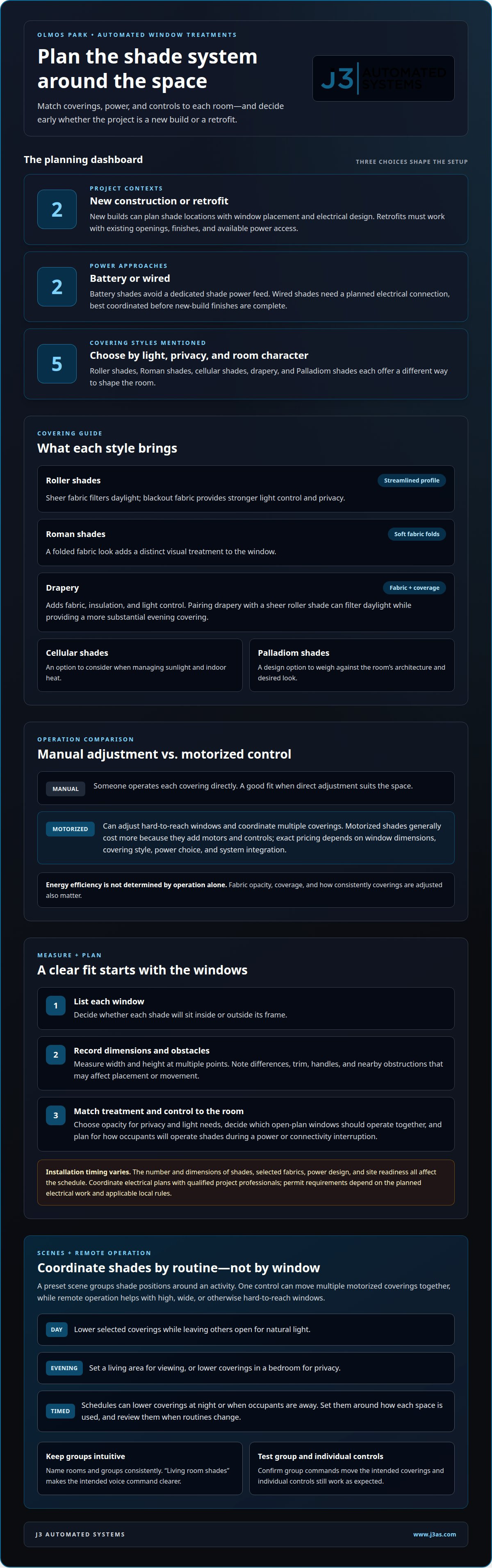
The best automated window treatments in Olmos Park balance light control, privacy, and how each room is used. Roller shades range from sheer to blackout, while Roman shades add soft fabric folds; cellular shades and drapery offer other ways to shape light and comfort. Motorized operation is especially useful for large or hard-to-reach windows, whether you are building new or retrofitting an existing space.
Choosing a covering is only part of the decision. Controls should simplify daily routines, not complicate them. Preset scenes can move multiple shades together, while remote operation lets you adjust them as needed. Integrating shades with home automation brings those controls into a broader plan. This guide explains how shade styles suit different spaces, what to consider in new construction and retrofits, and how timed adjustments can help manage sunlight and heat. You’ll also learn how a local consultation can help match coverings and controls to each room’s purpose.
Key Takeaways
- Match shade fabric and opacity to each room’s needs for light control, privacy, and appearance.
- Plan motorization early in a new build, or assess existing windows and controls when retrofitting.
- Use preset scenes and remote operation to adjust multiple coverings together or make changes room by room.
- Consider cellular shades, drapery, and timed adjustments when managing sunlight and indoor heat.
- A local consultation can help align window coverings and automation with the needs of a home or business.
Motorized shade options for new construction and retrofit projects
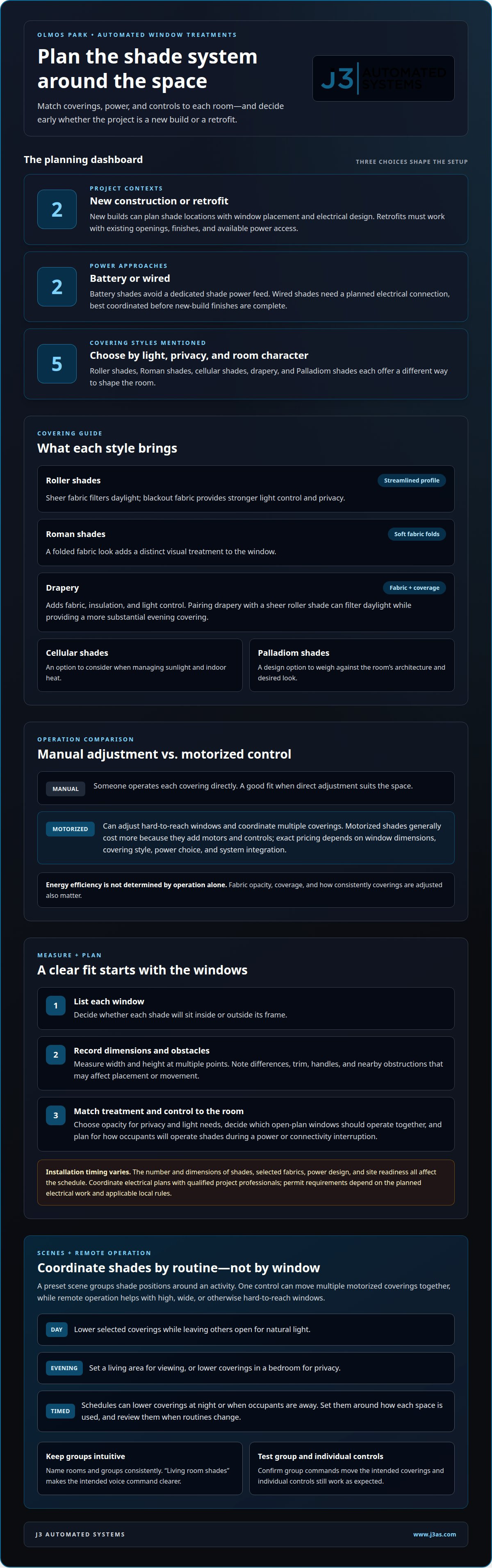
New construction lets you plan shades alongside window placement and electrical design. A retrofit must work with existing openings and finishes. In either case, fabric, power, and control choices shape how each room functions.
Drapery and Shade Styles
Roller shades have a streamlined profile, with sheer fabrics filtering daylight and blackout fabrics offering stronger light control and privacy. Roman shades arrange soft fabric in horizontal folds, while drapery adds fabric, insulation, and light control. Palladiom shades offer another design option to consider alongside the room’s architecture and desired look.
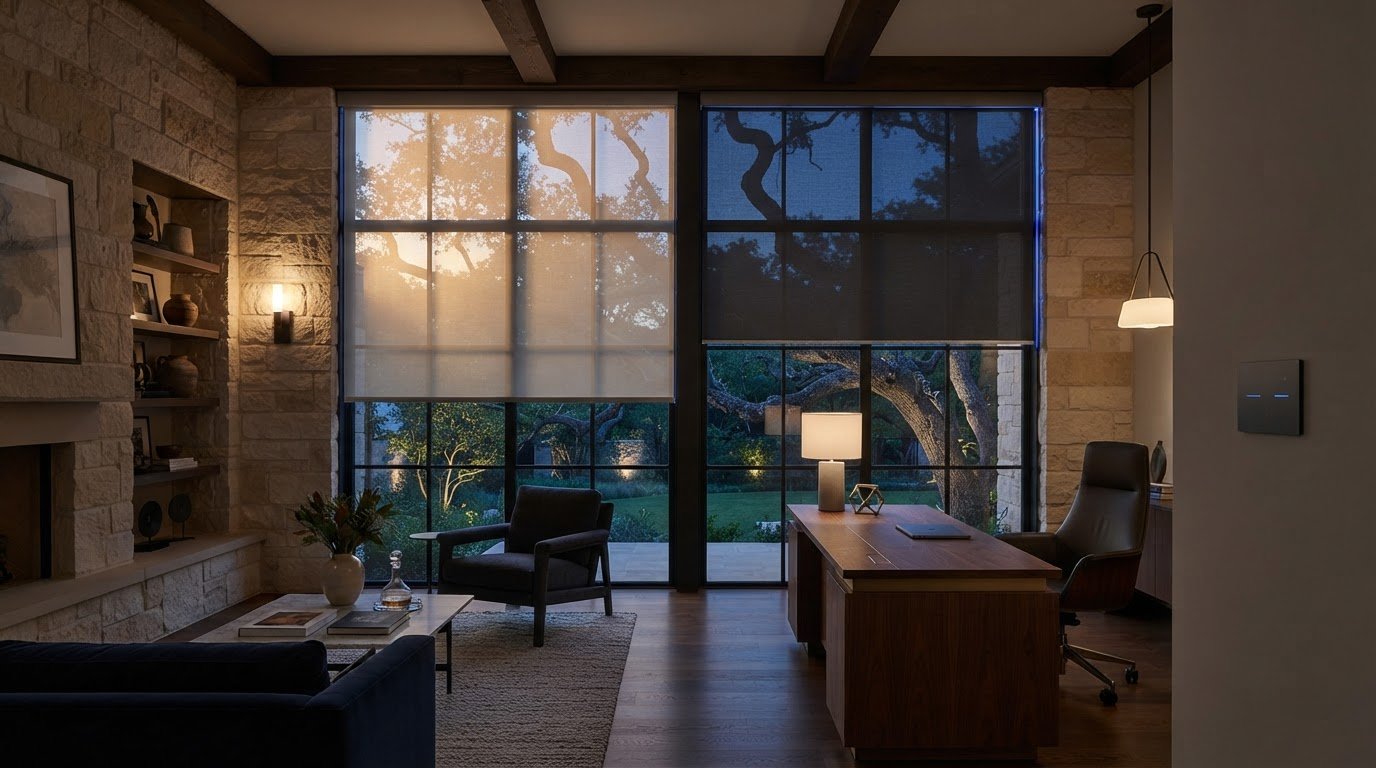
In an open-concept home, pair a sheer roller shade with drapery where you want filtered daylight and a more substantial evening covering. For inspiration on pairing custom window treatments with upscale architecture and interior finishes, design portfolios like pianta-design.com showcase how layered fabrics elevate high-end residential spaces. For new construction, plan treatments around window placement. In a retrofit, consider how existing trim and surrounding surfaces will affect the finished look.
Battery and Wired Power Options
Battery-operated shades avoid the need for a dedicated shade power feed, making them practical in existing rooms where you want to preserve finished walls. Wired shades need a planned electrical connection, so include their locations in new-build plans before finishes are complete. Choose based on the electrical layout, access, and preferred maintenance approach.
In Olmos Park, permit requirements depend on the planned electrical work and applicable local rules, not simply on whether a shade is motorized. Hardwired treatments need an electrical connection; battery models avoid adding a shade power feed. Coordinate wiring plans with qualified project professionals before installation.
Automated and Manual Blind Comparisons
Motorized shades generally cost more than manual blinds because they add motors and controls. Exact pricing depends on window dimensions, covering style, power choice, and system integration, and is provided after a quote request. Neither motorization nor manual operation alone determines energy efficiency; fabric opacity, coverage, and how consistently coverings are adjusted matter.
Manual blinds require someone to operate each covering, while automated shades can adjust hard-to-reach windows and support coordinated control. A preset, for example, can move multiple coverings together. Choose manual operation when direct adjustment suits the space; choose motorization when convenience or access is the priority.
Measuring and Choosing Automated Shades
Start by listing each window and deciding whether the shade will sit inside or outside its frame. Measure the opening’s width and height at multiple points, recording each dimension and any differences. Note trim, handles, and nearby obstructions because they can affect placement and movement.
Next, match the treatment to the room: sheer roller fabric filters daylight, blackout fabric offers greater light control, and Roman shades add folded fabric. In an open-plan layout, decide which windows should operate together. Accurate measurements and a clear control plan help define the right fit for your home.
Installation timing depends on the number and dimensions of the shades, selected fabrics, power design, and site readiness. A retrofit with existing power access differs from a new build that needs planned wiring. Motorization removes operating cords, which can pose a potential safety hazard for small children and pets. For privacy, choose fabric opacity by room. Also plan how occupants will operate shades if normal controls are unavailable because of a power or connectivity interruption.
Custom preset scenes and remote operation
A preset scene groups shade positions around an activity instead of treating every window separately. For example, a daytime scene could lower selected coverings while leaving others open for natural light. One button can control multiple motorized coverings at once, simplifying coordinated adjustments across connected rooms.
Start by listing the routines that matter in each space. A living area might have an open daytime setting and a lower-shade setting for evening viewing. A bedroom may use a privacy-focused position at night. These examples describe the intended scenes; exact shade positions depend on the windows, coverings, and household preferences.
Remote operation lets you adjust coverings without reaching individual windows. It is useful for high, wide, or otherwise hard-to-reach windows, and when you want to make a change from another area of the home. Keep controls easy to distinguish: occupants should know which one adjusts a single shade and which activates a group.
Voice commands offer another control option. Alexa voice commands can open motorized shades. Start with simple, recognizable commands and consistent names for rooms or shade groups. Naming a group “living room shades,” for example, makes the intended action easier to understand.
Motorized treatments can also work with home automation systems, bringing shades into a broader control plan. Before programming, decide which coverings should respond together and which should remain independent. In an open-plan home, kitchen and dining shades might share a scene, while a bedroom shade stays separate for privacy.
Automatic timers can lower coverings at night or when occupants are away. Set schedules around how each space is used rather than applying the same movement everywhere. For example, a living room might close in the evening while a room used later stays adjustable. Review schedules when household routines change.
For reliable everyday use, define scenes by purpose, assign intuitive names, and test each control after setup. Check that a group command moves the intended coverings, then verify individual controls still work as expected. A coordinated approach to integrated shade control can help align scenes, remote adjustments, and the home’s broader automation plan.
When reviewing the control plan, note how each covering operates as well as the scene it belongs to. Manual shades can use corded, cordless, or continuous-loop mechanisms. Include the operating method in household instructions so people can choose an appropriate way to adjust each covering instead of assuming every shade uses the same control. If a room has different covering types, make the distinctions clear in the control notes and keep the routine easy to follow.
As a final check, walk through ordinary activities and consider what someone should do when a scene does not suit the moment. Decide how to adjust one covering, return to a coordinated setting, and leave a shade independent when needed. Keep instructions brief and use consistent names for rooms and groups. Revisit them when controls change, and make sure every occupant can identify the intended action before relying on a routine.
Window coverings for homes and businesses
Choose coverings based on room function, window exposure, and who uses the space. In an Olmos Park home, a bedroom may prioritize privacy, while a shared living area needs flexible daylight control. A business may focus instead on consistent operation across reception areas, meeting rooms, or street-facing windows. Map those priorities before selecting fabrics or controls.
In a residence, consider how each room changes throughout the day. A living room facing a bright street may need adjustable light and privacy, while a bedroom may call for a covering that closes at night. In an open-plan interior, coordinate the look across connected spaces, then decide which windows need separate controls. This room-by-room plan helps avoid choosing one fabric or operating method for every opening. For homeowners seeking assistance with coordinating window treatments alongside broader residential finishes and material selections, MBlassingille Designs provides comprehensive interior design and consulting.
Base commercial shade decisions on daily use. A conference room, for example, may need coverings that reduce visual distractions during presentations, while a reception area may need to balance daylight and visitor privacy. Consider who will operate the shades and whether adjustments should be manual or scheduled. Automatic timers can lower coverings at night or when occupants are away, supporting a repeatable workplace routine.
Outdoor-facing windows call for different materials and placement. Exterior shades can use PVC-coated polyester or fiberglass and are designed for outdoor use. Consider them when you want to address sunlight before it reaches interior glazing. Match the covering to the window’s exposure and the building’s exterior design rather than treating it like an indoor fabric shade.
Manual coverings remain a good option where direct operation suits the room. They can use corded, cordless, or continuous-loop mechanisms. A rarely adjusted window may not need motorization, while a hard-to-reach opening may benefit from automated control. For a home with children or pets, motorization removes shade cords, which can pose a potential safety hazard. Choose an operating method that suits window access and household needs.
Use this planning sequence for each room or work area:
- Record the room’s purpose, privacy needs, and preferred daylight.
- Identify whether the window faces indoors, outdoors, or a public view.
- Choose between manual operation, remote adjustment, or scheduled movement.
- Align the covering style and fabric with nearby windows and finishes.
For example, a small office could use manual shades on accessible windows and scheduled motorized coverings in a hard-to-reach meeting room. A home might combine interior shades with outdoor-rated coverings where exposure calls for them. These choices let each covering suit its setting instead of imposing one operating approach across the property.
Window treatments for San Antonio heat and glare
San Antonio’s summer temperatures regularly reach the mid- to upper 90s, and triple-digit summer days are not uncommon. For Olmos Park homes and businesses, window coverings can help manage daylight and interior heat gain. Start by identifying rooms with strong sun exposure, uncomfortable brightness, or glare on screens, then match each window’s covering to its use.
Cellular shades can help reduce heat transfer because their honeycomb structure traps air. Consider them in rooms where limiting heat movement through the window is a priority. Weigh that need against desired light levels and privacy: a daytime workspace may need a different balance from a bedroom. You do not need to use one fabric or shade type in every room.
Motorized treatments can be programmed to adjust at times intended to manage interior heat gain. For example, a preset can lower selected coverings during a sun-exposed period, then raise them when daylight is welcome. Set schedules around how the space is used and when sunlight affects it. Review the timing as routines change rather than relying on one setting for every window.
Drapery adds another layer of control, providing insulation and light control while enhancing a room’s appearance. In a living area, combine drapery with a shade when you want both filtered daylight and a more substantial evening covering. In a meeting room, choose a treatment based on screen glare, privacy, and presentation needs.
Use a simple room-by-room assessment before selecting treatments:
- Note which windows bring direct sunlight into the room.
- Identify glare-sensitive activities, such as computer work or presentations.
- Decide whether the priority is heat management, light control, privacy, or a combination.
- Choose a schedule that fits the room’s use, then adjust it when routines change.
For a home office, program a sun-facing shade to lower during the period when glare interrupts screen work. A living room may need a different scene that preserves daylight while reducing brightness. These examples describe intended use, not a guaranteed temperature change: fabric, window exposure, and timing all affect how a room feels.
Warranty coverage follows the product and installation terms. Repair scope depends on whether the issue involves the motor, controls, fabric, or mounting. When reviewing coverage for a motorized treatment, distinguish those components: a control fault calls for a different repair than damaged fabric or a loose mount.
What companies install automated window treatments near Olmos Park, Texas?
Automated window treatments near Olmos Park are installed by window-covering specialists and home-automation integrators. A covering specialist focuses on shade selection, measurement, and fitting. An integrator can connect motorized shades with a broader automation system. The right project scope depends on whether the work involves standalone shade controls or coordinated operation across rooms.
Installation planning starts with the windows and how occupants use each space. A living room, for example, may need grouped controls, while a hard-to-reach upper window needs convenient individual operation. A site assessment identifies window dimensions, mounting conditions, fabric preferences, and power access. Those details shape the equipment plan and how the final controls should work.
New construction and retrofit projects need different coordination. In a new build, shade locations and wiring can be planned alongside architectural and electrical designs. A retrofit must work with existing trim, finishes, and power access. Battery-operated shades can avoid adding a shade power feed, while wired shades need a planned electrical connection. Account for each opening in the project scope.
Installation involves more than mounting a shade. The work can include fitting coverings, configuring motorized operation, grouping selected windows, and setting up remote controls or scenes. A business conference room might need coordinated adjustments for presentations. At home, a bedroom and living area may need separate controls for privacy and daily routines.
A clear project plan also sets out how occupants will use the system after installation. Decide which coverings should move together, which should stay independent, and whether schedules or remote adjustments suit the space. A walkthrough can demonstrate each control and confirm that a room-level command operates the intended shades. Simple, consistent names make shared controls easier to understand.
For an Olmos Park home or business, plan the covering, motor, power approach, and controls as one system. This matters most when a project includes many windows or connects shades with other home automation. Define the intended scenes, document which windows belong to each group, and account for rooms with different privacy or light requirements. This preparation gives the installation a clear operating structure.
To discuss shade planning and integrated controls for your property, schedule a local automation consultation.
J3 Automated Systems: Cinema-grade home theater
J3 Automated Systems can help bring automated shades into a coordinated home or business environment. Turn to the team when window coverings need to work alongside automated lighting and shades, rather than operate as isolated devices. For a media room, coordinated shade and lighting control can support a more considered viewing environment, while whole-property audio extends the experience beyond one room.
Commercial projects can also connect shade planning with building automation for HVAC and building management systems. The right design depends on how occupants use each space, which controls they need, and how the systems should work together. This integrated approach is especially useful when planning a new project or aligning existing spaces around consistent controls.
To discuss your project, contact J3 Automated Systems or visit www.j3as.com.
Shape the Next Step Around Your Space
Before planning automated window treatments in Olmos Park, define how you want the finished space to look and function. Choose the rooms where changes to light, privacy, or operation would make the clearest difference. Then note your priorities, such as preserving a view, simplifying daily adjustments, or coordinating the room with other controls.
This brief gives a consultation a useful starting point. Bring your priorities for each space, any new-build or retrofit considerations, and the routines you want the controls to support. That shifts the discussion from selecting individual coverings to shaping a system around how people actually use the property.
J3 Automated Systems can help translate those priorities into a considered approach for your home or business. If you’re ready to discuss your project, contact J3 Automated Systems. A clear first conversation can set the direction for a more cohesive, comfortable space.
Frequently Asked Questions
Which motorized blinds, shades, and curtains are available in Olmos Park?
Options for Olmos Park homes include motorized roller shades, Roman shades, drapery, and Palladiom shades. Roller fabrics range from sheer to blackout, while Roman shades offer soft folds and varied opacity. A bedroom, for example, might use a more light-blocking fabric, while a living space favors filtered daylight. The right combination depends on each room’s privacy needs, window shape, and interior design.
What power options are available for automated shades: battery, solar, or hardwired?
Battery-operated and hardwired power are practical approaches for automated shades. Battery operation avoids adding a dedicated shade power feed, while hardwired shades need a planned electrical connection. Solar power is a separate design consideration, not an automatic substitute for either approach. In a retrofit, existing finishes and access affect wiring decisions; a new build can plan shade connections alongside the electrical layout.
How long does installation take, and what is the typical lead time near Olmos Park?
Installation timing depends on the number and dimensions of shades, selected fabrics, power design, and site readiness. A retrofit with existing power access differs from a new build that needs planned wiring.