Motorized Shades in San Antonio: A Guide to Integrated Design
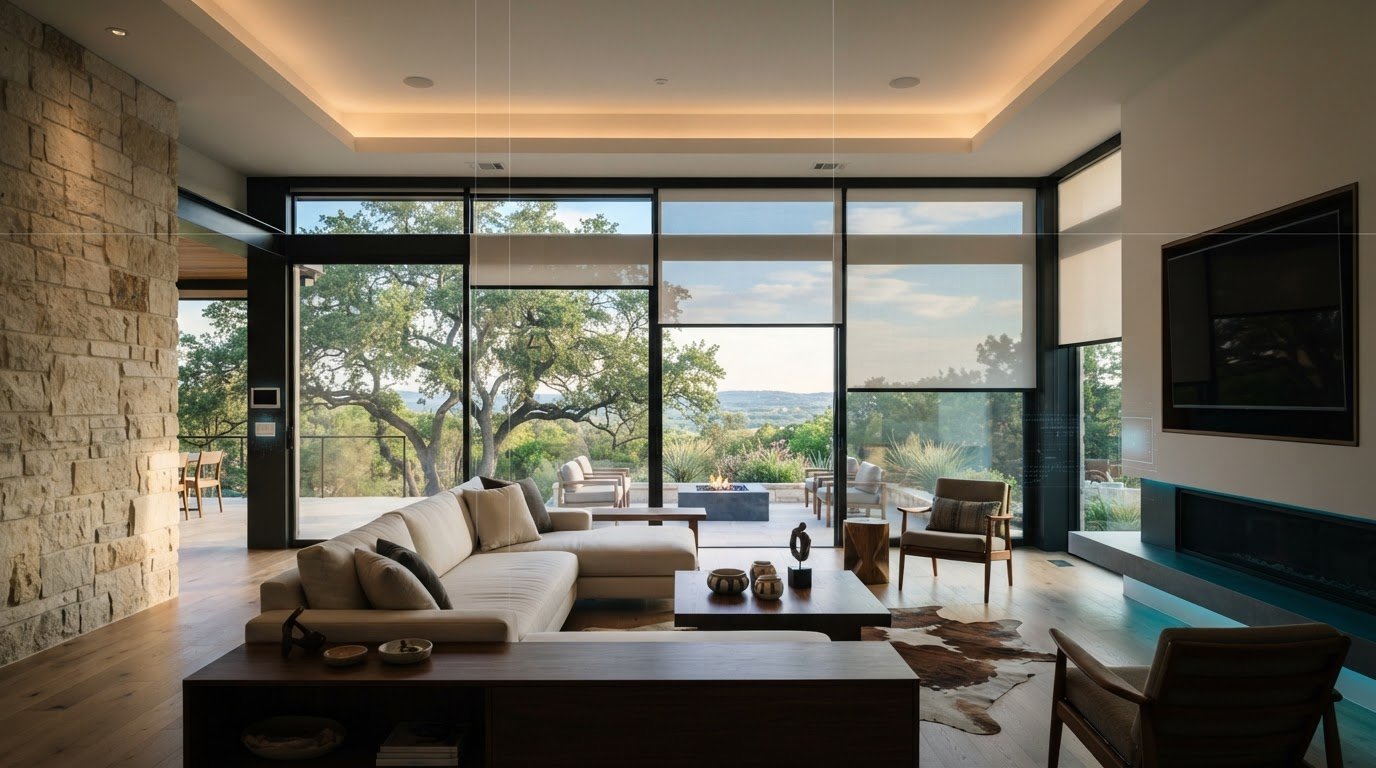
What if the most useful way to choose motorized shades is to start with the room, not the window covering? For homeowners exploring motorized shades San Antonio, the appeal is straightforward: easier operation, added privacy, and more considered control over daylight. The harder question is how shades will suit each window and fit the way the property is used. Their value becomes clearer when they’re planned alongside lighting and the room’s wider control goals, rather than selected as isolated hardware.
It’s reasonable to wonder what motorization adds beyond a manual shade, or whether one approach will work across different rooms and window types. This guide offers a practical framework for weighing those decisions and planning a coherent experience for your property. We’ll explore window needs, daily routines, privacy, and lighting coordination, then show how an integrated project can bring those elements together. With 15+ years integrating intelligent systems, J3 designs, installs, commissions, and supports shading and lighting through one accountable team, tailored to the property and its goals.
Key Takeaways
- Assess each room’s windows, exposure, privacy needs, and routines before deciding how shades should operate.
- Plan motorized shades San Antonio properties around the desired room experience, coordinating shading with lighting and intended use.
- Compare shade appearance and opacity separately from motorization and system-design considerations to make clearer choices.
- Follow a deliberate sequence from defining goals and assessing windows through integration planning, installation, and commissioning.
- See how one accountable team can tailor the design, installation, commissioning, and ongoing support to your property.
Why Consider Motorized Shades for a San Antonio Property?
San Antonio properties don’t share a single pattern of windows, sun exposure, privacy needs, or daily routines. A shaded bedroom has different priorities from a bright living area, and a hard-to-reach window presents a different practical challenge from one beside a frequently used seating area. Motorized shades San Antonio projects begin with these differences. Motorized shades are window shades operated through a motorized control rather than adjusted by hand.
Motorization is most useful when repeated manual adjustments become inconvenient. It can make shades easier to adjust on tall, wide, or difficult-to-reach windows. A considered plan also helps each room serve its intended purpose. Motorization doesn’t change the shade’s material or how that material filters light. For background on the category, Wikipedia’s overview of motorized window blinds describes motorization as an alternative to manual operation.
Where motorized shades can make a meaningful difference
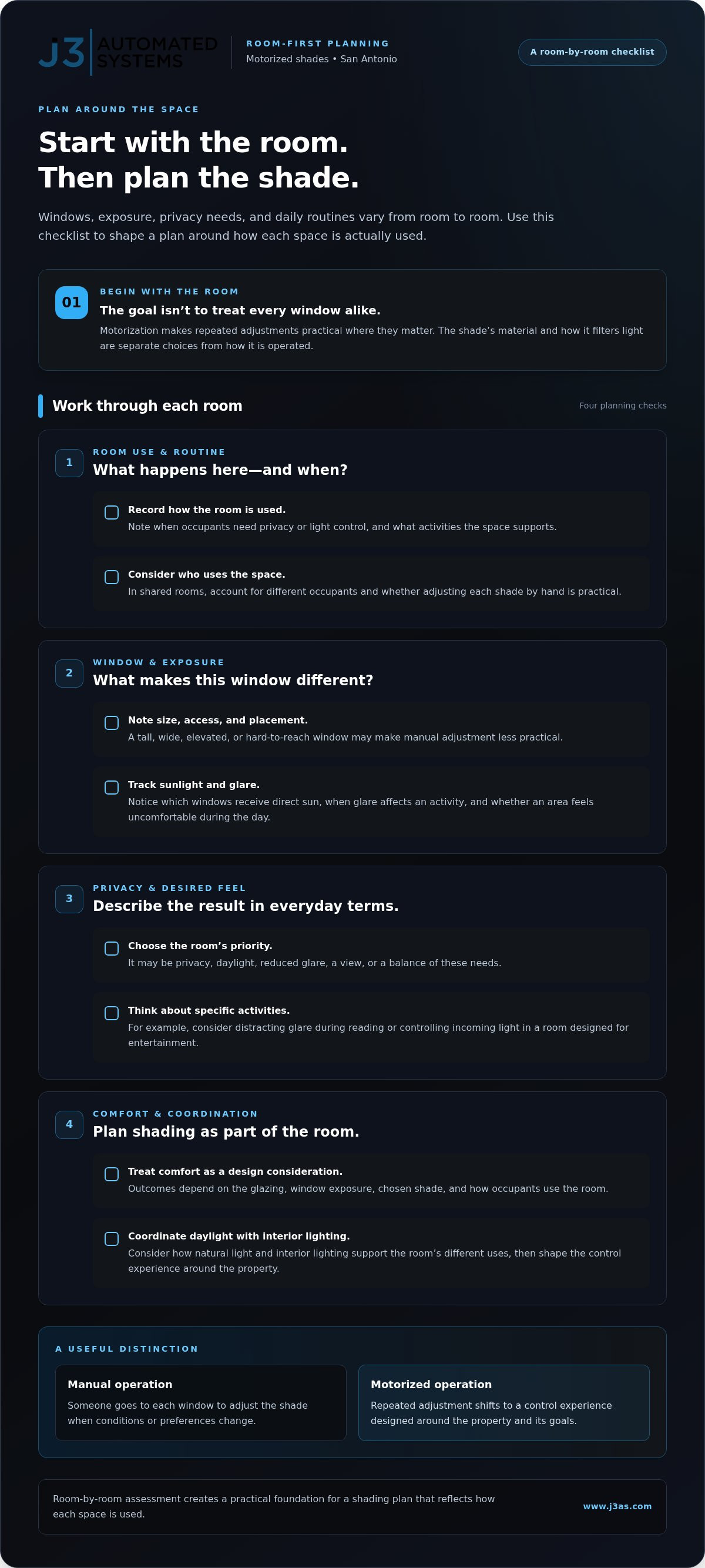
Assess windows individually. A bedroom may call for greater privacy and reduced incoming light at certain times, while a living area may need a balance between daylight, views, and privacy. In a shared space, consider how different occupants use the room and whether reaching each shade by hand is practical.
Review sun exposure room by room. Note which windows receive direct sun, when glare affects an activity, and whether a particular area feels uncomfortable during the day. Shade selection can be part of a comfort-focused design, but results depend on the glazing, window exposure, chosen shade, and how occupants use the room. No single expectation applies to every window.
What motorization changes in everyday use
Manual shades require someone to go to each window and adjust it whenever conditions or preferences change. Motorization shifts that repeated task to a control experience designed around the property. The goal isn’t simply to move every shade in the same way. It’s to make adjustment practical in the rooms where it matters.
Begin with the atmosphere each space should support. A bedroom may prioritize privacy, while a living area may call for a balance of light and view. Coordinating shade decisions across a room can make its daylight and privacy feel intentional, rather than like a series of separate fixes. The appropriate control approach depends on the system design and the property’s goals.
Before choosing a solution, make a simple room-by-room assessment:
- Identify the use: Record what happens in each room and when privacy or light control matters.
- Note the window: Consider its size, accessibility, exposure, and relationship to the room’s layout.
- Define the desired feel: Decide whether the priority is privacy, daylight, reduced glare, or a balance of these needs.
- Consider comfort carefully: Treat shading as one part of the room’s design, with outcomes shaped by the glazing, shade choice, exposure, and everyday use.
This assessment creates a practical foundation for planning. Instead of treating every window alike, you can shape a system around how each space is used and what its occupants need from the light.
How Motorized Shades Fit into an Integrated Room Design
Integrated shade design coordinates window shading with a room’s lighting and intended use. Rather than treating each shade as an isolated device, the plan considers how daylight, privacy, and the room’s activities work together. In a San Antonio home, that might mean considering how afternoon glare affects a reading area, how a bedroom feels at different times of day, or how window light contributes to a room used for entertainment.
Start with the experience you want, not assumptions about a particular brand, control, or feature. This keeps the design focused on the actual environment. A shade may be part of an effective plan, but its role depends on the window, the room, and how occupants use the space.
Start with the room, the window, and the intended experience
Consider the room’s purpose, where its windows sit, what privacy is needed, and when the space is occupied. A large window may influence more of the room’s daylight than a smaller one, while an elevated window may require a different approach to operation. These are design considerations, not reasons to assume every opening needs the same treatment or control.
Describe the desired result in everyday terms: reduce distracting glare during a specific activity, preserve a comfortable sense of privacy, or retain the room’s connection to natural light. A cinema room shows how one design choice can support a wider experience. J3’s cinema-grade home theater design considers the private screening environment as a whole, where controlling incoming light can help shape the room for its purpose.
Coordinate shading with lighting and other space systems
Shading and lighting are related parts of an intelligent space. A room’s feel depends not only on the daylight entering through its windows, but also on how interior lighting supports its use. Planning both together can help the design feel coherent, rather than leaving occupants to reconcile separate decisions after installation.
For example, a room used for conversation, reading, and media may need to support different moods and levels of daylight. The design discussion can map those uses to the intended balance of shading and lighting, then shape a control experience around the project. Exact control behavior is tailored to the property and its goals; it isn’t guaranteed by the category of motorized shades alone.
For homeowners considering motorized shades San Antonio, this integrated perspective connects individual window decisions to the larger room experience. It also gives the design team a clear basis for coordinating shading and lighting as parts of one intelligent space. Explore how J3 designs intelligent spaces around the needs of each property.
How to Compare Motorized Shade Options for San Antonio Homes
A useful comparison starts with the property, not a product list. For each opening, consider the room’s use, the window’s size and accessibility, its exposure, and the balance of light and privacy you want. One shade choice may not suit every window: a bedroom, a bright living area, and a hard-to-reach upper window can each call for a different design response.
Keep two decisions distinct. Appearance and opacity shape how a shade looks and how much light or view it allows. Motorization and system design shape how it operates and whether it belongs within a wider control plan. Treating these as separate questions makes it easier to compare options without assuming that a preferred fabric or appearance dictates the control experience.
Compare by window, room, and exposure
Assess each opening on its own terms. Note its dimensions and accessibility, how the room is used, and what you want to manage, such as glare, privacy, or daylight. In San Antonio, evaluate exposure at the property: nearby buildings, window placement, and room use all affect what matters. Avoid assuming that windows with a similar orientation will have identical needs.
| Use case | Window and exposure | Light and privacy goals | Integration need |
|---|---|---|---|
| Bedroom | Consider placement, access, and when the room is occupied. | Define the preferred balance of privacy and incoming light. | Plan operation around the room’s routine and intended feel. |
| Living area | Assess views, window size, and when sunlight affects activities. | Weigh daylight and glare against privacy needs. | Coordinate shade decisions with the room’s lighting and uses. |
| Outdoor space | Evaluate the specific setting and its exposure separately from interior windows. | Identify the desired comfort, shade, and privacy experience. | Include the outdoor area in the overall property plan while treating its needs as distinct. |
| Commercial space | Consider how openings relate to the building and its occupied areas. | Set priorities according to how each space is used. | Shading may be considered alongside broader commercial building management systems in Texas. |
Evaluate control and integration requirements
Next, define who uses each space and how they should interact with its controls. A shade’s motorization addresses its operation; the wider system design determines how that operation may relate to other room controls. Don’t assume a particular ecosystem or behavior based on the word “motorized.” Describe the desired experience, then shape the project around the property’s requirements.
This framework gives motorized shades San Antonio projects a clear basis for comparing choices across rooms without forcing uniformity. J3 tailors shading and lighting to the property and its control goals. Explore J3’s integrated design approach for a plan that connects individual windows to the wider space.
Planning Motorized Shade Installation in San Antonio
A well-planned installation starts before any shade is selected or fitted. The goal is to connect the property’s windows, room uses, and control priorities in a clear sequence, so the completed system reflects how people live or work in the space. For motorized shades San Antonio projects, move from goals to assessment, integration, installation, and commissioning without treating any stage as an afterthought.
- Define the goals. Identify what should improve, such as privacy, daylight management, or ease of adjusting a difficult-to-reach window. Separate essential outcomes from preferences.
- Assess rooms and windows. Review each room’s use, the location and characteristics of its windows, and how occupants interact with the space. This clarifies where needs differ across the property.
- Plan integration. Consider how shading should relate to lighting and other space systems. Establish the intended control experience before installation, rather than making decisions around assumptions.
- Install the system. Carry out the work according to the project design, coordinating the shading solution with the property’s requirements.
- Commission the system. Review the installed system against the design intent and control plan, then address its operation as part of completing the work.
Prepare a useful brief for the design process
A concise project brief turns general preferences into decisions the design team can use. List the rooms and windows where you want to improve light, privacy, or ease of use. For each, note who uses the space, what activities take place there, and what the controls should help occupants accomplish. Include lighting or other space systems that should be considered alongside shading.
- Room and window: Record the location and any access considerations.
- Use and routine: Describe how the room is occupied and when its needs change.
- Desired result: State the intended balance of light, privacy, and convenience.
- Related systems: Note lighting and other controls that belong in the planning conversation.
Understand design, installation, and commissioning
Design establishes how shading fits the property and the experience each space should support. Installation puts that plan into place, while commissioning reviews the completed system against its intended operation. These stages work best as connected parts of one project, not isolated transactions. J3 provides end-to-end design, installation, commissioning, and ongoing support through one accountable team, bringing continuity to projects where several decisions need to align.
That coordinated approach keeps the project grounded in its original goals as it moves from planning to completion. To discuss an intelligent-space project for your San Antonio property, connect with J3 about your project.
J3's End-to-End Approach to Motorized Shades in San Antonio
Motorized shades work best as part of a property’s wider design, not as an isolated hardware decision. J3 Automated Systems designs intelligent spaces across Texas, bringing shading and lighting into a coordinated plan for residential and commercial properties. The process connects the intended experience to a system that is designed, installed, commissioned, and supported.
For a project involving motorized shades San Antonio property owners can work with one accountable team through each stage. That continuity keeps the design intent in view as the work moves from planning into installation and commissioning. J3 Automated Systems brings 15+ years integrating intelligent systems and a white-glove approach to residential and commercial projects.
One accountable team from design through commissioning
Design establishes how shading should serve the property and relate to lighting and other space systems. The team carries that plan into installation and commissioning, keeping the project’s goals connected to the finished system. Commissioning brings attention back to the intended operation, rather than treating installation as the final design decision.
This one-partner model also provides a clear point of accountability. Instead of separating shade selection from broader system planning, J3 Automated Systems approaches shading as part of an intelligent space. The scope is tailored to the property and its control goals, without assuming a particular brand or named integration. Ongoing support extends the partnership beyond the initial project stages.
A tailored plan for residential and commercial properties
Residential and commercial spaces call for different planning conversations. At home, the design may focus on how occupants use individual rooms and the experience they want from light and privacy. In a commercial property, the conversation can consider how different areas are used and how shading fits within the building’s broader automation goals. Neither setting benefits from a universal template. The relevant priorities depend on the property.
J3 Automated Systems serves premier residential and commercial properties across Texas, tailoring intelligent-space projects to each setting. A useful starting point is to bring together three things: the property’s windows, the rooms or areas they serve, and the experience you want the controls to support. From there, design can connect shading with lighting and other relevant systems, with installation and commissioning carried through by the same accountable team.
If you’re ready to move from separate window decisions to a coordinated plan, plan a motorized-shade project with J3 Automated Systems. Begin with the property, its windows, and the experience you want to create. J3 Automated Systems can shape the design around those needs and carry the work through installation, commissioning, and ongoing support.
Begin with the Experience You Want to Create
Your next step can be simple: choose one room or window where a change would make daily life feel more comfortable, private, or convenient. Note what currently feels inconvenient and what you’d like to be different. That clear starting point gives a motorized shades San Antonio project direction without requiring every decision to be made at once.
From there, consider how the window relates to the room and the wider property. A thoughtful plan can grow from one priority into a coordinated design shaped around how you use the space. J3 brings design, installation, commissioning, and support together, with 15+ years integrating intelligent systems and white-glove service for residential and commercial projects.
Let your property and its priorities guide the conversation. Plan a motorized-shade project with J3 and take the next step toward a more considered, connected space.
Frequently Asked Questions
Do motorized shades work during a power outage?
Not necessarily. Operation during an outage depends on how the shade system is powered and configured. A shade that relies on a power source unavailable during the outage may not operate, while other arrangements can differ. If you want to adjust shades during a loss of power, make that requirement part of the design discussion. This keeps expectations aligned with the system selected rather than assuming all motorized shades behave alike.
Can existing window shades be motorized?
Sometimes, but existing shades aren’t automatically suitable for motorization. Their condition, construction, size, and operating mechanism can all affect whether adapting them makes sense. The intended control experience matters too, especially if the shades are part of a broader room plan. Treat it as a project-specific design question: assess the existing window treatment and the desired outcome before deciding whether to adapt it or plan a different solution.
Do motorized shades make a home more energy efficient?
They may support more considered management of sunlight, but motorization alone doesn’t establish an energy benefit. Results depend on the home’s glazing, window exposure, shade selection, and how occupants use each room. For example, reducing direct sun in a space during a particular activity may improve comfort, but that doesn’t guarantee lower energy use. Evaluate shading alongside the property’s actual conditions and treat energy performance as one design consideration, not an assured result.
Are motorized shades suitable for large windows?
They can be considered for large windows, but suitability depends on the opening and the system designed for it. Window dimensions, accessibility, placement, and the room’s use all inform the assessment. A broad window in a living area may have different priorities from a tall opening in a stairwell. Share the window’s characteristics and the experience you want; the design can then account for the specific opening rather than relying on a general rule.
Can motorized shades be integrated with lighting control?
Yes. Shading and lighting can be planned together as parts of an intelligent space. For instance, a room used for both work and relaxation may need different balances of daylight and interior lighting. The design should begin with how people use the space and the control experience they want, then establish how the systems relate. Exact control behavior depends on the project design, so it shouldn’t be assumed from the term “motorized shades.”
How should I plan motorized shades for a San Antonio property?
Start with the specific rooms and windows that need attention, then note what you want to improve, such as privacy, glare, or ease of operation. For San Antonio properties, consider how each opening’s exposure and surrounding conditions affect its use instead of applying one assumption across the home. Also identify lighting or other systems that belong in the planning conversation. This gives a motorized shades San Antonio project a useful, property-specific starting point.
Does J3 install motorized shades in San Antonio?
Yes. J3 Automated Systems designs and installs shading as part of intelligent spaces, with commissioning and ongoing support in its end-to-end work. J3 serves residential and commercial properties in San Antonio and across Texas, including New Braunfels, Seguin, Bandera, Boerne, Austin, and San Marcos. Each project is tailored to the property and its goals, so the design can account for how its rooms, windows, and wider systems are used.