Media Room Cost in Texas by Setup and Features
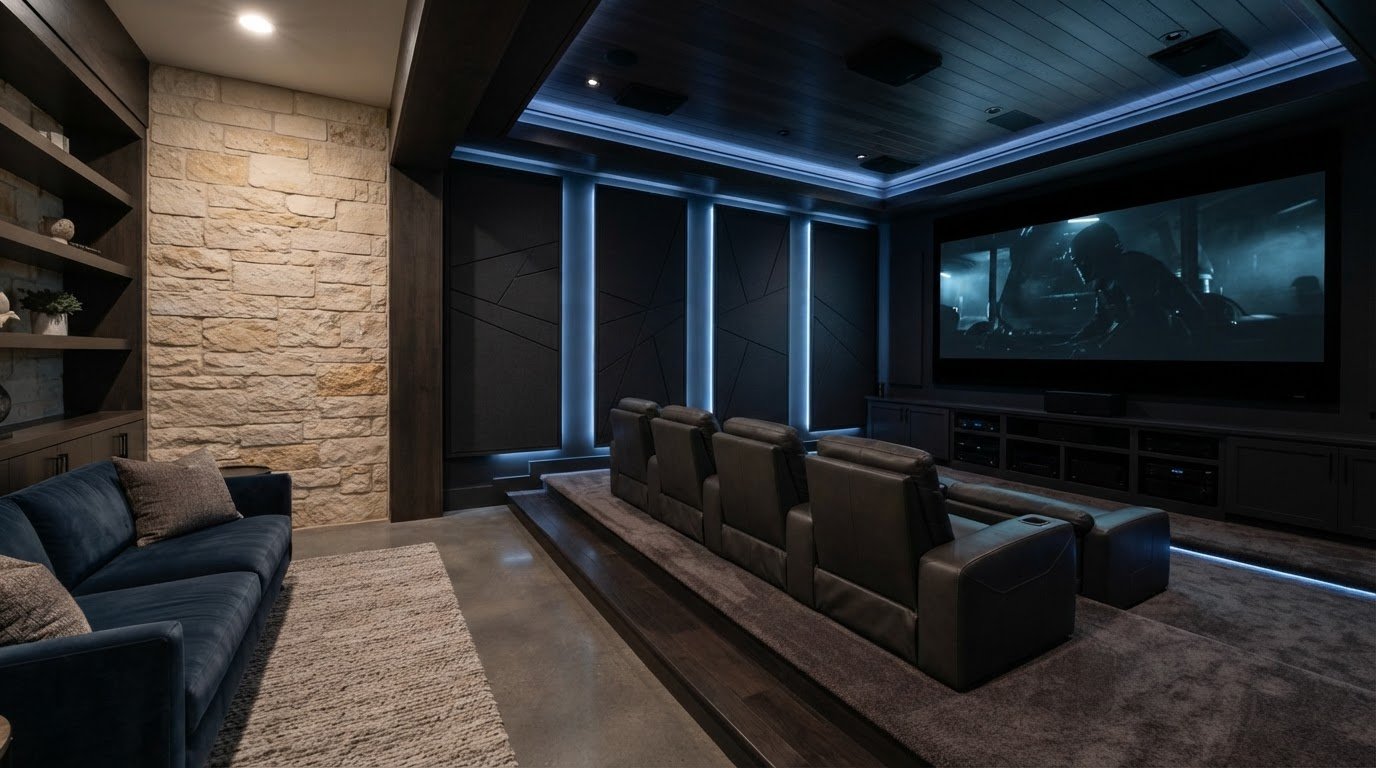
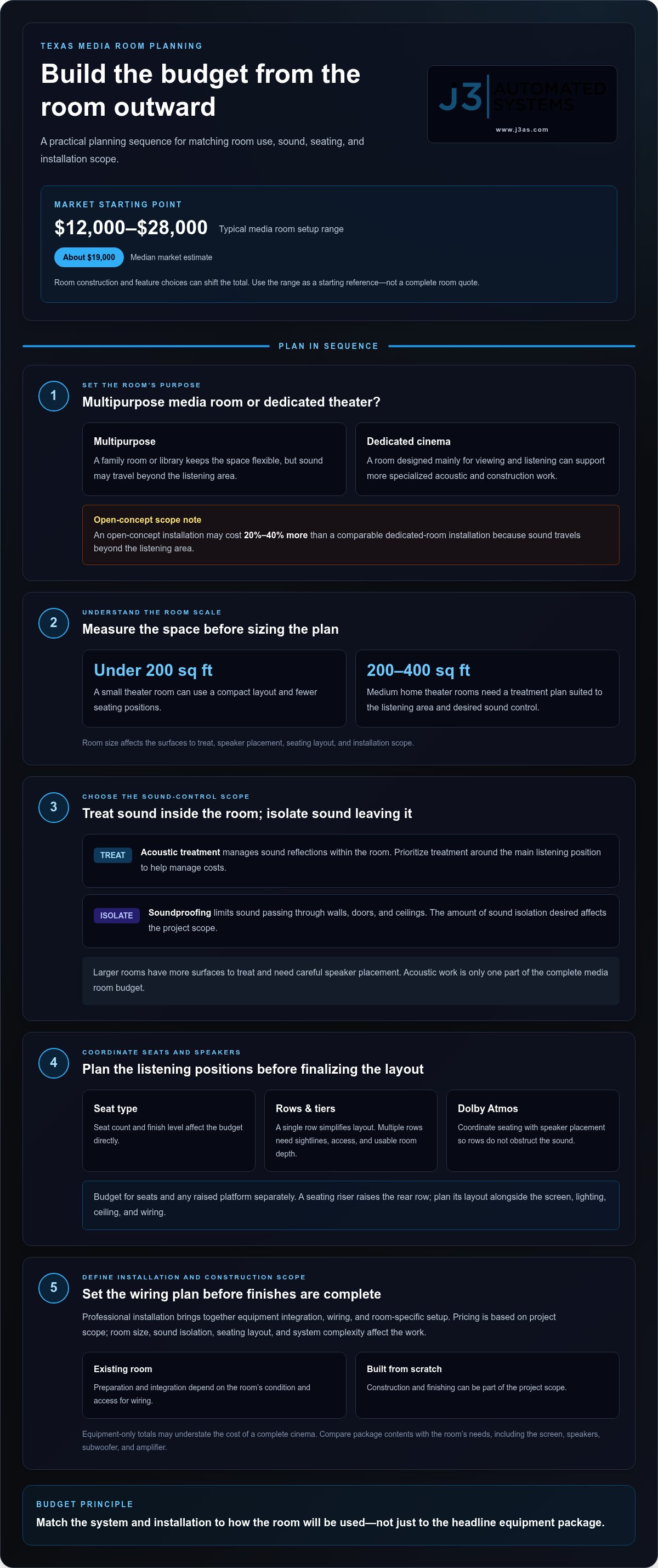
A media room’s cost depends less on the screen alone than on how much of the room you build around it. On the market, a media room setup typically costs $12,000 to $28,000, with a median of about $19,000. That range gives a useful starting point for anyone asking how much a media room costs in Texas.
A larger investment is usually needed for immersive Dolby Atmos audio, dedicated seating, acoustic treatment, or construction of a separate theater room. A flexible setup in an existing family room has different needs from a purpose-built cinema, even when both are designed for movie nights.
This guide explains how room and system choices shape the overall budget, from a basic media room to a dedicated theater. It covers how seating, Dolby Atmos, and construction affect the scope, and which decisions matter when planning a media room in your Texas home.
Key Takeaways
- Market estimates for a media room setup span $12,000 to $28,000, but room construction and feature choices can shift the total.
- Acoustic treatment and sound isolation can materially affect a mid-range budget, especially in a dedicated theater.
- Compare an open, multipurpose media room with a dedicated home theater before settling on a budget; the room’s purpose shapes the scope.
- Seating costs depend on the seat type and whether you add a tiered platform, so plan for both before finalizing the layout.
- Dolby Atmos configurations vary in complexity, making speaker layout and installation scope important budget decisions.
How much will it cost to create a home media room on a mid-range budget?
A mid-range budget depends on room preparation as well as the screen and speakers. Acoustic treatment, seating, room size, and installation scope can each affect the project total.
Room Size and Acoustic Treatment Costs
Acoustic treatment manages sound reflections inside a room, while soundproofing limits sound passing through walls, doors, and ceilings. Larger rooms have more surfaces to treat and need careful speaker placement.
Medium home theater rooms span 200 to 400 square feet. The treatment plan should reflect the listening area and the amount of sound control desired.
Acoustic Treatment and Seating Budgets
Acoustic treatment and seating are separate budget decisions, but both affect the listening experience.
Plan seating alongside speaker placement, especially for Dolby Atmos, so rows don’t obstruct the sound. A single row can make the layout simpler than multiple tiers. To manage costs, prioritize treatment around the main listening position and choose seating that suits the room’s intended use.
Average Texas Media Room Costs
There’s no single cost pattern across San Antonio, New Braunfels, Seguin, Bandera, Boerne, Austin, and San Marcos. Room condition, construction scope, treatment needs, and equipment choices usually have more impact on the total than the city alone.
These figures describe acoustic work, not a complete media room budget.
Professional Installation Costs
Professional installation brings together equipment integration, wiring, and room-specific setup. The scope depends on the work required, including access for wiring, acoustic treatment, and modifications to a finished space.
Professional media room installation in Texas is priced according to project scope, with pricing provided after a quote request. Room size, sound isolation, seating layout, and system complexity all affect the work. Plan wiring and seating before finishes are complete to avoid unnecessary changes and keep the scope aligned with your priorities.
Media room versus dedicated home theater budgets
A media room puts entertainment in a multipurpose space, while a dedicated theater is designed for cinema viewing. That difference affects construction scope, equipment choices, and the overall budget.
Small-Room Budget Differences
Small home theater rooms are under 200 square feet, so they can use a compact layout and fewer seating positions.
These ranges reflect different scopes, not simply different room dimensions. A compact surround sound system can include a subwoofer and amplifier without requiring dedicated construction. An open-concept space may cost 20% to 40% more than a comparable dedicated room installation because sound travels beyond the listening area.
Overall Theater Cost Ranges
A dedicated home theater is designed mainly for viewing and listening, often with more extensive acoustic and construction work.
These ranges distinguish a focused cinema room from a luxury private cinema. Room construction, equipment, and finish level determine where a project falls.
Prepackaged equipment bundles can simplify selection, but the equipment total isn’t the full room budget. Compare the package contents with the room’s needs, including the screen, speakers, subwoofer, and amplifier.
A dedicated theater budget also depends on whether the room already exists. Building from scratch may involve construction and finishing, while an existing room may need different preparation and integration. Equipment-only comparisons can understate the cost of a complete cinema.
Decide how the room will be used before comparing estimates. If it must also serve as a family room or library, a multipurpose media room preserves that flexibility. If immersive, controlled listening is the priority, dedicated construction can support a more specialized system. Either way, match the surround sound layout and equipment to the room instead of choosing a bundle based on its headline component count.
Theater seating and tiered platform costs
Seating affects comfort, sightlines, and space for movement. Budget for seats and any raised platform separately, then coordinate both with the lighting and wiring plan.
Room Construction and Seating Risers
A seating riser raises the rear row so viewers can see over the seats in front.
These estimates cover different scopes, so compare platform dimensions and construction work instead of treating them as equivalent. Planning the riser early also helps coordinate the layout, ceiling, and wiring before finishes are complete.
Seating and Tiered Risers
Seat count and finish level therefore affect the room budget directly, separately from platform construction.
A multi-row layout needs more than a riser: it must preserve sightlines, allow access between rows, and fit the room’s usable depth. Map the seats and screen position together before deciding on platform height or footprint. That makes it easier to judge whether a second row fits without crowding the circulation space.
Seating and Installation Costs
Installation scope depends on the room and construction involved, not just the number of seats. Adding a platform in a finished room requires different carpentry from incorporating the layout during framing.
List the seat type, row count, platform work, and wiring needs as separate parts of the project scope. This breakdown clarifies whether an estimate covers both seating and construction. It also provides a practical layout test: viewers should reach their seats easily, see the screen clearly, and have lighting that supports movement without disrupting viewing.
Plan lighting around the screen, entrances, and each seating row. Automated lighting and shades can be integrated into the room’s design, while seat placement helps determine where controls and pathways belong. Coordinating these decisions with wiring before the room is finished can reduce later adjustments.
A seating package may combine seats or equipment, but its price alone doesn’t show whether carpentry, platform work, wiring, and installation are included. Compare each item with the planned layout. A single-row room and a two-row theater have different space and construction needs, so listing those items separately makes the project scope clearer.
Basic media room cost
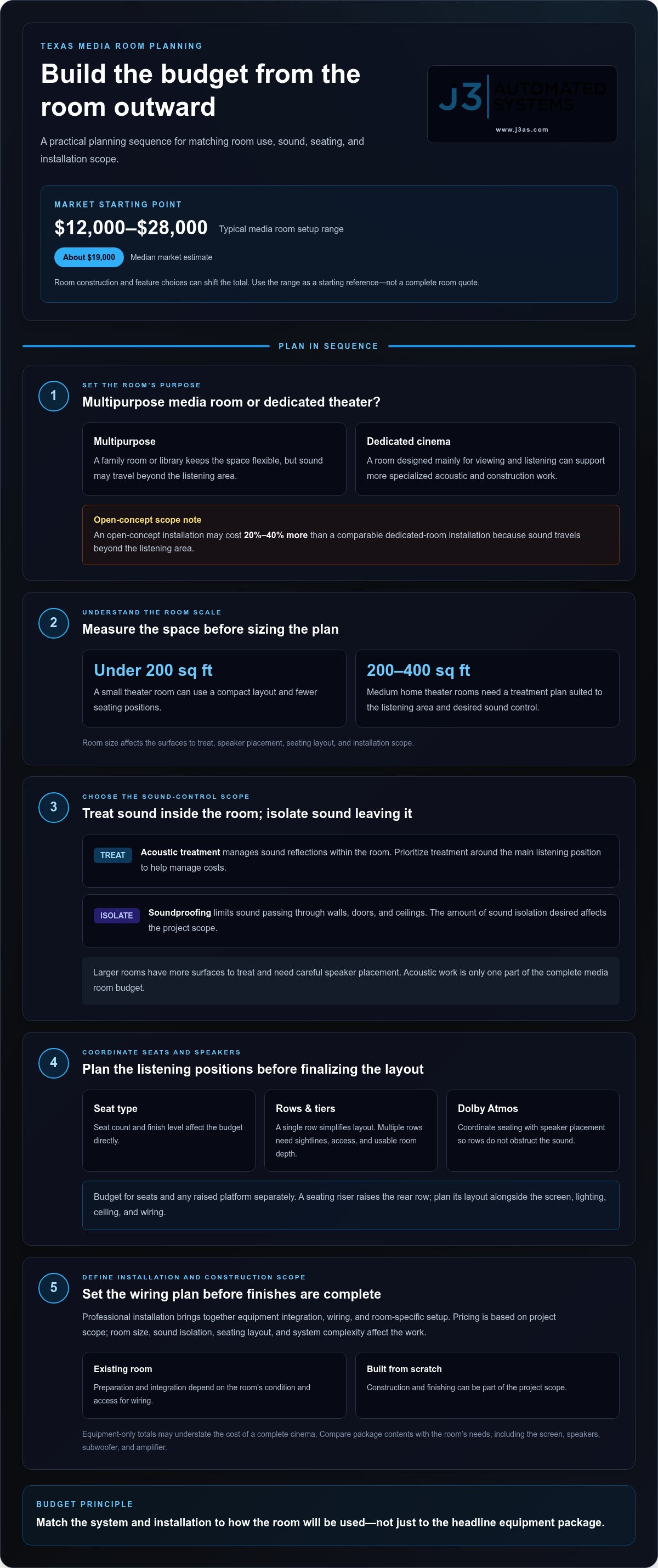
A basic media room keeps the layout focused: a display, surround sound, source connections, and seating. The market range for a media room setup or build is $12,000-$28,000, with a median of about $19,000. That aggregate range is not a quote for a basic room; scope and room preparation determine what a homeowner actually needs.
Start with the room’s main use. For a family room that also hosts movie nights, a television of at least 60 or 65 inches can anchor the viewing area without dedicating the room to a projector. A 5.1 configuration uses five speakers and a subwoofer, creating a defined surround layout. The right configuration depends on listening positions, room shape, and where speakers can be placed.
Keep the initial installation cohesive. Position the display for the main seating area, then plan speaker placement and wiring together. A receiver that switches between audio input sources supports connected devices, while a remote can simplify daily operation. Avoid buying components separately before settling the layout, since mismatched connections or poor placement can add work during installation.
A compact room can also accommodate Dolby Atmos through a 5.1.2 configuration. That adds height-channel speakers to the foundational surround arrangement, so ceiling access and wiring routes matter. If the room is already finished, concealing cables can affect installation complexity. Planning those routes during construction makes future upgrades easier, especially if the homeowner later chooses a larger configuration.
The display also shapes the basic setup. A television is a straightforward fit for shared-use spaces, while a projector and screen need suitable placement and a clear viewing surface. A motorized screen may suit a multipurpose room, but it adds another system element to coordinate. Align the screen, seating, and lighting layouts before selecting equipment.
To manage costs, prioritize the features that shape everyday use: display size, surround configuration, wiring access, and seating layout. Treat automation as a planned upgrade, not a default requirement. A basic room is defined by a focused scope, not one equipment choice. A clear configuration directs spending toward performance and avoids unnecessary complexity.
What is the average cost to build a media room in Texas?
There’s no single statewide figure for every room. To answer “how much does a media room cost in Texas?”, separate construction from equipment, then account for the features that shape the experience. Room condition, project scope, and whether you’re creating a multipurpose space or dedicated cinema all affect the budget.
On the market, media room setup or build offers typically range from $12,000 to $28,000, with a median of about $19,000. That provides a broad reference, not a fixed price for every Texas project.
Construction can shift the total substantially. That exclusion matters: the construction figure doesn’t include the display, speakers, amplifier, seating, or system integration.
Consider a 300-square-foot cinema built from the ground up. For an existing room, the calculation changes because the budget centers on equipment and adaptation rather than creating the room itself. Room size alone can’t explain the total; the existing structure and finish level matter too.
Audio configuration is another major variable. Speaker count and installation scope can change the audiovisual budget independently of construction and seating.
Planning during new construction can change the project economics. Early decisions let wiring, room layout, and system placement align with the build instead of requiring changes to finished surfaces later.
A practical answer to “how much does a media room cost in Texas?” starts with the room’s condition, construction requirements, and intended system. The project price depends on those factors and is provided after a quote request. Request a media room project quote to discuss a scope shaped around your room and system goals.
Professional media room projects commonly fall within a broad $12,000-$28,000 range, with a median near $19,000.
J3 Automated Systems: Cinema-grade home theater
J3 Automated Systems designs and builds cinema-grade home theaters for homeowners who want the room, audio, and controls to function as one considered system. This is a natural next step when you’ve defined your priorities, such as dedicated viewing, immersive sound, or a media room integrated with the rest of your home.
The design can coordinate the theater with whole-property audio and automated lighting and shades, creating a connected experience across spaces. Room layout, equipment integration, and how you use the space shape the project scope. This approach suits homeowners planning an integrated system rather than standalone hardware purchases.
Visit www.j3as.com to contact J3 Automated Systems about your media room.
Shape a Media Room Around How You’ll Use It
If you’re still asking how much a media room costs in Texas, define the experience you want before choosing equipment. Consider how the room should work on an ordinary evening, whether it needs to support family activities beyond movies, and how sound and lighting should connect with the rest of your home. Those decisions create a clear brief and help align the design with your priorities.
J3 Automated Systems brings cinema-grade home theater together with options such as whole-property audio and automated lighting and shades. That integrated approach can suit homeowners planning a theater that feels considered as part of the wider home, rather than assembled as separate components.
Share your goals and room plans with J3 Automated Systems to discuss a home theater designed around your space and how you want to use it. A thoughtful starting point can make the decisions ahead feel more manageable, and help you move toward a room that fits your home.
Frequently Asked Questions
Media Room vs Dedicated Home Theater: Which Is Right for Your Texas Estate?
Choose a media room if you want entertainment to share space with everyday activities; choose a dedicated theater when focused viewing and listening matter most. For example, a family room in San Antonio may need a flexible layout, while a separate room can be designed around a fixed screen and seating arrangement. Consider how often the room serves other purposes, where sound should carry, and whether construction changes fit your plans.
Does a home theater increase home value?
A home theater can appeal to buyers who value at-home entertainment, but it doesn’t guarantee a higher sale price. Its appeal depends on how well the room fits the home and whether future owners can use it comfortably. A multipurpose room may suit more routines, while a dedicated cinema reflects a more specific preference. Treat resale appeal as one consideration, not the sole reason to build.
How important is wiring in a media room?
Wiring connects the display, audio components, network, and controls into a usable system. Plan routes around the screen, speaker positions, and equipment location before finishing walls or ceilings. For example, a Dolby Atmos layout may need ceiling speaker connections that a conventional surround setup doesn’t. A clear wiring plan also makes later equipment changes easier and helps avoid visible cables across finished surfaces.
How much does a basic, mid-range, or luxury media room cost in Texas?
These categories describe different scopes, so compare room preparation, equipment, seating, and installation rather than relying on a tier label alone.
What is the cost per square foot to finish a media room in Texas?
These figures describe construction, not a complete media room. For a useful comparison, separate finishing work from the display, audio system, seating, and other equipment in the project scope.
How much do electrical wiring, lighting, and HVAC upgrades for a media room cost?
Lighting costs depend on fixtures, controls, and how they integrate with the room layout. HVAC requirements also vary with the room and equipment. Treat these as separate budget items, since electrical, lighting, and climate work address different needs.
How much does it cost to convert an existing room versus build a new media room in Texas?
For homes in San Antonio or Austin, compare the work each option requires, including wiring, room finishing, and system integration.
How do media room costs compare across major Texas cities?
There’s no single cost pattern across San Antonio, New Braunfels, Seguin, Bandera, Boerne, Austin, and San Marcos. Room condition, construction scope, acoustic treatment, and equipment choices matter more than the city alone.