Landscape Lighting Automation for San Antonio Homes and Businesses
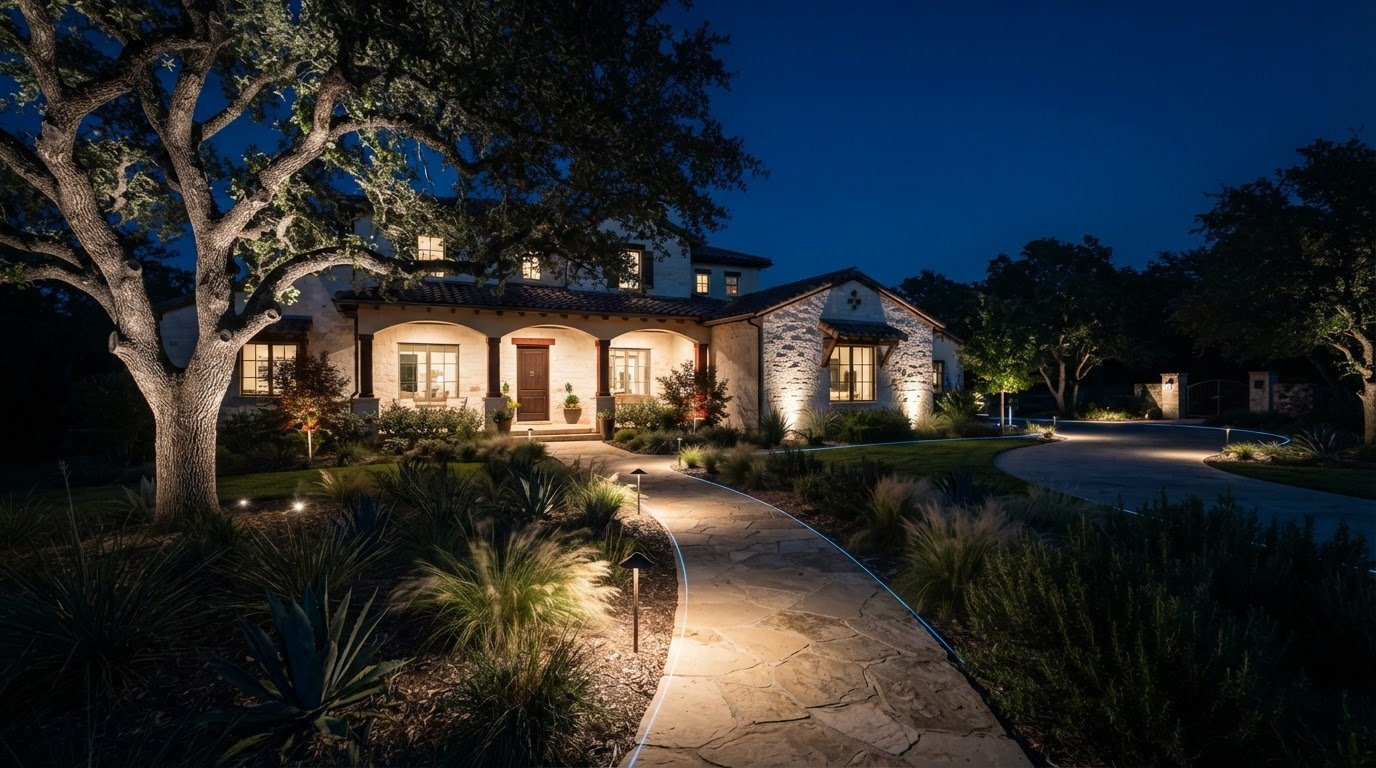
Landscape lighting automation in San Antonio works best when fixture placement, outdoor equipment, and controls are planned as one system. Remote access makes it easier to adjust lighting, while schedules can coordinate illumination with evening routines and security needs. The key decision is not simply which lights to add, but how the design should support the way people use the property.
Outdoor lighting should improve visibility and highlight architectural details without adding another daily task. Thoughtful automation can make lighting easier to manage, whether you’re illuminating a home’s paths and garden or a business’s exterior. This article explains how custom design shapes the result, what to consider when choosing fixtures for San Antonio’s climate, and how remote controls and schedules can support residential and commercial spaces. You’ll also learn what affects installation scope and how to plan your next step. The goal is an outdoor environment that feels considered after dark and straightforward to manage.
Key Takeaways
- Plan fixture placement around the property’s architecture, pathways, and how each outdoor area is used after dark.
- Choose weather-sealed fixtures suited to San Antonio’s hot climate, and consider how LED lifespan may affect long-term upkeep.
- Use remote controls and schedules to adjust outdoor lighting for everyday routines and security needs.
- Shape the design differently for homes and commercial properties, with each layout supporting its own activities and priorities.
- Coordinate lighting with broader automation where it adds value, such as automated lighting and shades at home or commercial building automation.
Professional landscape lighting design and installation
Effective outdoor lighting begins with a site plan, not a fixture list. For landscape lighting automation in San Antonio, the design should coordinate placement, wiring, controls, and intended use.
Installation Costs and DIY Kits
A project quote reflects the property layout, fixture selection, wiring, control requirements, and installation scope.
Professional design coordinates beam direction, brightness, and control zones across the property. A DIY kit may suit a short, simple path, but extending lighting around trees, steps, and outdoor seating calls for deliberate placement. Compare the design scope and components, not just the fixture count.
Low-voltage landscape systems use 12V, while line-voltage systems use 120V. San Antonio permit and code requirements depend on the system and installation scope; don’t assume one rule covers every project. Aim fixtures carefully to reduce glare and light spill. Dark-sky and light-pollution requirements can vary by location, so don’t treat general lighting guidance as a universal city rule.
San Antonio companies that install automated landscape lighting typically specialize in lighting design or systems integration. Their work may coordinate fixtures, control equipment, and schedules as one plan.
Installation, Repair, and Support
Installation includes positioning fixtures, routing and connecting wiring, setting up controls, and testing each zone after dark. For an existing system, troubleshooting starts by identifying whether the problem involves a fixture, connection, power supply, or control setting. Note the affected area and when the problem occurs to help narrow down the cause.
Support should address both the physical lighting and how it operates. A path light that stays on during daylight, for example, may need a schedule adjustment, while a dark fixture may need its connection inspected. Identify the symptom before changing settings or replacing components.
Installation Process and Timeline
A practical process starts with a property walkthrough and lighting plan. The installer then positions fixtures, completes the wiring and control setup, and tests the system after dark. The project scope depends on site access, design complexity, wiring routes, and the number of zones. A simple path layout differs from a plan covering gardens, entrances, and outdoor gathering spaces.
Review fixture locations and control zones before installation. This helps ensure the finished layout suits how people move through the property, from an entry path to a patio or business entrance. A final nighttime walkthrough can reveal aiming adjustments that are easy to miss in daylight.
Outdoor fixture durability in San Antonio’s climate
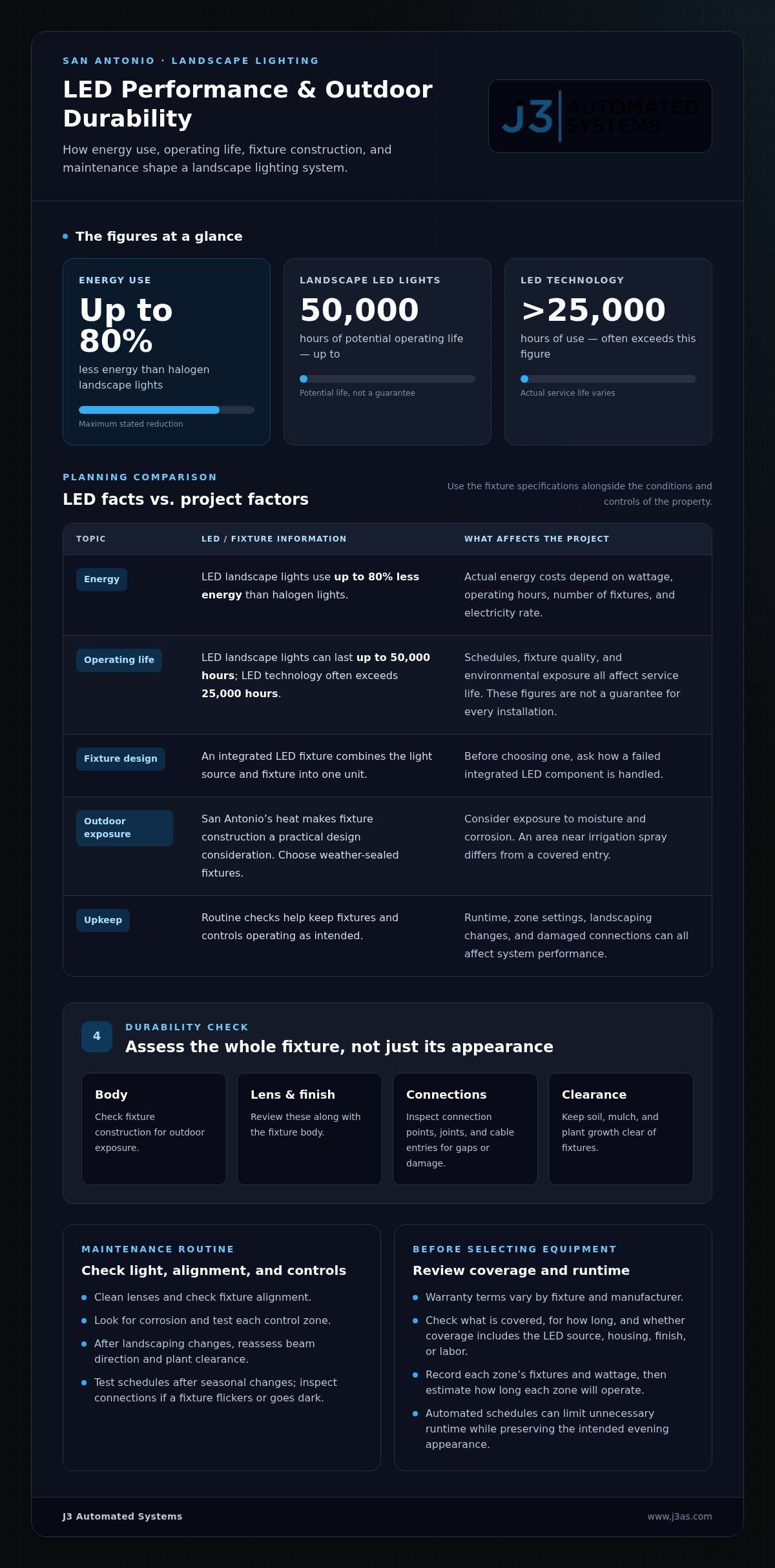
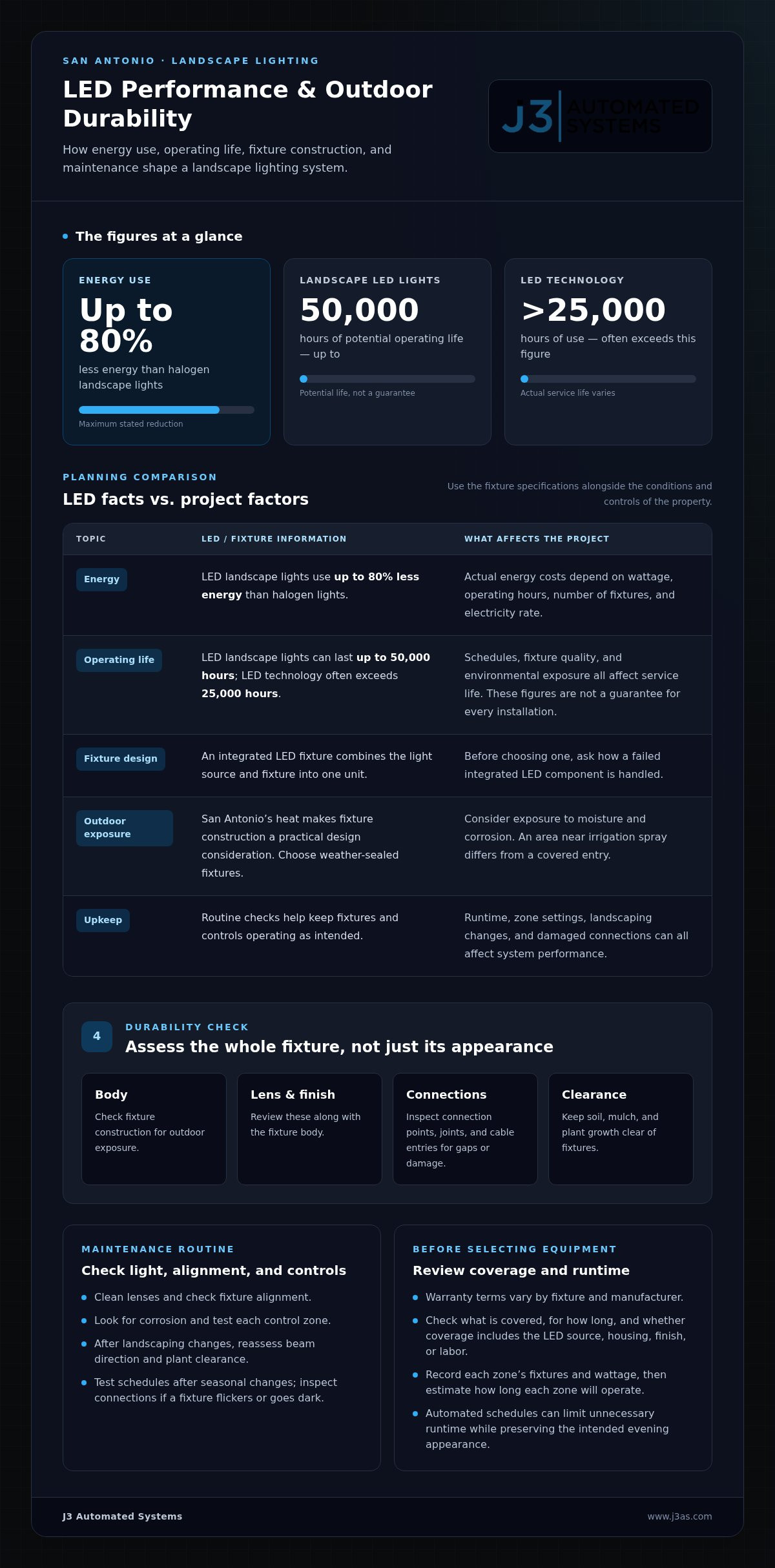
San Antonio’s heat makes fixture construction a practical design consideration. Choose outdoor fixtures with weather-sealed construction to help protect against exposure and corrosion. Assess the fixture body, lens, finish, and connection points together rather than judging durability by appearance alone.
Integrated LED fixtures combine the light source and fixture into one unit. LED landscape lights can last up to 50,000 hours, while LED technology often exceeds 25,000 hours of use. These figures describe potential operating life, not a guarantee for every installation. Operating schedules, fixture quality, and environmental exposure all affect service life. Ask how a failed integrated LED component is handled before selecting a fixture.
LEDs also affect energy use. LED landscape lights use up to 80% less energy than halogen lights. Actual energy costs depend on the system’s wattage, operating hours, number of fixtures, and electricity rate. To compare options, list the fixtures in each lighting zone, note their wattage, and estimate how long each zone will operate. Automated schedules can limit unnecessary runtime, while preserving the intended evening appearance.
Material selection matters in exposed locations. A fixture near irrigation spray, for example, faces different moisture exposure from one beneath a covered entry. Look for weather-sealed construction and finishes designed for outdoor conditions. During maintenance, check joints, lenses, and cable entries for gaps or damage. Keep soil, mulch, and plant growth clear of fixtures so beams remain unobstructed and heat can dissipate.
Warranty coverage varies by fixture and manufacturer, so review the terms before choosing equipment. Check what is covered, for how long, and whether coverage applies to the LED source, housing, finish, or labor. Keep purchase records and installation details together. Routine maintenance can include cleaning lenses, checking alignment, looking for corrosion, and testing each control zone. After landscaping changes, reassess beam direction and plant clearance.
For an automated system, maintenance includes both hardware and control settings. Test schedules after seasonal changes, confirm that each zone responds as intended, and examine connections when a fixture flickers or goes dark. A lighting plan that records fixture locations and zones makes troubleshooting more precise. If you’re coordinating landscape controls with automated lighting and shades, consider how consistent control should extend across indoor and outdoor spaces.
Remote control and security scheduling
Remote access makes outdoor lighting easier to adjust than a fixed routine. Smart landscape lighting can be controlled from a phone or smart home system, allowing you to manage areas such as an entry, garden, or patio without going to each control. Decide which zones need independent control and which can share a schedule.
App-based controls let you switch zones on or off and adjust settings remotely. Name each zone by purpose, such as “front walk” or “courtyard,” so everyone can understand the controls. Build schedules around regular routines, while keeping manual control available for evenings that differ from the usual pattern.
Security scheduling works best when it reflects real activity rather than keeping every fixture on all night. A schedule might light the entry and path during evening arrivals, then leave selected areas on later. Separate controls prevent a small garden accent from being treated like a main entrance light. Scheduled lighting can support visibility and create an occupied appearance, but it is not a substitute for a complete security plan.
Voice control can add a convenient layer for immediate changes. A compatible smart lighting setup can respond to a voice command to dim garden lights to 50%. Alexa voice control depends on compatible equipment and integration within the system. Use voice commands for simple adjustments, while keeping schedules available for recurring routines and phone controls for precise zone selection.
Wired and wireless systems differ in how controls communicate with fixtures. Wired control relies on physical connections planned alongside the lighting layout. Wireless control sends commands without a dedicated control cable, so signal coverage becomes an important design consideration. A property with distant fixtures, walls, or dense landscaping may need different planning from a compact courtyard.
Map the property before programming controls. Mark the entry, paths, gathering areas, and architectural features. Decide which locations need a shared schedule and which need separate commands. Test the system from the places where it will be used, including indoor living areas and outdoor spaces. This helps reveal whether zone names, control access, and timing make sense in daily use.
Review schedules when routines or outdoor use change. A household hosting evening guests may need a different patio setting than on an ordinary weekday. A business can align entrance lighting with operating hours and late departures. Keep a simple record of schedule names and intended zones so adjustments remain clear instead of accumulating into confusing settings.
For properties coordinating outdoor controls with indoor scenes, automated lighting and shades can bring related lighting functions into a unified control approach.
Lighting for homes and commercial properties
Residential and commercial properties need different outdoor lighting plans because they serve different routines. A home may prioritize the front walk, patio, and garden, while a business may need clear entrances, parking approaches, and outdoor seating. Start with the activities each area supports, then arrange fixtures and control zones around those uses.
For a residence, map how people move from the driveway to the entry, then toward living spaces outdoors. A front path may need consistent visibility, while a garden feature can use a separate, quieter scene. Keep entertaining areas distinct from circulation routes, so one adjustment doesn’t unnecessarily change the whole property. Outdoor lighting can be enjoyed 365 days a year, making year-round use a practical design consideration.
A commercial lighting plan should follow operating patterns. Entrances, walkways, patios, and service access points can have different lighting needs. Group fixtures by function instead of putting every outdoor light on one control. This lets staff manage customer-facing areas separately from secondary spaces and makes schedule changes easier when business activity shifts.
Use this planning sequence for either property type:
- Mark entrances, paths, gathering areas, landscape features, and work zones on a site plan.
- Identify which areas need steady illumination and which need accent lighting.
- Assign each area a control zone based on its use and who operates it.
- Review the design after dark, checking sightlines, glare, and transitions between spaces.
These steps help prevent a common mismatch: a well-lit feature beside a poorly illuminated route. A lit garden, for example, does not replace visibility along the path leading to it. At a restaurant, a bright patio should not feel disconnected from the entrance. Consider the view from inside and outside, since windows and glass doors can change how bright fixtures appear.
Control access also varies by property. A homeowner may prefer simple scene names such as “arrival,” “dinner,” or “late evening.” A commercial manager may need clearly labeled zones staff can operate without changing the entire schedule. Documenting each zone’s name and purpose helps prevent confusion during handoffs and routine adjustments.
Before finalizing a layout, walk each route at night and note where light should guide movement, highlight a feature, or remain subdued. Compare that experience with the daytime plan. A home, office, or hospitality property can have a coherent outdoor environment when fixture placement and schedules reflect how people actually use the space.
Custom landscape lighting design
Custom design starts with the property, not a preset fixture arrangement. In San Antonio, map the home’s architecture, paths, trees, planting beds, and outdoor rooms before choosing fixture locations. A stone façade may benefit from selective grazing, while a winding walk needs consistent guidance. Give each beam a clear purpose: guide movement, reveal texture, or define a gathering area.
Start a site plan by marking what people see from key viewpoints. Include the front approach, garden-facing windows, patio seating, and any business entrance. Then identify visual priorities. A mature tree might anchor a garden view, while a low wall could frame a walkway. This keeps features from competing for attention and helps the final composition feel intentional.
Next, design in layers. Use path lighting to guide movement, accent lighting to highlight selected features, and broader illumination where people gather or work. Choose fixture positions based on the surface and viewing angle. A fixture aimed at a window can create indoor glare; a carefully adjusted beam can reveal a tree canopy without overpowering the patio. Test the effect from near and distant viewpoints.
Translate the design into control zones that match how the property is used. A residence might separate the entry, garden, and patio so each area can follow a different routine. A commercial site could distinguish customer approaches from secondary outdoor areas. For landscape lighting automation in San Antonio, controls should follow the design, not force every fixture onto one all-on schedule.
Use this sequence to refine a concept before installation:
- Record the property’s entrances, paths, gathering places, and focal features.
- Choose the purpose of each lighting layer, such as wayfinding or accent.
- Place fixtures to control glare and preserve the desired view from indoors.
- Group locations into zones based on use and operating routines.
- Review the result after dark, then adjust aiming and balance.
Custom work also accounts for change. Trees grow, planting beds shift, and outdoor seating moves. A plan should allow for adjustments to fixture direction and control scenes as conditions evolve. Keep a record of fixture locations, zone names, and intended effects. This gives future maintenance a useful reference and keeps the design from becoming a collection of disconnected adjustments.
For a property-specific design, start planning a custom lighting system around its architecture, movement, and outdoor use.
J3 Automated Systems: Cinema-grade home theater
J3 Automated Systems can help when landscape lighting needs to work within a broader property experience. Its cinema-grade home theater, whole-property audio, and automated lighting and shades bring entertainment and lighting into a coordinated environment. For commercial properties, building automation (HVAC/BMS) can align building systems with operational needs.
Consider an integrated approach when separate controls make it difficult to coordinate outdoor areas with indoor routines, or when a project involves connected systems. A property-focused design can organize lighting around how people move, gather, and use each space, while keeping system functions clear and manageable.
To discuss a property automation project, contact J3 Automated Systems.
Shape an Outdoor Experience That Works as One
The next step is to decide how outdoor lighting should fit the way you use the property, not simply where fixtures belong. Define the experience you want on arrival, during outdoor gatherings, and after the evening routine ends. That gives a designer a clear foundation for shaping landscape lighting automation in San Antonio around your home or business.
For a broader residential environment, J3 Automated Systems brings together automated lighting and shades, whole-property audio, and cinema-grade home theater. These offerings can support a connected experience that moves naturally between indoor and outdoor spaces. Begin with the priorities that matter most, then let the system design reflect them.
Contact J3 Automated Systems today to discuss how a considered automation plan can serve your property. A clear vision is the first step toward outdoor spaces that feel cohesive, purposeful, and ready for what comes next.
Frequently Asked Questions
What landscape lighting automation services are available in San Antonio, Texas?
Landscape lighting automation can bring design, installation, control setup, and commissioning together in one project. For a San Antonio home, that could mean coordinating entry lighting with garden and patio scenes; a business may need separate controls for customer entrances and other exterior areas. J3 Automated Systems offers automated lighting and shades as part of its intelligent-space work. Its Texas service context includes San Antonio and surrounding communities.
How much does automated landscape lighting installation cost in San Antonio?
Automated landscape lighting cost depends on the property and the project scope, and a price is provided after a quote request. Key factors include the number and type of fixtures, wiring requirements, control zones, site access, and integration needs. A plan for a single entrance differs from one covering paths, gardens, and gathering areas. Defining those priorities helps establish a clear project scope before pricing.
What smart controls work with landscape lighting, including timers, apps, and voice assistants?
Landscape lighting controls can include timers, phone apps, smart home systems, and voice assistants when the selected equipment supports them. A timer runs a set schedule; app control gives users a way to adjust settings remotely. Alexa commands depend on compatible system integration, so don’t assume every fixture responds directly. For example, a supported setup might let a voice command dim garden lights to 50%.
How do astronomical timers and photocells automate outdoor lighting?
An astronomical timer calculates switching times around local sunset and sunrise, then adjusts the schedule through the year. A photocell responds to ambient light, switching lighting according to how bright or dark its surroundings become. The distinction matters: a timer follows programmed astronomical timing, while a photocell reacts to actual light conditions. Choose based on whether predictable schedules or changing outdoor brightness better suits the property.
What landscape lighting fixtures and systems work best for San Antonio heat and weather?
Choose outdoor fixtures with weather-sealed construction suited to San Antonio’s hot conditions, and assess the finish and housing in exposed locations. Consider how irrigation, sun exposure, and nearby plants affect each fixture’s placement. LED systems can reduce energy use compared with halogen. Also consider maintenance and replacement needs: a path beside regular irrigation, for instance, calls for careful attention to sealing and connection points.
How should automated landscape lighting be maintained and troubleshot?
Start troubleshooting by identifying whether the issue affects one fixture, one zone, or the whole system. If one light fails, inspect its visible condition and note whether nearby fixtures still work. If an entire zone behaves incorrectly, review its control setting and schedule. Keep the fixture map and zone labels accessible. After landscaping work or irrigation changes, inspect affected areas and confirm the lighting still serves its intended purpose.